
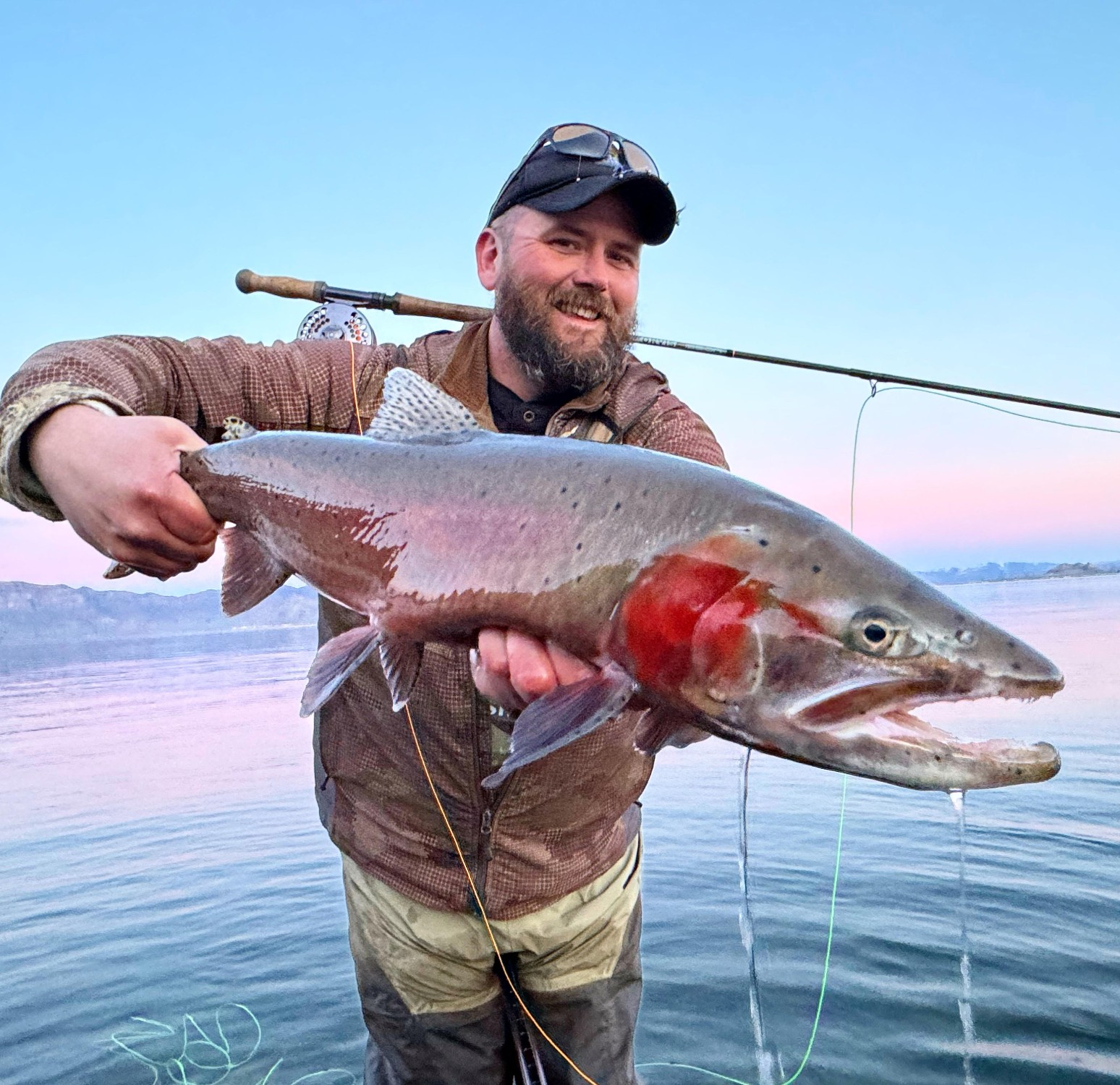

The first time I’d ever heard of a Pale Morning Dun, I was standing hip deep on a spring creek in Montana. Trout were rising all around me, but despite cycling through my entire fly box, I just couldn’t get one to eat. As I stood there tying on yet another pattern and resisting the urge to pull my hair out, I glanced over at the bank where I saw an old man sitting with his feet in the water and a smirk on his face.
“They’re eating PMD’s,” he said, holding up his rod and pointing to the fly tied at the end of his leader. “They’re eating what?” I asked, walking to the shore and sitting down beside him. “Pale Morning Duns,” the old timer said, holding out the tiny off-white pattern he was using so I could get a better look. Explaining the particularities of the small mayfly to me, the aged angler pulled out his fly box and dropped a few PMD patterns in my hand. I tied one to my line as he gestured back towards the water, where I began hooking into trout with almost every cast, quickly rocketing the PMD to the top of my favorite insect list.
The Full Cycle
Inhabiting all types of rivers and streams across the western United States, the Pale Morning Dun is a relatively small species of mayfly with a huge reputation. Hatching from late spring well into the early autumn, these graceful, pale yellow to light olive mayflies can usually always be counted on to bring trout to the surface, often working when nothing else will.

The reason that PMD’s are so popular with the fly fishing fraternity is that they hatch consistently in almost all the waters that they live in, and both the trout and anglers can rely on their arrival almost daily. Usually beginning to emerge in the late morning, PMD’s are notoriously slow to reach adulthood, and both emergers and duns will hang in the surface film for far longer than other mayfly species. Breaking out of their exoskeletons throughout the day, the delightful little bugs will drift downstream like little yellow sailboats in continuous waves, and right into the mouths of expectant trout.
The mayfly’s unbroken presence on the water makes PMD’s unique in the fly fishing world. Unlike other mayfly hatches where trout key in on one particular stage of the insect’s lifecycle, trout generally feed on any and every type of PMD, from emerger to dun to spinner. This allows anglers to have nearly nonstop action when PMD’s are hatching, so long as they’re using the right equipment and fishing in the right spots at the right time.
A Gentle Touch
As previously mentioned, PMD’s are a small and graceful insect. Accordingly, to fish the bugs properly, you have to use small and graceful equipment. While your standard 5-weight will work, to imitate the gentle touchdowns of the insect and to set the hook on what are often very subtle takes, using a rod with a softer flex will often get you more PMD action. If you have the option, switch to a lighter 4-weight or even a 3-weight, as the lighter rods are usually better suited for delicate presentations. This is essential because trout targeting PMD’s can be incredibly spooky, and you have to be very careful not to pull your fly too hard off the water or to splash it down at the end of your cast.
Leaders for a PMD hatch should be at least 9 feet long, though using a longer 10-foot to 12-foot leader is never a bad idea. Generally, both your leader and your tippet should be in the 4x to 6x range. However, if you’re targeting trout in especially slow-moving and/or clear water, dropping down to 7X or even smaller will result in more hookups.

As far as PMD fly patterns go, I believe in variety. During the early part of the hatch, emerger patterns like the RS2 and Sparkle Dun are my go-tos. But I’ll usually pair these patterns up with a soft-hackle or a longer biot emerger as a dropper so that both flies will drift just beneath the surface film. Once the hatch really gets started and I’m seeing a lot of duns on the surface, I’ll switch out to a fly with a larger profile like a Parachute PMD, Comparadun, or even a small Cream Variant.
PMD’s can often take up to an hour to fully emerge and then will spend very little time on the water’s surface once they do. This makes cripple patterns like Sparkle Duns, Quigley’s Cripples, and Mathews PT Emerger especially effective. Trout will almost always target injured or stillborn PMD’s over healthy adults, so I’ll almost always use a cripple as a dropper off my dun patterns or even exclusively, rather than just a single adult.
PMD spinner falls aren’t much different from other mayflies, and your standard Rusty Spinner or Hackle Spinner in sizes 14 to 16 should work just fine. However, as trout will usually still be keyed in on cripples during a PMD spinner fall, I only use spinners as droppers off the back of larger size 14 and 16 cripple patterns.
From The Back to The Front
PMD hatches generally begin in the tailouts of longer, faster-flowing pools. The nymphs will become active in the late morning and swim to the edges of softer water off riffles and small rapids to emerge. As they break out of their shells and swim to the surface, the PMD’s continuously push downstream with the current, ending up in the head and well into the midsection of the next pool down. Accordingly, when you’re fishing a PMD hatch, you’ll want to start in the back of the pool and then work your way forward.

At the beginning of the hatch, start fishing at the back of any pools where you see trout rolling and bulging the water just beneath the surface. Use emerger patterns and soft hackles, and cast your flies directly upstream to the edges of the faster water. Pick up your slack as they drift back towards you and set the hook anytime you see a bulge near your flies, or of course, anytime you feel a tug.
When the hatch begins in earnest, move either upstream or downstream, depending on where you see the most trout activity, concentrating your efforts on longer, slower-moving sections of water. Once you have a few risers spotted, cast dun and/or cripple patterns as far ahead of the trout as you can to give yourself plenty of time to make the appropriate mends. Often, trout will move towards a drifting PMD rather than waiting for the bug to come to them, especially when there are other fish around. Hence, you want to be sure to have your fly in a perfect dead drift, at least 2 to 3 feet upstream of rising fish.
Flipping The Switch
As I learned from that old man on that faithful day, PMD hatches can give you some of the best fishing of your life. The delayed, but steady emergence of the insects often means that things will go from zero to sixty in the blink of an eye. During a PMD hatch, you can spend hours on a seemingly lifeless river, only to suddenly have trout rising all around you like raindrops during a microburst. It’s a famine-to-feast type of fly fishing that, so long as you use the right patterns and fish in the right place, is certain to give you your fill.