
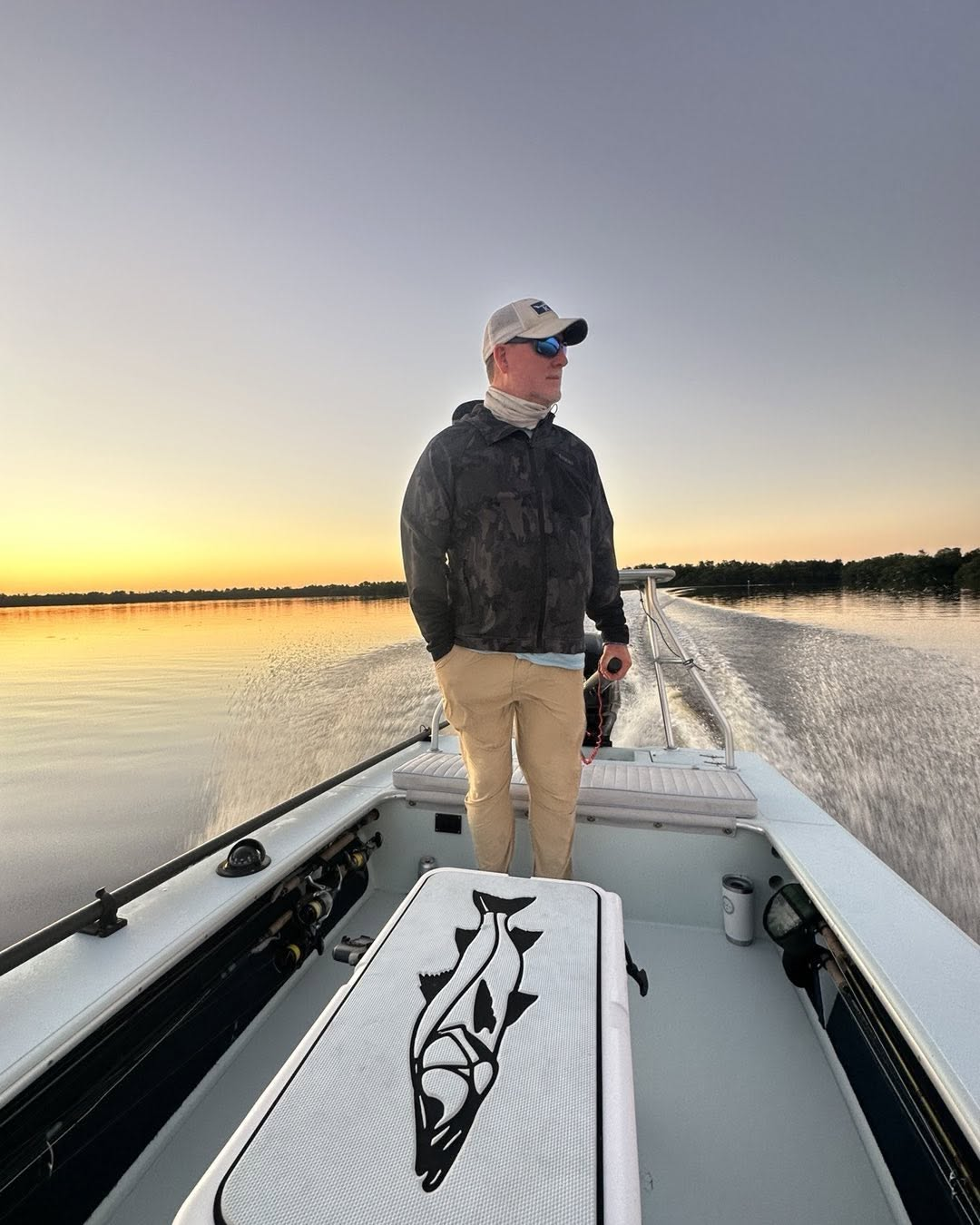

Article by Jason Schratwieser, President of the International Game Fish Association.
Every sport has rules. Not suggestions. Not guidelines. Rules.
They exist to create fairness, define the playing field, and allow performance to be measured in a meaningful way. Whether you’re playing the finals at Wimbledon or playing a leisurely game with friends on a public court, the same basic framework applies. That consistency is what makes it a sport.
Recreational fishing, despite what some might argue, is no different. In many regions it is even commonly referred to as “sport fishing.” It’s practiced competitively across the globe, and it has a governing body, the International Game Fish Association (IGFA), that has spent nearly a century defining how the sport is meant to be conducted.
Before the IGFA was established in 1939, there were no universal standards. As recreational fishing grew in popularity and sophistication, leading angling clubs around the world recognized a problem: without consistent rules, comparisons were meaningless. A fish caught in Australia couldn’t be fairly measured against one caught in the Caribbean. There was no common ground.
The IGFA changed that. What began as a framework for saltwater conventional angling evolved to include freshwater and fly fishing, ultimately establishing the global standard not only for world records, but for how the sport itself is practiced.
Why I Fly Fish by IGFA Rules

I fish as much as I possibly can. And like many of you, I’ll fish for just about everything. But where I’m most at home is on the flats targeting bonefish, tarpon, permit, snook, and redfish with a fly rod. South Florida is my backyard, and I spend most of my time fly fishing Everglades National Park, Biscayne Bay and the Florida Keys, but I have also fished a number of exotic destinations around the world. I don’t fish tournaments, and I’ve never submitted a world record. But I fish by IGFA rules. Not because I have to—but because that’s the game.
It’s Easier Than You Think
There’s a persistent myth that fishing by IGFA rules is restrictive or overly technical, but that’s far from the case. In fly fishing, it comes down to a few fundamentals such as how you rig your tackle and how you cast, hook and fight your fish. Though not the complete set of IGFA fly fishing rules, the following are the fundamentals.
Tackle:
- Fly rods must be at least six feet long and butt length can’t be more than six inches when measured from the center of the reel foot. Two-handed or Spey rods that are longer than 11 feet can have a butt length of up to 10 inches. Fortunately, the vast majority of commercially available rods meet these criteria.
- Your leader must include a class tippet—no heavier than 20 lb—that serves as the system’s weakest link. There’s nothing that prevents you from using a straight piece of line that’s 20 lb or less, should you want to.
- You are allowed to have no more than 12 inches of a shock or bite tippet that precedes the fly. This can be made of any material to prevent cutoffs from toothy critters and wear-throughs from raspy ones.
- Your fly must actually be a fly. There’s plenty of latitude here, but you can’t tie on a tiny Rapala lure and call it a fly. The use of scent or scented material is also not allowed.
On the water:
- The fly line—not the fly—does the casting.
- Trolling a fly behind a moving watercraft is not permitted. The craft must be completely out of gear both at the time the fly is presented to the fish and during the retrieve.
- You cast it, you hook it, you fight it. Once hooked up, no one touches your rod, reel, or line. However, someone can grab the leader to help you land the fish.
- The fish must be landed within a rod’s length of the angler.
That’s it. This isn’t regulatory overreach—it’s the foundation of the sport. Let’s take a look at some real-world examples.
Permit fishing in Mexico:
You’re on a panga with two guides. One’s poling and the other is standing an uncomfortably close distance behind you. You see a fish, make a cast, and hook a permit. However, the second guide behind you that’s been chirping in your ear about how to strip the fly noticed that the persistent 20-knot wind has turned the fly line on the deck into a piece of abstract art and untangled it just before you cleared your line. That’s a no-no. Then, after a relatively short but spirited battle, as you begin to get the fish closer to the boat, the second guide jumps out of the panga, goes on a walkabout, and nets your fish almost a fly line’s length away from the boat. That’s also a violation because the fish wasn’t landed a rod’s length away from the angler.
Fishing for large, tough fish (e.g., tarpon, giant trevally, billfish, etc.)

You’ve saved your pennies and now find yourself in an exotic location ready to mix it up with a big fish that can bust knuckles and make backing evaporate. You’re amped up and ready to count some serious coup. Knowing that said fish has a nasty reputation for playing dirty, breaking line and/or wearing through it, you decide to take no chances. You’ve chosen a “leader” that is a straight piece of 100 lb. You hook a Bonafide leviathan and one of the following happens:
- Your rod breaks even though you’re not high-sticking it because fly rods aren’t designed to lift 100 lb.
- Your leader breaks at the connection to the fly line.
- You straight stick and put so much pressure on the fish that the fly line breaks, or
- You’re able to bring the fish successfully to hand.
Outcomes 1-3 lead to immediate sadness and if you’re lucky enough to land the fish, you weren’t technically fly fishing. Yes, you used a fly rod and a fly to catch a fish, but that’s not the same thing as fly fishing by the rules. Let’s use tennis as an analogy again. Simply hitting a tennis ball with a racket back and forth doesn’t constitute playing a game of tennis.
Now, I’ve heard the argument that using a class tippet heavier than 20 lb or using no class tippet at all allows the angler to land fish quicker and presumably in better shape. Maybe so, maybe not. A 20 lb class tippet that is tied with proper knots allows you to pull tremendously hard on very large fish. Good knots and solid fish-fighting techniques routinely allow big fish such as tarpon over 100 pounds to be brought to the boat in 30 minutes or less. Learning how to tie good knots and fight fish efficiently and effectively makes you a better angler. Using a heavier class tippet or forgoing it altogether just allows you to cover up mistakes. And should you need to purposely break off a fish because a shark is in hot pursuit (something that’s becoming all too common these days), you’re able to do so more easily with a 20 lb class tippet. The same can’t be said for that straight 100 lb leader. Finally, angling luminaries such as Stu Apte and the late Mark Sosin, who helped create the IGFA rules for fly fishing, were often quoted as saying that “fly fishing was never intended to be an unlimited category.”
Why You Should Fish IGFA Leaders
Fly fishing by IGFA rules isn’t just about World Records or tournaments. It’s about defining what fly fishing actually is. Rules create boundaries and boundaries create meaning. Without them, there’s no standard, no comparability, and ultimately, no sport. Fishing by the rules is a choice. No one is forcing it on you. But if you care about the tradition of fly fishing—if you care about doing it right—then it’s an easy one. Because in the end, this isn’t about whether you caught the fish. It’s about how you caught it.
If you’re interested in learning more about the IGFA’s International Angling Rules, visit www.igfa.org, shoot us an email at hq@igfa.org or give us a call at 954-927-2628. We’ll be happy to talk you through them.