Home Blog Page 61

Wild at Heart with Kaylee Fordyce

Debuting today, the Outdoor Channel is set to launch its newest series, Wild at Heart, featuring host Kaylee Fordyce. You may know the surname Fordyce from Rob Fordyce, legendary keys guide, tarpon angler, and host of The Seahunter. Not to be overshadowed by her father, Kaylee is an exceptional angler and conservationist in her own right. Kaylee is a South Florida native, inundated at a young age with all things fishing and hunting in the Sunshine State. Along the way, she’s gone on some epic adventures, has become a world-class angler, and even solidified her name in the record books with multiple IGFA records. 

In Wild at Heart, Kaylee shows viewers wild places through the lens of fishing and hunting. The show sets to blend Kaylee’s love for the outdoors and her unwavering passion for protecting these wild places. With launch day finally here, we sat down with Kaylee, the youngest and only female solo host of an Outdoor Channel series, to learn more about Wild at Heart and her journey into fly fishing. 


Interview with Kaylee Fordyce

Flylords: With Rob Fordyce as your father, we picture you jumping tarpon as soon as you could walk. Could you tell us how you got into fly fishing?

Kaylee: “Actually, it’s a pretty funny story. As a kid, I never wanted to ask my dad to teach me, and he never wanted to push it on me.
I don’t think he knew that I was interested, and everyone asked because that’s what he does every day. So it was this unspoken thing. So he never taught me. 

When I was 17, I did an internship with one of my dad’s customers. He was a doctor out of California. He’s a big fly fisherman and had a donor for his lab who wanted to do this fly fishing trip. So he and his wife took me, assuming I had fly fished before. After realizing I didn’t know anything, they taught me the basics. My first time ever fly fishing was on the river in Montana. That’s how I started to learn, and then my dad realized I was interested, and it bloomed from there.”


Flylords: Can you tell us more about the show and any underlying messages we should be on the lookout for?

Kaylee: “I recognize that I’m in a pretty unique position. I’m the youngest and the only female solo host of an outdoor series. And I think that puts me in a unique position to share things like what I was just sharing with you. The history of the sport and our environment and how it’s changed and how we need to preserve it. Because if people don’t understand and appreciate the sport, they won’t protect it. And if they’re not going to protect it, it’s not going to exist. 

That’s the biggest message I try to get across to my audience, but also, I love to do crazy, fun stuff, and I want to highlight that on the show, too. I think there are a lot of things that people don’t show on TV shows. In nature, you never know what’s going to happen. So it’s hard to plan for things, but I think when we go out, we see some of the most amazing things. If we can get that on film and show that to an audience, that gives them a glimpse of how amazing the outdoor is and how they can get involved and appreciate it and understand it.”


Flylords: When filming this, were there any challenges that you faced?

Kaylee: “For starters, the first episode we did was right after Hurricane Debbie came through. It was a tropical storm when it came through, but it turned everything up. Even though it had passed, that water back in the Glades stayed straight mud
so it was a bit of a struggle. We also filmed an episode chasing a slam. We worked for it, but we got a slam on the fly. 

Another surprisingly challenging day was trying to catch sharks on the fly, which you would think would be straightforward. I’m not going to say it’s easy because they’re hard to fight, but it’s not typically hard to find sharks on a flat and get them to eat. That day was tough. Everything was blown out after that storm, so finding a shark was tough.” 


Flylords: How did this series come to fruition, and where did the name Wild at Heart come from?

Kaylee: “It was kind of crazy how everything lined up. I’ve been doing hosted fishing trips, like hosted girls’ fishing trips, for a couple of years. So last October (2023)
I was hunting. I’m sitting in a tree stand, and I’m on my phone, passing the time. While waiting, it hit me that I need to start a business. The next question was, what would I name it? So, I came up with Wild at Heart Outdoors. I set it up for my hosted trips and my tournament-running business, all that stuff.

Come January, my dad and I had filmed a couple of episodes for his show. As we were filming them, I had a couple of people keep telling me, you would be really good at this. Like you’ve got a good TV presence. You’re good at fishing; you should do this. Then March came, and somebody at the outdoor channel saw me on an episode with my dad, and they thought I would be a great fit to have my own show.
They want younger people on the channel. So they reached out. My dad asked, do you know what you would call it? 
And I’m like, yeah, I already have an LLC, so that’s how it happened. I didn’t tell anyone until July, and I found out in March. I kept it under wraps and just started getting everything in order.”


Flylords: Wild at Heart showcases your two passions, fishing and hunting. It may be an impossible question, but if you had to choose one, what would it be and why?

Kaylee: “That’s really tough because they’re my two biggest loves, but fishing is awesome and it’s so technical, and I mean, we practice catch and release. I’m very conservative with how I hunt, too, but fishing is my life.
It’s where I live. It’s what put food on the table when I was growing up, and it’s my heritage, so I would choose fishing.”


Flylords: As a Florida native, the diversity of fish to target is endless. What would you say your favorite fish are to target?

Kaylee: “My top two are snook and tarpon. Those are my favorites. They’re aggressive, fight hard, and jump. If I had to choose inshore, those are my two species, but if I had to choose an offshore species, it would definitely be sailfish for obvious reasons: they jump, put up a good fight, and are just fun.”


Where to Watch Wild at Heart

Wild at Heart airs on Monday at 1:30 pm, Thursday at 9:30 pm, Friday at 1:30 am and 5:30 am, and Saturday at 8:30 am. You can view it on the Outdoor Channel


Final Thoughts

After sitting down with Kaylee Fordyce, her passion and enthusiasm for fly fishing and the outdoors is infectious. Her vast and varied adventures put her in a unique position to tell the story of the outdoors through a new perspective. Wild at Heart bridges the gap between fishing and hunting while seamlessly blending core conservation principles into every episode. We can’t wait to keep up with Kaylee and her adventures this year.


20 Reasons You Know You’re a Fly Angler

F3T Behind the Lens: Streamers, Steamers, & Struggles on the Krka

Super Bowl Smoked Fish Dip

If you ask me, Sundays in February are a great time to go fishing. Especially the second (was first) Sunday, and that is because there’s something called the “Big Game” that draws many, if not all, amateur anglers off the water. This leaves all of those overfished tailwaters a little less crowded, and some of the perfect ice fishing lakes without a tent in sight. If you’d like to go fishing, please do, but if you’re like me and get drawn off the water by the game, that’s ok. I tend to hang out at the table with buffalo wings, wild game chili, pizza, and dips unless my team is on the screen. Historically, my go-to would be a buffalo chicken dip, but after some recent tinkering in the kitchen, I found a great substitute—smoked fish. As the avid fisherman I am, I figured I could tap into my culinary side and make some spicy smoked fish dip. This recipe will surely have any Super Bowl party drooling, borrowing inspiration from buffalo chicken dip and bursting with flavor. For a quick and easy last-minute recipe, follow along below: 

Ingredients:

Brine:

  • 4 cups water
  • 1/4 cup brown sugar
  • 1/4 cup salt
  • 2–5 cloves crushed garlic
  • 1 tsp chili powder
  • 1 tsp red pepper flakes
  • 1 tsp smoked paprika (sweet or hot)
  • 2 pinches black pepper
  • 2 Dried bay leaves
  • 1 serrano pepper (lightly scored or sliced to release flavor)
    (Optional: Add any other spices, herbs, or chilies to taste.)

Dip:

  • 1 cup cream cheese
  • 1/3 cup sour cream
  • 1–2 tbsp hot sauce (e.g., Frank’s Red Hot or any vinegar-based hot sauce)
  • 1 cup smoked fish (deboned and flaked)
  • 1–2 tbsp roasted, minced Fresno peppers
  • 3 tbsp minced shallot
  • Fresh dill or parsley for garnish

Instructions:

Brining the Fish

  1. Heat water, salt, and brown sugar in a pot. Stir until dissolved.
  2. Remove from heat and add garlic, spices, and serrano pepper. Let cool in the fridge until room temp or cold (2+ hours).
  3. Submerge fish in the brine and refrigerate for 3–6 hours. I used stocked trout, but use any fish you’d like. (For longer brining, reduce salt and sugar by half)
  4. Rinse fish under cool water to remove any of the brine, pat dry, and refrigerate for 1–3 hours to form a pellicle. Place the fish on a wire rack to let the air surround the fish. If you don’t have a wire rack, parchment paper, paper towels, or just a plate will do, but make sure the skin is exposed to the air. Short on time? This step is definitely one you can skip, but for the best results, letting a pellicle form is best.

Smoking the fish

  1. Preheat smoker to ~185°F (85°C).
  2. Smoke fish until the internal temperature reaches 145°F (63°C) and the meat flakes easily.
  3. Roast Fresno chilies in the smoker for ~35 minutes. Once charred, peel off the skin. Placing the peppers in a plastic bag for 5 minutes to steam can help the skin come off easier.
  4. Remove fish skin and bones, then shred the meat to your desired size.

Making the Dip

  1. Mix together the cream cheese, sour cream, hot sauce, and shallot in a bowl
  2. Fold in the smoked fish and incorporate it fully
  3. Lastly, add in the peppers to the dip until the spice is to your liking. I recommend 2 tablespoons, but I prefer mine on the hot side. 

Serving

  1. Warm the dip in a 350°F (175°C) oven for ~10 minutes in a cast iron skillet or other oven-proof dish
  2. Serve with pita chips, a warm crusty baguette, trout skin, or some vegetables! Anything with some good texture works best. Enjoy!

For other Super Bowl-worthy recipes, check out these below:

The Only Battered Fish Recipe You Need to Know

Crispy Perch Fillets with Chili Butter: Flavor on the Fly, Vermont

Are Dams Coming Down on Oregon’s Willamette River Valley?

USACE

Earlier this month, the prospect of substantial connectivity improvements to Oregon’s Willamette River came into focus with the enactment of a new law signed by then-President Joe Biden. The Legislation was the Water Resources Development Act of 2024, which authorizes projects to improve waterways all throughout the country. Relating to Willamette, the law directs the U.S. Army Corps of Engineers to examine what the river system might look like without Hydropower rather than progressing with costly and inefficient fish passage infrastructure. 

Map of Willamette Valley Projects

Flowing through northwest Oregon, the Willamette River is a major tributary of the Columbia River, terminating in Portland. Numerous species of endangered or threatened fish species inhabit the Willamette—mostly due to dam construction and urban development. 

Thirteen dams scatter the Willamette, but at question are eight hydropower dams. Those dams do not possess effective and legally required fish passage structures for several species of endangered wildlife and operate at a significant financial loss–to the tune of “$700 million over 30 years” to the Corps. Once ProPublica made that inefficiency widely public, decision-makers and advocates took notice, and the pressure campaign to reimagine the Willamette River’s future took strong footing. 

The Willamette River system dams produce just 1% of the region’s electricity—they are not efficient sources of power, considering their ecological toll. According to the OPB reporting, these dams produce electricity for 100,000 homes but cost five times greater than more efficient systems. Their primary function, however, is flood control, which can serve a valuable societal function…when done properly. For instance, if the up-damn reservoirs are maintained at capacity (mostly for recreational boating and other stillwater activities) they cannot handle the influx of water in a flood scenario. On the other hand, if river levels are managed to resemble those of a free-flowing river, the native ecology can recover, if not thrive, and allow for improved flood mitigation. 

In addition to the new law directing a closer examination of the Willamette projects, a federal document relating to mitigating the harmful impacts on threatened and endangered species provides a blueprint for the actions to aid long-term recovery. However, this is not an explicit recovery plan or a mandate to remove the hydropower structures. 

“The directive from Congress gives us all the chance to figure out what makes the most sense in the long term while the Biological Opinion requirements will hopefully help kickstart recovery in the near term,” said Jennifer Fairbrother, Legislative and Policy Director at The Native Fish Society. “It’s time the Corps lay out the full suite of options for recovering fish in the Willamette basin. This means assessing whether eliminating commercial hydropower production can save our fish and save northwest ratepayers money. Of course, given the Corps’ track record of flouting Congressional directives, we’re skeptical that the Corps will complete this analysis in anything resembling a meaningful timeframe, if ever.”

Time will tell what this study recommends for the Willamette, and what decision-makers ultimately decide on. One thing is for certain—progress is progress, and we are looking forward to what a more connected and free-flowing Willamette river system could mean for wild steelhead and salmon runs in Oregon. 


Fly Fishing Valentine’s Day Gifts They’ll Actually Use: Fly Shop Edition

Valentine’s Day is around the corner, and for many, this means showing your significant other how much they mean to you. In a normal world, people shower each other with corny gifts, tacky cards, and too many sweets. Unfortunately for fly anglers, we are from normal. Every waking moment revolves around thinking about fishing, gear, flies, and any excuse to get out on the water. In an effort to make your Valentine’s Day more meaningful and show your anglers you care, we put together a list of our favorite gifts. These fly-fishing Valentine’s Day gifts can be found at local fly shops, so if you’re behind the curve, don’t sweat it; a quick trip will get you everything you need.

All products featured on Flylords are independently selected by our editors. However, when you buy something through our retail links, we may earn an affiliate commission.


Flies

Buy Here

If there’s one thing fly fishermen never have enough of its flies. No matter how much they tie or how many flies they buy, anglers never complain about more flies. Local fly shops are great about picking out patterns that work on your rivers, so don’t be afraid to ask for help, that’s what the staff is there to do. Some tried and true patterns are pheasant tails, hare’s ears, Adams dry flies, squirmy worms, elk hair caddis, and Pat’s rubber legs.

Tippet

Buy Here

Just like flies, every angler needs tippet. On the water, it’s a constant guessing game of how much tippet you have and when you will run out. Extra tippet spools in 4x, 5x, and 6x are a welcomed sight and will surely not go to waste on any angler. 


Indicators

Buy Here

Indicators or bobbers are another piece of gear that anglers are always rummaging through bags and waders to find more. Luckily, local fly shops have no shortage of indicators, and keeping with the spirit of Valentine’s Day, they come in pink. 


Backing

Buy Here

If your angler is constantly tinkering with reels, then backing—the colorful line under the fly line—may be the perfect gift. Available in plenty of colors, they can customize their reel to their liking, creating a personalized touch to their setup. If you know their favorite color, go with that. If not, chartreuse, blue, and pink can make some pretty sweet setups.


Gloves

Buy Here

If you’re reading this and trying to find a fly fishing gift, then chances are your angler fishes 24/7, regardless of weather. With winter in full effect, a good pair of gloves goes a long way on the water. We like the Orvis Softshell Convertible Mitts for their versatility. The fingers come in handy for fishing, and when you do need to warm up, the mitt cover will help in short order. Of course, if you can’t find this particular glove, any glove is better than none at all.


Hats

Buy Here

It’s no secret that fly anglers love hats. This Valentine’s Day, add a hat from their favorite fly shop or favorite fly fishing publication. The Flylords Heritage Series is an instant classic that looks and feels great both on and off the water.


Pliers and Nippers

Buy Here

No angler will complain about getting a new set of pliers and nippers. These tools are essential for any angler, and with budget-friendly options available, they make great gifts. The Loon Nippers and Loon Forceps will set you back roughly $30 but make up for it with premium components and a dependable design.


Fly Boxes

Buy Here

Like flies, fly boxes are pieces of gear anglers can never have enough of. If you’re already getting them a few fly patterns, pair it with a fly box for a complete package. The Tacky Original Series fly box is among the best out there and for a modest price, has ample storage for all the patterns they need.


Apparel

Buy Here

In keeping with the theme of supporting local fly shops, apparel is a go-to gift option. Luckily, almost every fly shop has their own apparel with their logos on it. A gift like this is something your angler will proudly rep on the water and around town. If you don’t have a fly shop nearby, a good go-to is the Simms Solarflex Hoody. They are soft, comfortable, and applicable to any fishery.


Packs

Buy Here

Our last and biggest gift on the list is a new pack. There are countless options available and at all price points, so you really can’t go wrong here. If you’re looking for inspiration, one of our favorites is the Umpqua Northfork Waist Pack. This pack is sized perfectly for short day trips or evening sends and is sure to put a smile on their face.

The Ultimate Fly Fishing Gift Guide

Flylords Holiday Fly Fishing Gift Guide 2024

How to Tie: The Crazy Charlie

In this week’s “How to Tie” video feature, McFly Angler ties a legendary bonefish pattern that should be in every saltwater angler’s flats box, the Crazy Charlie.

Learn About This Fly:

Difficulty: Easy

As more snow hits New England and temperatures continue to float in the 20s, my mind naturally drifts towards warmwater species. Although a saltwater trip isn’t on the agenda for me this year, I know that is not the case for many during winter. Whether in the Indian Ocean or Florida Keys, bonefish keep novice and expert anglers alike happy and on their toes. These ghosts of the flats are no easy task on fly, but the Crazy Charlie is a pattern that has caught more bonefish debatably than any other and should certainly be there to help. 

When it comes to simple it doesn’t get much better than this. If the Clouser Minnow isn’t your first saltwater pattern, it’s likely this could be a perfect fit. Only using a few materials creates a simple and buggy profile that bonefish can’t resist. With its ease of tying and durability, novice anglers can watch their own Crazy Charlie get eaten on the flats time and time again. 

Depending on the bonefish you are chasing, typically rods in the 7-9wt range will offer enough backbone. These fish won’t show mercy in their runs and cheap gear will be exposed quickly, making it imperative to bring a reel with a strong drag. Breaking or losing a few off during the day is expected, but preparing batches in several variations is wise especially when factoring in changing conditions. The Crazy Charlie is just one of those staple patterns that will live in infamy in saltwater fly fishing and should occupy a good chunk of real estate in your fly box. 

Ingredients: 

Now you know how to tie the Crazy Charlie!

Video and ingredients courtesy of McFly Angler.

Reel of the Week: Catching a 25lb Rainbow Trout

A Note from @theanglerslogbook:

“Nestled in a remote part of the South Island of New Zealand surrounded by mountains is a river that we have dubbed ‘The River Of Giants’. And for good reason – this is the home of some of the largest brown & rainbow trout in the world. For a few years now, a small group of us guys have been making the annual pilgrimage to fish this river, but this year only Lance (@fishthedriftnz) & myself could make it along. With a deteriorating weather forecast, the pressure was on to make our first day of fishing this river count. Luckily, the first stretch of water we investigated was loaded with big dark smudges, but after Lance put a few drifts past them, it seemed that none of them were too interested in what he was throwing down. He decided to increase his depth and swapped to a pole position, and sure enough on the second pass he was hooked up to the biggest of the smudges. Lance’s experience fishing this river proved invaluable, as he quickly worked this beautiful rainbow towards the nearby bank where I was ready to assist with the net. This stunning fish measured 25.5 pounds and after a few quick photos, we got to film her as she swam off strongly. After years of fishing this river, the first fish of the day turned out to be the second biggest that Lance had ever landed on this particular river, so The River Of Giants once again lived up to it’s name! If you want to check out the full video of this adventure, you can watch it on our YouTube channel | The Angler’s Logbook – Episode 87 & 88″

Reel of the week from @theanglerslogbook, be sure to follow them on Instagram here!


Check out the articles below: 

Fishing Tips: How to Read Water In Colder Months

Angler Story of the Week: Catching a Fish Without a Fly Rod?


Fishing Tips: How to Read Water In Colder Months

Reading water in colder months is different than what you be used to in fair weather conditions. Check out this video from Troutbitten to improve how you read water in the colder months.

F3T Behind the Lens: Streamers, Steamers, & Struggles on the Krka

Image Courtesy: Alijaz Znidarsic & The Balkan River Defence

The 2025 Fly Fishing Film Tour is here, bringing another exciting lineup of captivating stories from the water. To get you pumped for this year’s films, we’re sharing an exclusive look at the filmmaking process through our F3T Behind the Lens series. Be sure to check out the full 2025 schedule HERE and grab your tickets today!

In this Behind the Lens article, we sit down with Rok Rozman at the Balkan River Defence to discuss their newest film, Streamers, Steamers, & Struggles on the Krka. In this light-hearted short film, the gang takes to the Slovenian Krka in search of a multi-species slam over a 3-day float trip filled with laughter, competition, and epic white water rafting. We sat down with Rok and the Crew to discuss how the film got its name and the deeper topic within the film. Check out the full interview below.

Flylords: What a fun, light-hearted film. In the midst of not leaving landmines behind, what is the main point you want folks to take away from watching Streamers, Steamers, & Struggles?

Rok: “The primary purpose of the series of short films is to deliver a meaningful and important message in a light and comic package. As a river conservation organization, there are multiple reasons why we lean toward comedy to get our message across. We have spent the last 10 years fighting tooth and nail against aggressive hydro development (and mass tourism) and for the preservation of the last wild rivers and river stretches of Europe with our initiative, Balkan River Defence. In addition to being a part of the Balkan River Defence, we are also fly fishermen, hunters, kayakers, and biologists, and we take the protection of our wild rivers as our responsibility.

Image Courtesy: Alijaz Znidarsic & The Balkan River Defence

We have produced two feature films (The Undamaged and One for the River: The Sava Story) and a number of mid-length films and recently realized the potential of short films. When it comes to the comic and light-hearted atmosphere in our short films, the main point we want to make is two-fold…and it’s pretty simple: we are fed up with thousands of films that try to make everything epic, heroic, and mythical where there is no real basis for that. At the same time, our crew just happens to be a bunch of funny individuals that, if placed in the right place at the right will surely deliver some sort of comedy. Hard topics are like life, best consumed and digested with laughter. And, if we are honest, we also like the challenge of packing a sometimes complex message into a short and funny vessel.”

Flylords: In this movie, the crew floats the Krka in Slovenia. But doesn’t the Krka travel all the way into Croatia and eventually into the Adriatic Sea? 

Rok: “The Krka we floated and fished on is the Slovenian Krka. There is indeed a Krka River flowing in Croatia, too (and there is yet another one in Bosnia and Herzegovina as well), but the one we were on is the Slovenian Krka. Interestingly, Krka is used in Slavic languages (mostly in the Balkan Peninsula) to describe a karst or a chalk stream type of river that has a rich source or spring coming to the surface from underground.

Image Courtesy: Alijaz Znidarsic & The Balkan River Defence

Due to high concentrations of calcium carbonate, it hosts an incredibly rich diversity and abundance of insect and mollusk life. This, in combination with the fact that when conditions are right, calcium carbonate precipitates from water to organic matter like moss and causes this organic matter to become encrusted with a layer of minerals, which then accumulate on top of each other and create the only known biologically formed rock called tufa, creates an incredible environment for aquatic life. Since it keeps on growing (a couple of millimeters per year), tufa creates ever-new formations that provide both shelter and hunting spots for a vast array of fish in these food-rich waterbodies. To have 44 native fish species present in such a short river (the total length of the Krka between its source and outflow into the Sava River is only 95 kilometers) is a rarity worldwide. And we are happy and proud to have a river like that in our homeland!”

Flylords: Can all 44 fish species be found throughout the entire river system or are there specific areas better for specific species?

Rok: “There is a gradient of appropriate habitats for certain species. In general, there are more Salmonid species like brown trout and grayling found in the upper reaches of the Krka, where there are more rapids due to a steeper gradient of flow and consequentially more rapids and oxygen, as expected. But this doesn’t mean you can’t end up reeling in one of the salmonids just before Krka empties itself in the Sava River.

Image Courtesy: Alijaz Znidarsic & The Balkan River Defence

On the contrary, some of the biggest specimens were caught there. One of the beauties of these kinds of karst rivers is their incredible self-cleaning capability, which enables Salmonids to live even in lower river stretches. A rich diversity of plant and algae life, in combination with numerous places to hold both surface and intra-terrestrial fauna of invertebrates and micro-organisms, provides a cleaning service like no other. The middle stretches of the river are best known for chub, barbel, and the mighty huchen (Danube salmon). The lower stretch is known for giant Wels catfish, Pike, European perch, and wild Carp. Fishing on the Krka is like roulette. You always hope for a bite but never really know what to expect at the end of your line.”

Flylords: In the film, we noticed you were throwing a two-hand rod for big pike. Did you ever get one? 

Rok: “Haha, I did get a solid bite and managed to see the fish that took the big streamer, but the camera didn’t manage to capture that. Unfortunately, a very solid pike found a way to unhook itself before we managed to convince it to swim into the net. That’s fishing sometimes.”

Image Courtesy: Alijaz Znidarsic & The Balkan River Defence

Flylords: Every trip has amazing moments that don’t quite make the final cut. What didn’t make the cut this time that you think about with this adventure?  

Rok: “Well, one of those moments is surely that big take I just mentioned, but others are more intimate and lasting. Things that happened hanging out next to the campfire after cameras were shut down are always the best, aren’t they? You can notice we did quite some damage to cans and bottles and can imagine there were many stories and jokes told, even some bets made.”

Image Courtesy: Alijaz Znidarsic & The Balkan River Defence

Flylords: How long was the float, and how long did it take?  

Rok: “We floated for 3 full days and covered a mere 25 kilometers. We took it easy, as we all think that sometimes less is more, especially in this rushed way of living that is somehow creeping in even in our part of the otherwise slow-paced world.”

Image Courtesy: Alijaz Znidarsic & The Balkan River Defence

Flylords: When the crew camped, we noticed that they were camping on farmland. Is there an understanding between land owners and users of the river, or are there designated areas where you can camp? 

Rok: “We camped on a wet meadow on a river island, which gets its grass cut once or twice a year, depending on the conditions. The farmer can only reach the island by driving his tractor over the river channel when the water levels are super low, so this limits his interventions and, in a way, makes this half farmland, half wilderness.

Image Courtesy: Alijaz Znidarsic & The Balkan River Defence

The private property thing is not as evident and harshly used in Slovenia as it is in America, for instance, and many things can be simply solved if you kindly ask the owner/farmer for permission. Also, there is a law that states that the banks of the river up to the high water line are public. So, in combination with both facts, you can find a place to set up a small camp in almost every given situation. But no matter where, when, or how you decide to set your camp, the main thing should always keep in mind is you are only visiting there. It’s always good to practice to pack out what you pack in.” 

Extras: 

Flylords: In the film, the crew goes into a local market to buy a local wine. What type of wine was it, and do the vineyards in the area affect the river at all?

Rok: “The special type of wine this wine region is famous for is called Cviček. It is a light red wine, which is, next to Tuscany’s Chianti wine, the only other known wine composed of red and white sorts of grapes. This combination makes it special alone, but when you add in the taste and ease of drinking it, it becomes evident why there are so many vineyards there. It has a low alcohol percentage, which makes it a traditional energy drink of sorts for those working in the vineyards and farm fields. The impact these vineyards have on the river is that there is usually a fisherman or two enjoying this beverage while fishing. The locals in this part of Slovenia don’t buy wine at the shop like we did. They all have their own small and traditional family vineyards, so the impact on the river environmentally is almost nothing.”

Image Courtesy: Alijaz Znidarsic & The Balkan River Defence

Flylords: Two years ago you targeted Huchen, last year you chased marble trout, this year was a multi-species slam, what is next for the Balkan River Defence team? 

Rok: “In terms of river conservation, we will keep on doing our best to keep big dam projects back. One of them, called HPP Mokrice, is proposed to be built on the Sava River just downstream of the mouth of the Krka. It would create a huge reservoir that would also flood the last kilometer of the Krka, and what is worse, the downstream laying dam would cut the main migratory route for most of the Krka fish species. The Sava River, from the confluence with the Krka, is free-flowing for more than 700 kilometers, all the way to where it meets the Danube in the Serbian capital city of Belgrade. This makes this stretch of the river, together with Krka, one of the longest remaining open fish corridors in Europe.

Image Courtesy: Alijaz Znidarsic & The Balkan River Defence 

Despite all those facts and the fact that both Sava and Krka are protected by the European Union, it is unfortunately not enough to keep the aggressive Green Deal agenda at bay. The push to build dams has never been stronger, as it is backed by big investments, subsidiaries, and changes in river conservation laws. This will destroy all remaining free-flowing rivers and river stretches of Europe. But to end it on a positive note, we came up with some really fun ideas for the next film around the campfire that may or may not involve us on a saltwater trip!” 

If you’re interested in fishing with Rok and exploring Slovenia, check him out HERE.

Don’t forget to buy your Fly Fishing Film Tour Tickets HERE! And make sure to check out our other Behind the Lens articles below! 


F3T Behind the Lens: “Echoes in the Tundra”

2025 F3T Behind the Lens: Mouse Trap

F3T Behind the Lens 2025: Shadow People at The Falls

Best Coolers for Fly Fishing 2025

Whether out on the boat or out exploring your local rivers, a good cooler is an essential piece of gear. Keeping food, beverages, and, in some cases, even fish cold is a necessity when you’re off the grid. These days, it seems every day there is another cooler brand touting their products as the most rugged and reliable solution to hold ice longest. With brands like YETI, RTIC, Pelican, and more dominating this space, we felt it necessary to round up a bunch of coolers and see just how they stack up against one another. These are the best coolers for fly fishing.

How We Made Our Picks

Like fly rods, certain coolers are meant for certain tasks. A 65-qt chest cooler is great for multi-day fishing trips but overkill for an afternoon float. Boat anglers also have different requirements than wading anglers. In an effort to make sure all bases are covered, we tested coolers across categories, including chest coolers, backpack coolers, and soft coolers, and for an all-encompassing rundown of angling needs.

All products featured on Flylords are independently selected by our editors. However, when you buy something through our retail links, we may earn an affiliate commission.

To make this list, we judged coolers by three main categories: their ability to hold ice, their user-friendly features, and their practicality from a fly fishing standpoint. If a cooler met all three requirements, we could be sure it was ready for the day-in and day-out abuse of fly fishing. 


Things to Consider Before Buying

A good cooler can be a decent investment. That said, in the cooler space, you often pay for what you get. There are some exceptions where brand names may increase the cost compared to competitors. In an effort to make sure you find the right cooler for your needs, consider these three requirements.

Size:

When buying a new cooler, consider where you’ll be using it most. For anglers with a boat, you may have ample room for a bigger cooler, but anglers who are wade fishing should likely consider a smaller size. A good rule of thumb is to fit the cooler to the general style of fishing you do most. This way, you get the most out of your investment. 

Angling Needs:

To choose the best cooler for the job, consider your style of fishing. This goes a lot further than if you are on foot or fishing off a boat. For instance, if you find yourself taking long trips camping and fishing in remote areas, you’ll want ample cooler space. If you live in a tropical area like Florida, you’ll want the cooler with the best possible insulation. This ensures you’ll have ice longest. If weight is an issue, you may want to consider a soft cooler to cut weight down and make it easier to transport.

Pre-Chilling:

Any cooler you buy will benefit from pre-chilling. This is a technique of placing sacrificial ice or ice packs in a cooler prior to using it for a fishing trip. Coolers act as insulators, meaning they hold cold and heat. If your cooler is in a hot garage, and you throw ice directly in it, the ice will absorb the retained heat and melt faster. Using a sacrificial bag of ice prior to loading up the cooler will ensure you get the best performance out of your cooler.


The Best Coolers for Fly Fishing

Best Overall

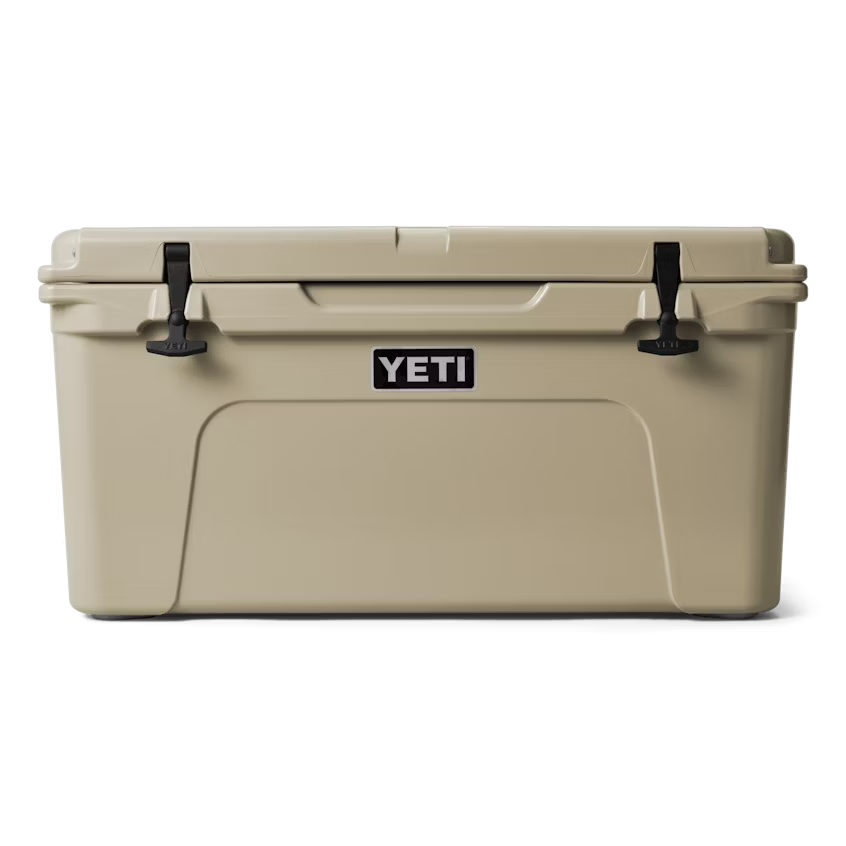
YETI Tundra 65

Buy Here

Key Features:

  • Storage Capacity: 65 Qts
  • Weight: 30.03 lbs
  • Warranty: 5-year warranty

Pros:

  • Rugged and simple design withstands abuse
  • Holds ice incredibly well
  • Sturdy and can double as a casting platform

Cons:

  • Fly line will occasionally get caught on handles
  • Expensive

YETI is a giant in the cooler world, responsible for bringing the first roto-molded cooler to market. To this day, that design holds up, earning the YETI Tundra 65 its spot as the best overall in our list. The 65 Qt size is a perfect middle ground. It has ample space for a multi-day camping trip and doubles as a great boat cooler. In addition, YETI’s rotomold design is as bombproof as it gets. We’ve dropped ours a fair share of times with only the smallest scuffs and scratches to show for it. 

When it comes to holding ice, the Tundra is more than capable of holding ice for days, even on hot summer days. Our one gripe with this cooler is the handles will occasionally snag your fly line if you plan to use it as a casting platform. That said, the handles can be removed and turned around to sit flush and prevent this problem from happening. For its versatility and reliability, the YETI Tundra makes the cut for our longer drift boat trips, along with our other favorite essentials.


Best Value

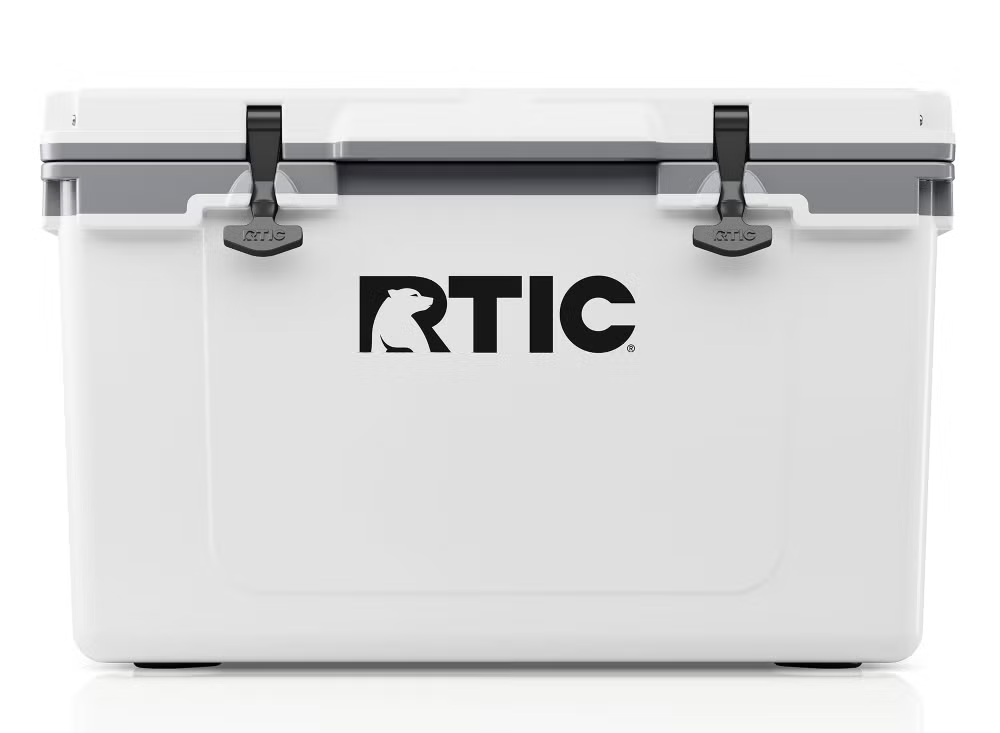
RTIC 52 QT Ultra-Light

Buy Here

Key Features:

  • Storage Capacity: 52 Qts
  • Weight: 21 lbs
  • Warranty:  3-years

Pros:

  • Great value
  • Lightweight but durable design
  • Holds ice incredibly well

Cons:

  • Not as durable as RTICs Ultra-Tough line
Photo courtesy of RTIC.

RTIC came into the cooler space with the goal of delivering premium products for a fraction of the price. Their Ultra-Light line is no exception. As its name implies, the RTIC Ultra-Light coolers use roto-molded injection and weight-saving technology to lighten the cooler by up to 30% compared to its competitors. That is a large claim, but in testing on the water and lifting this cooler in and out of boats, we found it significantly easier—even when loaded up. The real dealbreaker for us is the price point. At $200, you get a lightweight cooler that holds ice and several accessories included. While it may not be as rugged as their Ultra-Tough line, the lightweight construction showed no signs of failing anytime soon. 


Best Soft Cooler

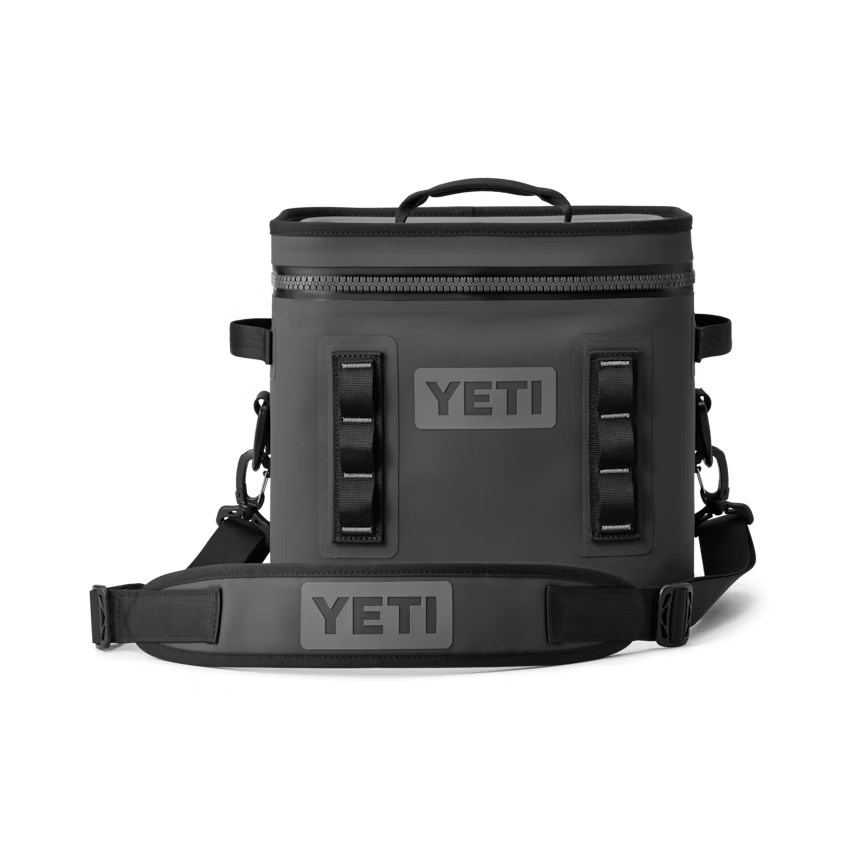
YETI Hopper Flip 12

Buy Here

Key Features:

  • Storage Capacity: 12 Qts
  • Weight: 3 lbs
  • Warranty: 3-year warranty

Pros:

  • Lightweight and easy to pack for day trips
  • Ample storage space for a day of fishing
  • The soft-shelled design is waterproof and floats

Cons:

  • Expensive
  • Not the best cooler for large groups

Recently, soft coolers have begun to take over the market. This popularity can be attributed to their lightweight and easy-to-transport design. One of our favorites is the YETI Flip 12. The Flip series comes in three sizes: 8, 12, and 18-Qt offerings. Of these, we have found the 12 to be the most useful. This size offers plenty of cold storage for lunch and beverages, along with a few snacks. Its soft-sided design makes it easy to transport whether wading or floating a river. In addition, YETI pairs this bag with a YKK zipper. This fully waterproof zipper allows the Flip to double as a dry bag, keeping essentials dry or keeping ice in the cooler. It is currently offered in seven colorways for all anglers’ liking.


Best Backpack Cooler

ICEMULE Boss

Buy Here

Key Features:

  • Storage Capacity: 30 L
  • Weight: 7.5 lbs
  • Warranty: Lifetime

Pros:

  • Comfortable backpack straps
  • Additional pockets for added storage and fishing gear
  • Roll top design is waterproof

Cons:

  • Expensive

The Boss from ICEMULE is a backpack cooler that set out to solve the main issue we have with backpack coolers—storage. Unlike traditional backpack coolers that have a central compartment and no other storage, the Boss has two side pockets and a main front pocket. For fly anglers, this opens up the possibility to pack a cooler and all the essential gear at once. In addition, the Boss, at 30L of dry storage, has ample cold storage. Rounding out the pack are two padded shoulder straps and a padded waist strap to disperse the weight of heavy loads. Like other soft coolers, the waterproof design also doubles as a dry pack in a pinch.


Best for Day Trips

Pelican 30QT Elite

Buy Here

Key Features:

  • Storage Capacity: 32 Qts
  • Weight:21.67 lbs
  • Warranty: Lifetime

Pros:

  • Push button latch closures
  • Holds ice incredibly well
  • Added cupholders on the lid come in handy

Cons:

  • Expensive
Photo courtesy of Pelican.

Pelican, a company known for its hard cases, implemented its technologies into coolers, and they are a winner. The Elite line features several sizes and configurations, but the 30-qt model is ideal for day trips. Whether on the drift boat or in a truck bed, the Elite 30QT gives anglers the perfect amount of cold storage for a day on the water. It does so without taking up too much space and getting in the way of effectively fishing. On this particular cooler, Pelican opted to mold cup holders and a tape measure into the lid. Having this extra security definitely comes in handy when floating down the river and keeping your drinks in place. In addition, this cooler gets the same push button latches found on Pelican hard cases. These latches are easy to operate and secure flush to the cooler, making it nearly impossible for line to jump off the deck and getting snagged.


Best Floating Cooler

Rugged Road 65 V2

Buy Here

Key Features:

  • Storage Capacity: 65 qts
  • Weight:13 lbs
  • Warranty: Lifetime

Pros:

  • Incredibly light
  • Reversible lid with cup holders
  • Floats upright

Cons:

  • Not as durable as traditional roto-molded coolers
Photo courtesy of Rugged Road.

Every cooler on this list will certainly float, but the Rugged Road 65 V2 is the only cooler that floats upright. Now, we don’t expect you to be wading through the river with a cooler attached to your waist, but this does come in handy. If you’re anything like us, your life revolves around the water. Inherently, you’ll find a situation where this comes in handy, like floating the river in the summer. This cooler also made the list for its incredibly lightweight design. At just 13 pounds, this cooler comes in at half the weight of roto-molded coolers. That said, this cooler is not roto-molded, but the team at Rugged Road made sure it would hold its own in terms of durability. The last handy feature is the reversible lid. One side is flat, and the other has cup holders, so depending on your needs, you can change it on the fly.


Final Thoughts

A good cooler can go a long way on the water. Keeping your drinks iced down and cold on a hot summer day is a welcome treat when baking in the sun. With the cooler market exploding, it can be hard to find the best cooler for your money. Take into consideration your fishing style and the sizing requirements of any cooler before you make the investment. This guide to the best coolers for fly fishing should help steer you in the right direction with thoughts of warm summer days and rising fish on the horizon.


Best Headlamps For Fly Fishing 2024

The Best Rain Gear of 2024

Angler Story of the Week: Catching a Fish Without a Fly Rod?

A Note from Elmer Pillon (@captainelmerpillon)

“After being inspired by Flip at the BTT symposium, I had to give it a try. catching my first fish( a snook) on fly with no rod was super exciting and challenging at the same time. Now it’s time for a big one!” Captain Elmer Pillon

Angler Story of the Week from Captain Elmer Pillon, be sure to follow Elmer’s instagram at @captainelmerpillon! 


Check out the articles below: