

There are some things that feel like they should go together but just don’t. Things like stripes and polka dots, thin chips and thick dip, and any movie with both Emily Blunt and Dwayne Johnson (Jungle Cruise sucked). Yet perhaps the biggest should-work-but-doesn’t mismatch in all the world may just be trout fishing and summertime.
While the long days and warm, beautiful weather make summer seem like the perfect time to head down to the river with your fly rod, the fact is that trout are cold-water fish. They’re most active in water temperatures ranging between 50 and 65 degrees and prefer cooler, overcast weather in the 50 to 70 degree-ish range. While these preferences can make fishing relatively easy in the spring and fall, during the heat of summer, it can make fishing for trout fall flatter than Blunt and Johnson’s chemistry in The Smashing Machine (I barely got through it). Yet, all your summer fly fishing ambitions need not be lost, as long as you’re willing to change your tactics and fish at the right times and in the right places.
Think Small, Fish Small
While your big foam hoppers, leggy nymphs, and monster creature streamers may work in the early summer, during the latter part of the season, you should start sizing down. As the water warms up, oxygen levels get low, and trout become sluggish and even timid in their feeding habits. They stop chasing down big bugs and baitfish in the current and begin to hold in place and meander in circles, grazing like cattle on whatever smaller offerings are available.
Now we’re not talking about throwing minute midges or size 22 Perdigons as you do during the winter. Instead, during the late summer, you should start toning and sizing down the flies that were working well before the heat wave. Instead of big, gaudy summer flies, switch out to smaller, more natural-looking dry flies, English-style nymphs, and discreet, lightly weighted streamers, all of which will continue to land you trout in hot weather.
Another thing to keep in mind is that trout tend to stack up in the heat. Instead of being spread out along the entire river, the fish will be more concentrated in spots where they can easily rest and feed. Accordingly, you’ll want to thoroughly fish your flies through smaller, fishy-looking sections of water. Instead of walking or floating down the river and continuously working the banks and hitting every spot in sight, slow down and make multiple drifts through good-looking water. You may be surprised with just how many trout come out to play in a single pool or run.
Fish Early and Fish Late
Though those sunny, blue sky summer afternoons may seem like the perfect time to go fishing, the truth is that it may be one of the worst times to target trout during hot weather. When the sun hits its zenith during late summer, trout move into deeper water and shady cover, becoming lethargic and hard to convince. However, both before and after these afternoon siestas, the fish can be ravenous, making the early morning and late evening absolute prime times to be on the water.
Start your fishing day a few hours before sunrise when the water is still cool, and the fish are more active. Concentrate on cut banks, riffles, and shallow current seams where trout feel secure and are willing to feed as soon as the sunlight hits the water. It’s a fantastic time for fishing large dry flies like hoppers and big parachute patterns, as after a long night of inactivity, the fish won’t be too picky, especially in the shimmering light of early morning.
The hours before and after sunset are another excellent time to be on the water during summer heat. Not only is it beautiful, but as the light fades and the air cools, trout will move out of their deep-water hiding spots to feed on anything and everything they can find. It’s an excellent time for working over bank edges, tail-outs, and shallow flats with both dry flies and streamers as the trout can become extremely aggressive. In addition, if there’s a hatch going on, the stillness of late evening is an excellent time to find pods of rising trout in calm, flat water pools where they can make for easy pickings.
Targeting Fast Water
If you’re looking to catch fish throughout the entire day during the late summer, your best bet is to fish in faster water. Rapids, riffles, waterfalls, and other areas where the water gets churned up have higher oxygen and more active fish. Yet catching anything in these fast-moving spots can be a real challenge if you don’t fish them correctly.

Nymphing in fast water is easily the most productive way to catch fish during late summer heat. The best way to do it is by clipping on a large amount of weight about 2/3 of the way down your leader and then adding an indicator near the top. Tie on a pair of nymphs below the weight so that you have 2 to 3 feet of unweighted line between your flies and split shot. Ideally, this will allow you to cast directly into the fast water where the weights will quickly sink your nymphs down into the strike zone. Make a few fast mends as soon as your flies hit the water so that they will be drifting at the same speed as the current by the time they reach the slower water below the rapids. Then set the hook hard anytime your indicator twitches, dips, or hesitates.
If you’re a dry fly junkie looking to hook up in faster water, you want to use larger, more buoyant flies. Choose bulky patterns made of foam or deer hair that float high in the water and then smack them down hard along the edges of where the fast water slows down between and behind rocks and riffles. The key is to make an impact on the surface around the fringes of the rapids and not on the slower water. Ideally, this splash down will attract a trout’s attention and cause them to make a quick decision about eating the bug before it gets away.
A Cautionary Tale
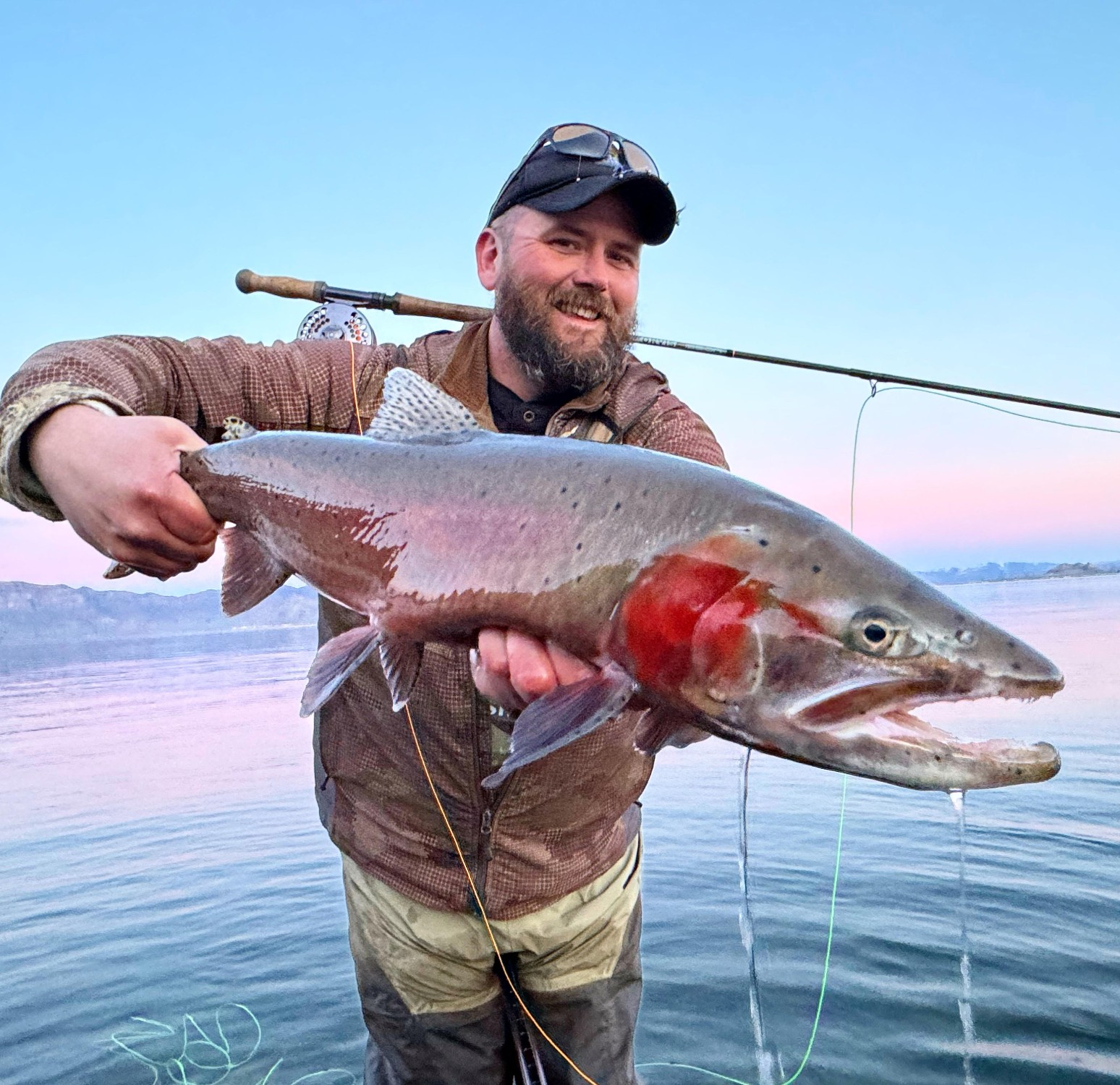
Regardless of how or how much you want to catch trout during the summer, the fact is that you need to do it carefully. When the water temps warm up, trout get stressed out and will quickly die if they’re messed around with too much. So, fish responsibly by using heavier leaders that will help land fish quickly. Once you’ve got a trout in the net, don’t try to get your hero shots; just take a quick picture of the fish in the water and then send them on their way.

As previously mentioned, trout are cold-water fish, and as responsible anglers, we need to respect that fact. If water temperatures in your area exceed 70 degrees, it’s better to give up the ghost and leave the trout alone until the water cools down. After all, there are a lot of warm-water species that are happy to take a fly, and if anything, you can use the extra time off the water to enjoy a summer blockbuster—I hear Jungle Cruise 2 is supposed to be pretty good.