

Long Haul Gear Reviews are based on time spent in the field, not in the showroom. No gimmicks, no fluff, no marketing hype—just honest takeaways from putting gear through the wringer. When you’re wading through current with a camera in tow, hauling tackle on a salt-sprayed skiff, or hiking valuable gear into the backcountry, a pack that keeps water out isn’t a luxury—it’s a non-negotiable.

The YETI Panga Backpack 28 hit the market in 2018 as part of YETI’s push into waterproof soft gear. Over the past three years, I’ve had the chance to see whether it’s truly built for the wild. It’s been dragged through tidal marshes, salt flats, and glacial rivers; stuffed into canoes and skiffs; jammed into airplane overheads; and hosed off more times than I can count.

YETI
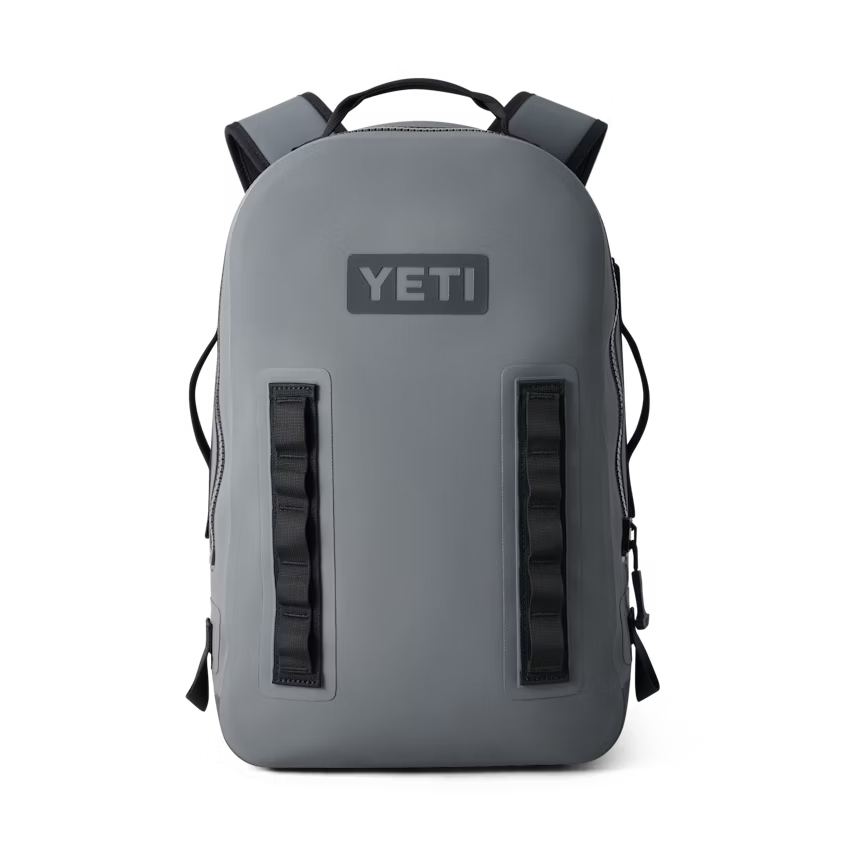
Panga Backpack
Specs:
- Dimensions: 12.5”W x 7.0”D x 19.7”H
- Volume: 28 liters
- Weight: 3.9 lbs
- Material: ThickSkin shell (high-density nylon + TPU laminate)
- Zipper: HydroLok (fully waterproof, airtight)
- Pockets: One main compartment, internal mesh pocket, laptop/hydration sleeve
- MSRP: $300
Pros:
- Fully submersible
- Puncture-resistant ThickSkin shell
- Three-year warranty
- HitchPoint Grid is compatible with attachable accessories
Cons:
- Not the most comfortable for all-day wear
- Minimal organizational features

The Skinny:
The YETI Panga 28 is a premium waterproof pack designed for harsh, wet environments. It’s not built for casual commutes—it’s built for situations where keeping your gear dry is essential. Overbuilt, simple, and tough, it starts to justify its price tag if you’re rough on gear or operate in consistently wet conditions.
The pack’s ThickSkin shell is seriously durable and handles fishing-related abuse with flying colors. The internal layout is minimal: a sleeve along the back panel and a small zippered mesh pocket on the front. There are no exterior pockets, but the HitchPoint Grid lets you attach add-ons like the SideKick Dry or Rambler Bottle Holder. The chest and waist straps are removable, and the HydroLok zipper is both waterproof and airtight once sealed.
YETI includes a three-year warranty—and that’s important.

The Time Test:
I’ve used the YETI Panga Backpack for over 3.5 years in demanding environments—from the Alaskan bush to saltwater flats in Ascension Bay to remote atolls in French Polynesia. I’ve waded waist-deep and even swum across channels with it on my back, fully loaded with camera gear and tackle. Not once has it let water in.
The zipper requires occasional lubrication to keep sliding smoothly. YETI includes a small tube of lubricant with the pack, and a quick application now and then keeps the seal working as it should.

Comfort-wise, it’s not ideal for long hauls with heavy loads. While the chest and waist straps help, this isn’t a hiking pack—it lacks ventilation and padded support, which can make it feel hot and heavy over time.
It also isn’t the easiest pack to access while wading. The top-load design and waterproof zipper slow things down, especially when you’re standing in water. That said, the volume and protection make the tradeoff worth it in my use case. I use it mostly on boats and less frequently when wading.

If you’re looking for a pack strictly for wading—and don’t need to carry much—a sling-style option might suit you better. But for bulky items like camera gear, slings fall short. The Panga’s capacity wins out for me.
After about 2.75 years, one of the zipper teeth broke. While the pack still held a seal, I filed a warranty claim for peace of mind. The process was smooth: I submitted a photo and proof of purchase (an email receipt from YETI worked fine). I had the option to send the old one back first or get a replacement upfront with a refundable credit card hold. With some trips quickly approaching, I chose the latter—no issues at all. A brand-new pack arrived with a fresh three-year warranty. That level of customer service is one of the reasons I stick with YETI.

My Recommendation:
If you spend serious time in wet, rugged environments and need to protect valuable gear, the YETI Panga Backpack is absolutely worth considering. It’s purpose-built for anglers, photographers, and explorers who can’t risk soaked equipment. After more than three years of use, I can say it lives up to its reputation.
There are trade-offs. It’s not the most comfortable for full-day hauls, and it’s slower to access on the water. But if waterproofing, durability, and carrying capacity are your top priorities, this pack stands in a league of its own. The ThickSkin shell is nearly bombproof, the zipper does its job (with basic maintenance), and the warranty backs it all up.

There are workarounds for the bulk if you’re willing to get a little creative. When I wade the flats and only need a few key items—say, for bonefish or redfish—I un-Velcro the SideKick Dry and wear it around my waist with a wading belt. It gives me quick access without hauling the whole pack. Back on the boat or beach, I simply reattach it and I’m good to go. It’s a small adjustment that adds a lot of flexibility.

At $300, the Panga is an investment—but if you’re hard on gear and constantly dealing with wet conditions, it’s one that pays off. For me, the peace of mind knowing my camera, tackle, and essentials are bone dry is worth every penny.
Article by Flylords Food Editor Kirk Marks, an angler, photographer, and culinary aficionado based in Kent Island, Maryland. Give him a follow at @kirkymarks.

