
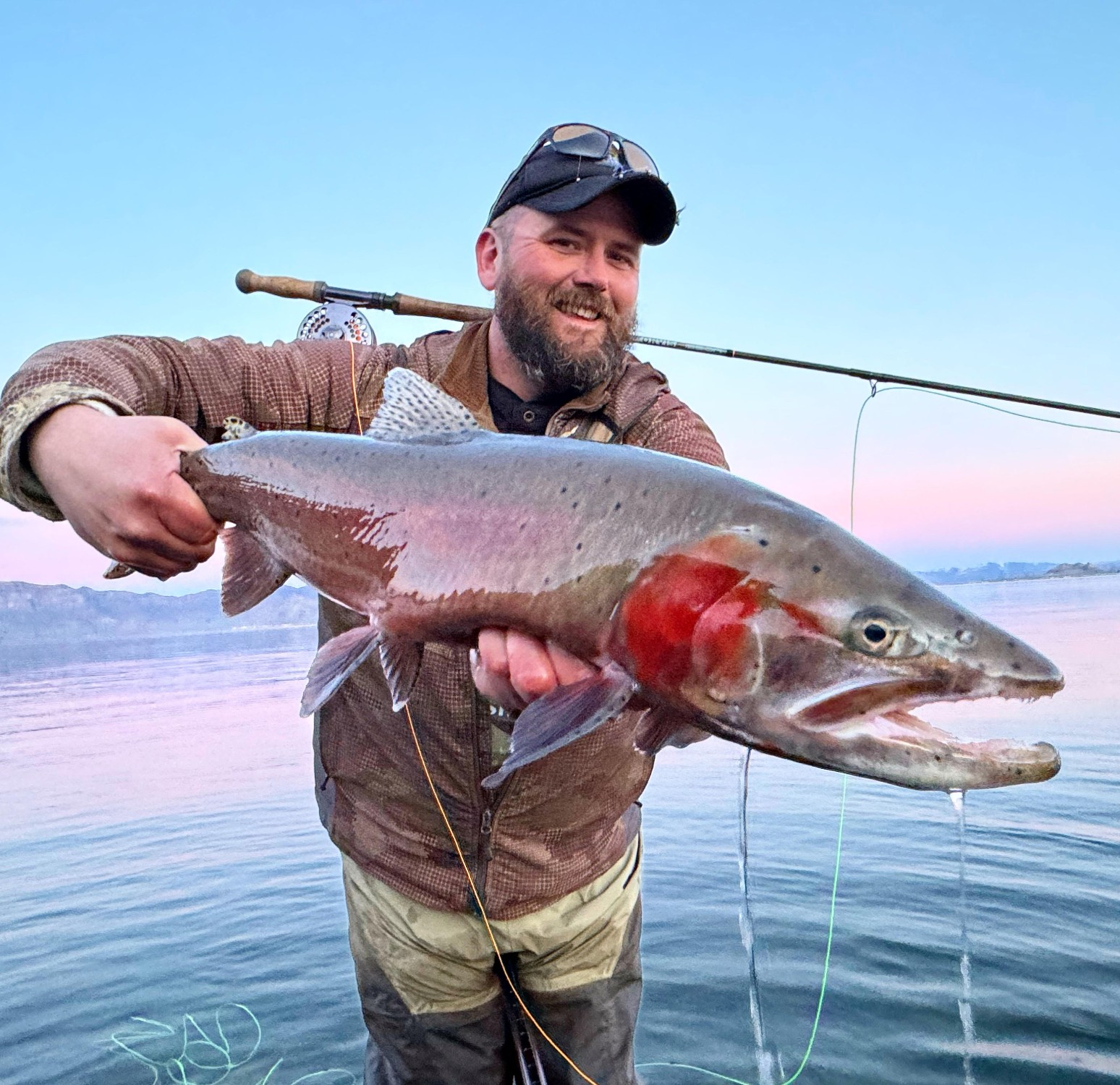

I caught my first pike on a fly rod long before I had even tried to catch a trout. My grandfather had a giant pike mounted on the wall in our family’s cabin growing up, and my brother and I became obsessed with catching its equal. So, every spring, as soon as the ice was out on the local lakes and rivers, the two of us would head up to the cabin to hunt big pike on the fly.
In my opinion, pike are the perfect fly rod quarry. As voracious super-predators, pike attack flies with a malevolence that few other gamefish possess. Yet at the same time, they can be more finicky than an old brown trout in a spring creek, especially during the spring post-spawn period. During this time, these normally deep-water hunters patrol the shallows, presenting fly anglers with a fantastic opportunity to tangle with a leviathan. Yet, as aggressive as they are, catching pike on the fly consistently, especially the larger trophy-sized fish, can be challenging, as you must hunt them with the right equipment at the right place and time.
The Right Stuff
You flat-out can’t fish for big pike with light gear. Not only are the fish powerful enough to snap your typical 5-weight rod like a twig, but with their razor-sharp teeth, they will shred line, leader, tippet, and flies like a buzzsaw. Fishing for big spring pike is like going into battle, and accordingly, you want gear that is strong and durable to withstand a lot of punishment.

Fly rods for pike should be in the 8-weight to 10-weight range. These larger rods offer ample leverage and are ideal for both fighting big fish and casting large flies. In spring, most of the big post-spawn female pike you’re after will be in 3 to 10 feet of water, so the heavy, full-sink lines pike anglers use in summer and fall aren’t necessary. Instead, string your rod with a floating weight-forward fly line, preferably one with a short shooting head that’s designed for long-distance casting. This will help you cover ground when blind casting in big chunks of pikey-looking water and is ideal for making long, accurate casts when sight-fishing for spooky pike in clear shallows.
Big pike are rarely leader shy, so use heavy 20lb to 30lb leaders and tippet, which will also help turnover larger flies at a distance. Finally, while a lot of anglers believe shock tippets are enough, I’ve found that tipping your leader with at least 18 inches of 20lb to 40lb bite wire is the only way to truly protect your line from a pike’s gnashing teeth.
Take Your Temperature
Knowing the water temperature is vital for spring pike success. Pike move into shallow water to spawn right after ice out and then begin feeding during daylight hours when water temps in the shallows reach 45 degrees. They will continue to hunt, feed, and live in the shallows until water temps reach the mid-50s. So, whenever you find a likely looking spot, take your water temps often and concentrate your fishing efforts in areas that are in the sweet spot 45-55 degree temperature range.

In the early part of the season, target shallow bays that are between 2 and 4 feet deep with darker colored bottoms where water temps will rise quickly and stay steady throughout the day. This usually happens first along the western bank of lakes, ponds, and rivers, which get the most sun, making them ideal starting points for a spring pike hunt. Pay extra attention to any areas with standing vegetation like cattails, or any spots with adjacent marshes, shallow inlets, or flooded shoreline grasses where pike have likely spawned.
During late spring, when water temps begin to tickle 50 degrees or higher, move out into deeper water between 5 and 10 feet. Start targeting areas in the back of coves and at the mouth of bays where lighter colored bottoms, like sandbars and gravel flats, reflect a lot of light. These areas make ideal hunting grounds for big, post-spawn pike as water temps remain cool while also providing a smorgasbord of prey like baitfish and pre- and post-spawn panfish and bass.
Elephants Eat Peanuts
While the old saying of “big flies catch big fish” applies to pike, it’s not the best idea to fish the biggest streamers you can find during the spring season. This is especially true during the early spring when water temps are cold, and pike are still drained from spawning. Instead, at least during the early season, try fishing with smaller, trout-sized fly patterns, and you’re almost guaranteed to connect with more fish.
My favorite early spring pike patterns are small to medium streamers that can be fished slowly and right along the bottom. The most productive flies are usually made of materials that create a lot of movement and action in the water without needing a lot of influence from the angler. Small 3-inch to 5-inch, lightly weighted streamers like Conehead Bunny Leeches, Clouser Minnows, and even crayfish patterns like the Belly Bumper are ideal for this sort of work, as you can sink them to the bottom and then twitch and jerk them around like a wounded or dying baitfish. They’re also great options for sight-fishing in the shallows, as you can drop them right off a big pike’s nose without spooking them off.

As water temps begin to rise into the 50’s, start fishing with slightly larger 6-inch to 8-inch streamers that you can cast a good distance to draw in cruising pike. Flies like the classic Pike Bunny are a go-to during this time, but I’ve also had a lot of luck with articulated trout patterns like the Double Deceiver, Cj’s Sluggo, the Flatliner, and Slick Willy, which can all be jerked, twitched, and paused just under the surface, ringing the dinner bell for big hungry pike.
Fish Your Way Out
Sticking and moving is the name of the game for spring pike fishing. In most lakes and large rivers, big pike will spread out and hunt any large bay or cove that fits their needs. Catching these fish consistently means covering water by moving from one likely looking spot to another. Work over each area thoroughly by sight fishing or by blind casting at different depths until you strike toothy paydirt.

Start fishing for spring pike in the shallowest water you can find. Cast right along the bank edges, paying extra attention to any areas with a lot of vegetation or structure where pike may be waiting in ambush. Once you’ve worked these shallow spots, move a few yards out into slightly deeper, more open water and then fish through it as well. Try to spot cruising pike where you can, but otherwise just make long casts and cover as much water as possible.
Keep moving and fishing your way out further into open water until you reach the first distinct drop-off where the water is deeper than 10 feet. Once you hit the drop, pull stakes and move on to the next shallow, pikey-looking cove and start the process all over again.
A Short Happy Season

Spring pike fishing is like going on safari with a fly rod in your hand. You move as slowly and quietly, peeking around every corner and casting at every dark shadow with your entire being on edge. You’re stalking a predator, and it feels like at any second, something may come charging out of the darkness to drag you into a bare-knuckle fight of slashing teeth and drag screaming runs. This makes every spring pike you land feel special, for when one finally appears behind your fly, cruising along like a sentient torpedo, you suddenly know what it feels like to be prey. It’s a hell of a rush that will keep you coming back for more.