
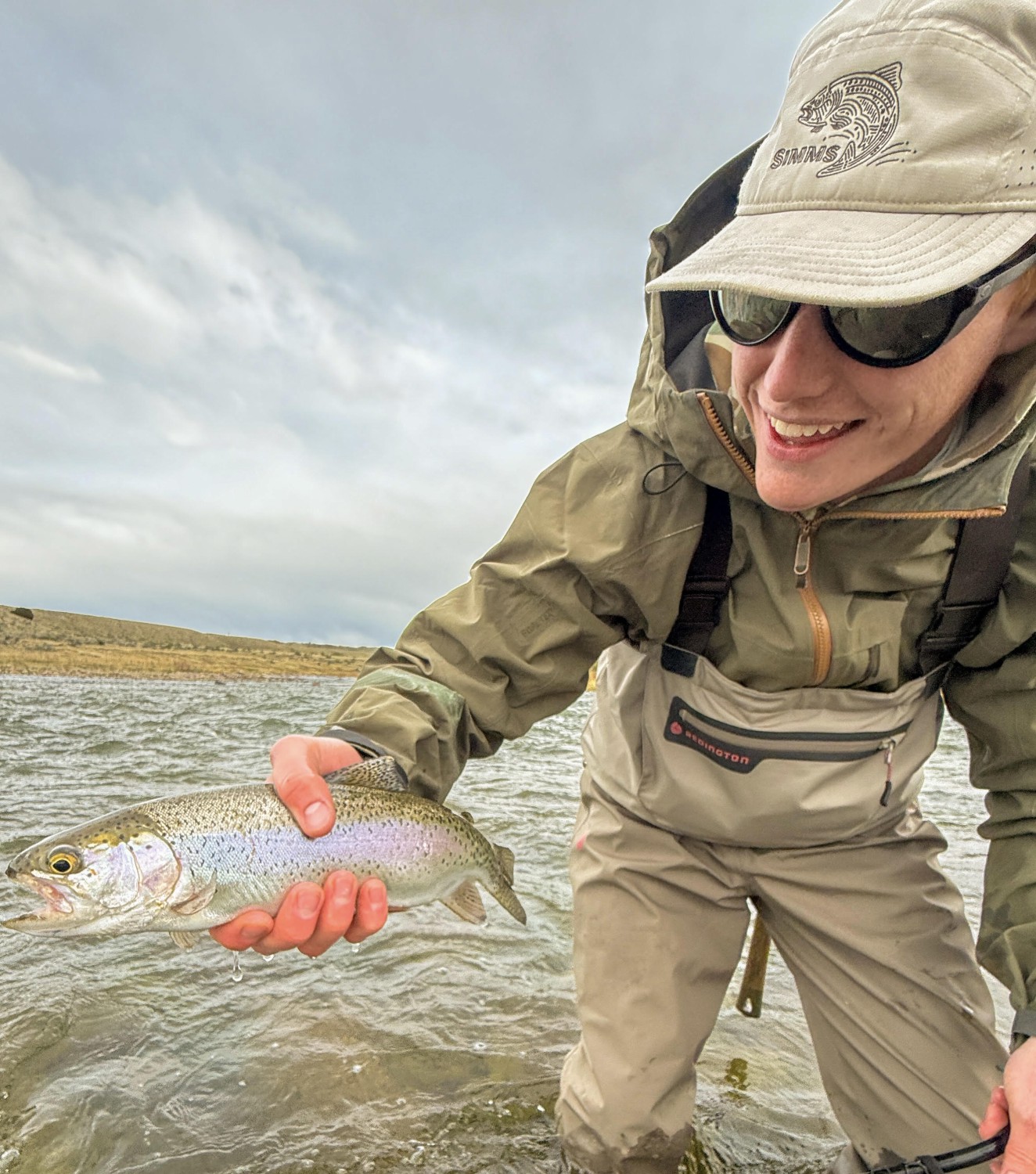

When most anglers hear the term stockie, they picture something similar: a worn-down, dull rainbow trout with no hesitation in its gills. While this is the unfortunate truth for many, it’s not the reality for all stocked trout.
Hatchery-raised trout are raised worldwide for many reasons: to create fishing opportunities, rebuild dying populations, bring fish into waters that wouldn’t naturally support reproduction, and sometimes to control other fish populations. Because of this need for stocking trout, fisheries managers have started to explore hybrids, selective breeding, and sterile fish; in return, we have seen some pretty crazy fish come from hatcheries.
It’s important to understand that each of these is not its own separate species. Some are just hybrids between two species, and others are strains bred just for their unique colors. Some have been heavily stocked, and some have never made it out of the hatchery. Enough said, let’s get into some unusual hatchery trout!
Tiger Trout

Tiger trout are probably the most well-known stocked trout out there. Tiger trout come from crossing a female brown trout with a male brook trout, giving these trout that classic maze-like look, inspiring the name. Brown trout and brook trout have different numbers of chromosomes, which means that tiger trout are sterile for the most part. So hatchery owners can use this to create a fish for anglers without risking creating another naturally occurring species in the area.
Tiger trout are pretty serious competitors. They eat insects, smaller fish, and anything else they can get their jaws on. Sometimes they get used for taking care of unwanted fish in an area. They’re very pretty, aggressive, fight hard, and are willing to eat almost all flies, making tiger trout one of the most desirable species for trout anglers.
Splake
A splake is a cross between a female lake trout and a male brook trout. The name combines “speckled trout,” a common name for brook trout, with “lake trout.” Unlike the tiger trout, splake are a mixture of two different species in the char family, and it’s fairly common to see characteristics from both parents; some of the most common are the vermiculation and colorful fins that come from the brook trout. The longer body shape and deep forked tail come from the lake trout.

Typically, you’ll find splake in cold lakes and reservoirs because they grow much faster than lake trout and usually are easier for anglers to catch. Luckily for us, you will find a lot of splake trout in shallower areas (especially in the colder months), the opposite of typical lake trout, which are tricky to reach from shore. The best way to target these fish is with streamers, baitfish patterns, and leeches.
Golden Rainbow and Palomino Trout
If you ever come across a stunning bright yellow trout hanging out in a stocked pond, it was almost certainly a golden rainbow or palomino trout. Don’t let the name fool you; these fish are not the same as the infamous native golden trout. They are actually a variation of rainbow trout that began with an unusually colored rainbow trout found in a West Virginia hatchery in the 50s. That hatchery selectively bred the fish until they eventually produced the modern bright golden strain we see stocked today.

That original golden rainbow was then bred with normal colored rainbows, eventually leading to the creation of palomino trout. At one point, the palomino trout had coloring that was uniquely between the parents, but now they are really seen as interchangeable names. These fish are mainly bred for the novelty of their look and ease of finding in the water, but unfortunately for the trout, osprey, eagles, and herons agree.
Puccini Trout
Puccini Trout have to be my favorite on the list in regards to their looks; they are a better-looking version of a brown trout. Puccini Trout are very recognizable from their large red and orange spots. Puccini trout are selectively bred brown trout from Italy. They get their name from the Puccini trout farm in Tuscany’s Casentino Valley; breeders there have selected certain trout for their unique coloration for generations.

Now Puccini trout have been released into a pretty limited number of Italian fisheries, most notably the Tevere Tailwater between Tuscany and Umbria. They are an extremely rare breed with very unnatural but sweet coloration. This has made them quite famous among avid anglers, photographers, and anyone else who appreciates the beautiful look of these fish.
Stocking Done Right
Stocking trout isn’t always as simple as it seems. Hatcheries have to consider numerous factors, like food sources, disease risk, native populations, genetics, and a whole lot more. But when done right, we’re left with healthy fisheries and some of the most unique trout in the world.