
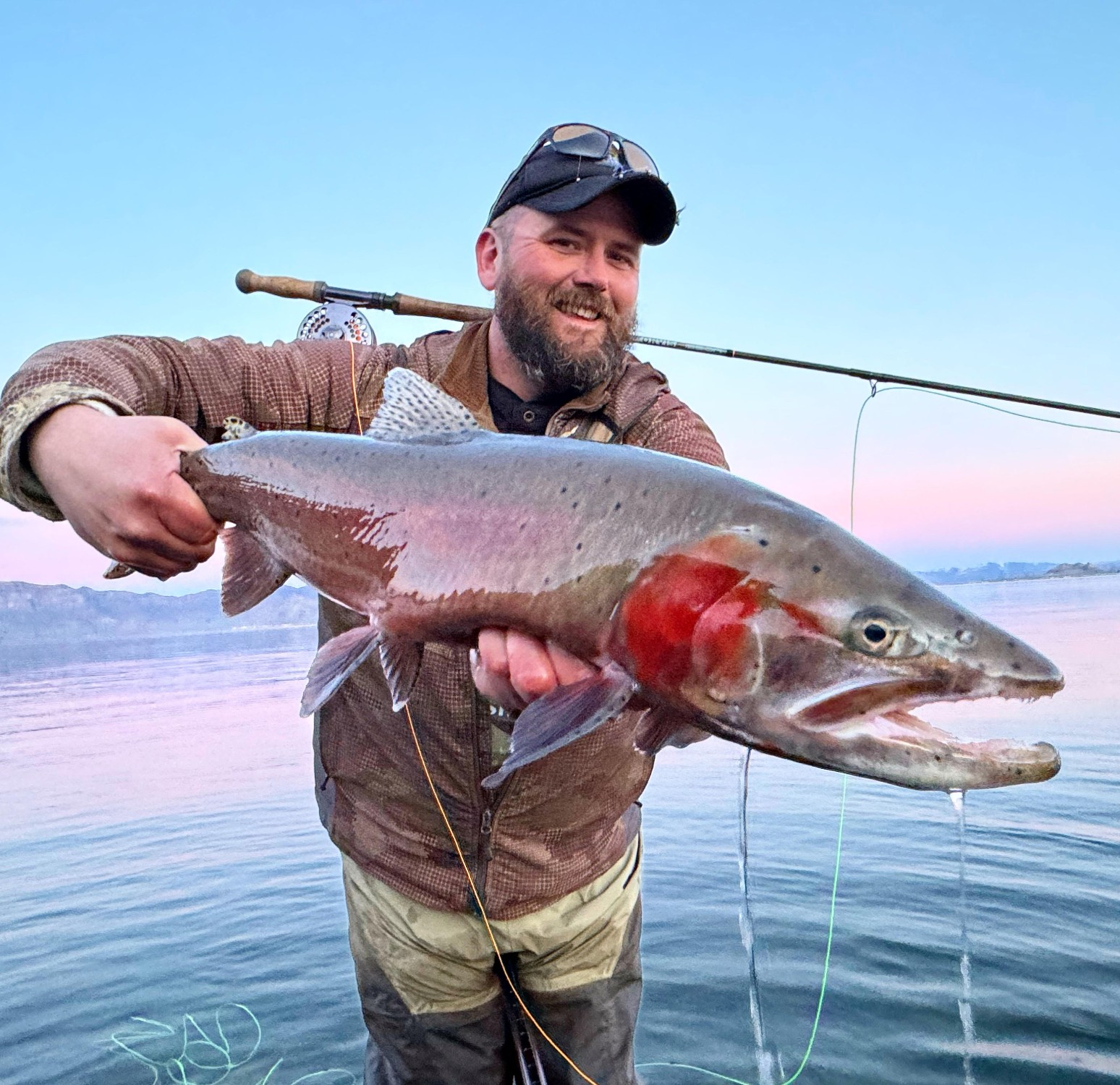

When it comes to fly fishing for trout, I’m a complete streamer junkie. No matter where I’m fishing, what hatch is happening, or what flies are actually working, I’m always looking for an excuse to tie on something big and ugly and go searching for a monster. It’s an obsession that will see me chucking meat through the spring, summer, fall, and even winter.
Most anglers think of winter trout fishing as a time to use smaller flies and delicate presentations. While this is true, I’ve found that when the action is slow, fishing streamers during the winter is an awesome way to connect with trophy-caliber fish that every angler dreams about catching, so long as you’re using the right flies and know where and how to fish them. Over the years, I’ve developed several techniques and tips for consistently catching winter trout on streamers. Here’s what you need to know.
Why Winter Streamer Fishing Works
One of the reasons that winter streamer fishing is so effective is that it offers trophy-sized trout a trophy-sized meal during a time when calories count. In the cold waters of winter, a trout’s metabolism slows down, and they don’t want to eat as often or work as hard for their food as they do in the summer. So, like offering a half-frozen, starving man a porterhouse steak instead of a bag of peanuts, these conditions make it much easier to convince larger fish to chow down on a single large meal rather than several smaller ones.

My favorite winter streamer flies are patterns with a realistic profile that create a lot of action without requiring much movement. These include sculpin patterns like Mike’s Meal Ticket, The Bank Robber, and Galloup’s Sex Dungeon, which can be both dead drifted and/or bounced along the bottom in slower water. I also like to use a lot of medium to large baitfish patterns like the Double Deceiver, Grajewski’s Yard Sale, and Kill Whitey, which can be flicked, jerked, and paused on the retrieve to imitate a wounded, easy-to-catch meal.
A Quick Word on Leaders
While the same larger 6-weight and 7-weight rods will work just fine for winter streamer fishing, you do want to make sure to lighten your leaders and tippet. The traditional 15lb to 20lb test line you use during spring and autumn will stand out like a suspension cable in the low-clear water of winter, so toning things down to 10lb or even 8lb test fluorocarbon lines is a very good idea. While this may lead to losing a few more bugs to the bottom, it will also ensure that you get more strikes from spooky winter trout.
Slow Things Down
Unlike during the spring, summer, and fall when you rip and strip your streamers like a maniac, winter streamer fishing is all about slowing things down. You want to work your bugs patiently and methodically so that they swim and bump along the bottom, offering sluggish trout an opportunity they can’t resist.

The most effective way I’ve found to slowly fish winter streamers is by dead drifting them with the current. To do this, cast your fly upstream of your target area and then make a slight downstream mend, which will create a bow in your line, causing the current to slowly drag your fly through the water. As your fly drifts, add in the occasional twitch and flick with your rod tip just as it’s about to hit bottom so that it looks like a baitfish on its last legs. Strikes will come as either a gentle tick or a sudden heavy feeling, as if you’ve gone from drifting through water to drifting through syrup. In both cases, set the hook hard.
Another effective way to fish winter streamers, especially when targeting areas of the river with very little current, is with long, slow strips. Make a cast, then work the fly back towards you with methodical, crawlingly slow strips that barely increase the tension on the fly. This slow stripping action will cause your fly to slowly rise and fall back towards and even bounce off the bottom, ringing the dinner bell and causing any hungry winter trout in the area to come over and investigate.
When and Where to Fish
Fishing the right depth is incredibly important to winter streamer success. Depending on the weather or the time of day, winter trout will generally be found either in the deepest, slowest-moving pools or in the shallow dead water right along the edges of the bank. Both areas of the river are fantastic spots to connect with big winter trout on streamers, though you want to make sure you’re fishing them at the right times and under the right conditions.

In the early mornings, during cold fronts, or on extremely overcast days, concentrate your fishing efforts in the deeper pools and try to keep your streamer right on the bottom. During these times, the deeper water offers more consistent water temperatures compared to shallow, faster-moving water, making them ideal places for the trout to gather and feed.
On brighter days, the shallow edges of the bank will draw in more trout. This is especially true in areas with sandy or light colored bottoms, as the light reflection will cause the water temperatures to rise much more quickly. These shallow edges are ideal dead drift spots as currents are usually moving slowly enough to make your streamer swim slowly and naturally.
The Swing is The Thing
If you’re fishing a large river or a stream where trout are few and far between during the winter, then swinging streamers is your best bet. It’s both the most effective way to cover water, while still working your fly slowly and methodically, so you can find a trout that wants to play.
Swinging streamers in winter a bit of a different from swinging flies at other times of the year. You want to concentrate your efforts in pools and runs where the current is flowing at a slow walking speed, and you want to ensure that your streamer is swinging as close to the bottom as possible. The best way to do this is to change your casting angle from the more traditional 45-degree cast down and across the stream to a 90-degree cast directly across, or even slightly upstream.

After you cast, make a steep upstream mend and allow your fly to sink down towards the bottom as it floats past you before tightening the line and slowly swinging it across the river. Fish the fly all the way across the current until it comes to a stop directly downstream of where you’re standing.
To keep your fly moving slowly and to add a bit of extra action, hold your rod high as the fly swings, keeping as much of the line out of the water as you can. Then you can add in some small, flicking pulses with your rod tip to cause the fly to jerk and flap a bit in the water, creating a wounded action that will often trigger more strikes.
The Frozen Chosen
It takes a special kind of angler to fish streamers in the brutal cold of winter. It’s a slow, methodical game where you must be able to stand for hours in a semi-frozen river, enduring hours of continuous casting, and work your fly with an icy determination in hopes of getting just one or two strikes. Yet when you finally do connect with winter trout on a streamer, it all becomes worth it because the fish will usually be big enough to make you forget your numb extremities as you go toe to toe with a cold-water monster and try to bring the beast to bear.