
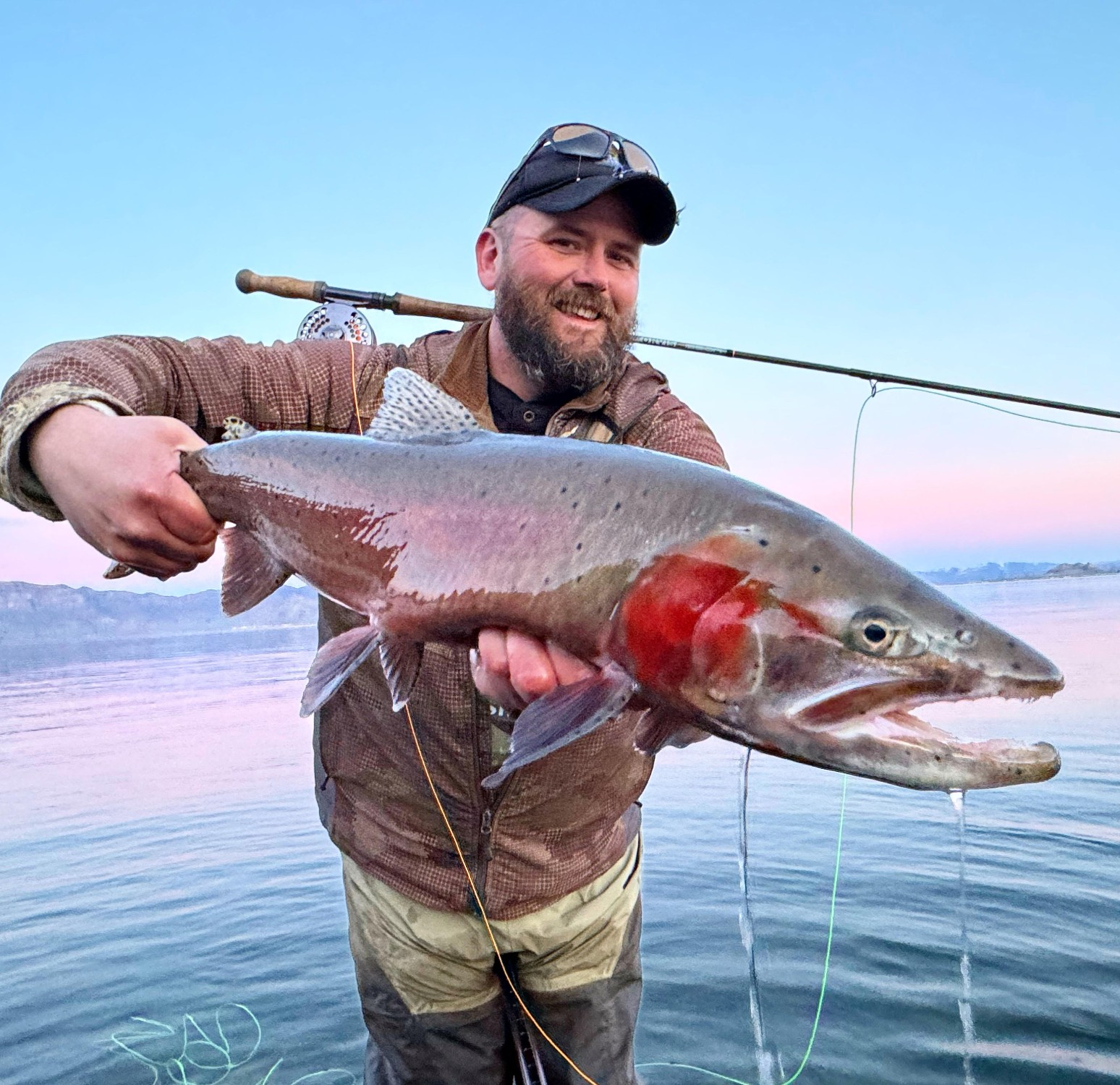

Catching winter steelhead on the swing is perhaps the greatest mystery in fly fishing. From the very start, you must deduce where in the seemingly endless miles of river that steelhead are running. Then you’ve got to find an appropriate, not-too-slow and not-too-fast spot. Finally, you rifle through your fly box to try and find a pattern to tempt a fish that doesn’t actually eat. Throughout this constant investigation, the last thing steelheaders worry about is their sink-tip, yet it’s often the most important tool on their belt.
Fishing the right sink-tip, or sinking leader, is crucial to winter steelhead success. Not only will it help you get your flies down on the steelhead’s level, but when you’re looking for a needle in a haystack, the right sink tip will help you present your fly efficiently, increasing your odds of connecting with a unicorn. With all the different types of sink-tips out there, finding the right one for the job can be a real challenge, yet there are some general rules to follow.
Know Your Sink Rates

Most sink-tips come with an inches-per-second, or ips, rating system printed right on the side of the package. Generally, these range from around 3ips all the way down to 10ips. The better ones will also be color-coded so you can automatically grab the right tip out of your leader wallet without having to do any guesswork.
Knowing the sink rate of each one of your leaders is crucial, as it essentially allows you to count down your depth after you cast. This gives you both a general idea both of how deep you’re fishing and how and where your fly is being presented to the fish.
Lighter is Better
Over my years of chasing winter chrome, the biggest mistake I’ve seen 99.9% steelheaders make is fishing too heavy. Most will automatically rig up the heftiest sink-tip they have and then dredge the bottom, snagging every few minutes and breaking off half their flies in the process before finally changing to a lighter tip. This is an error built around the idea that winter steelhead are always right on the bottom, and while this does have some merit, most anglers don’t realize that steelhead strike up.

Steelhead strike lures, flies, baitfish, or even waterlogged leaves drifting through the current (I’ve seen it happen), out of habit and/or aggression. After spending their formative years as lowly rainbows that rose and snatched insects out of the river before heading to the ocean, steelhead automatically begin to associate anything drifting over their heads with food. In addition, steelhead will also strike anything that enters their “bubble,” or the 5 to 6 inches of space in front and just above their head, out of pure aggression. This is exactly where you want your fly to be.
When you start off fishing with a heavy sink-tip that keeps your fly on the bottom, you’re essentially smacking the fish right in the face with your fly. Usually, this causes steelhead to spook rather than strike, leading to wasting time swinging back through what is now empty water. Instead of just fishing with the heaviest tip you have, start with a slightly lighter sink-tip than you think you’ll need. Fish it through the run, and if you don’t connect, gradually work your way down with faster sink-rates, and you’re almost guaranteed to get more grabs.
Weighted Leaders vs. Weighted Flies
Matching your sink-tip to your fly is an essential part of winter steelheading. Unweighted and even lightly weighted flies sink gradually and will move downstream with the current as they descend, while heavy, dumbbell-eyed fly patterns make a beeline for the bottom like the front half of the Titanic. This can have a dramatic effect on your presentation, so when you’re choosing a sink tip, take the weight of your fly into account.

Ideally, a perfect presentation for winter steelhead will see your line, leader, tippet, and fly all traveling through the water at a gradual 45-degree angle. However, if the sink tip is too heavy for the fly, your presentation will have more of an unnatural “J” shape where the fly is drifting at an angle slightly above your leader. On the other side of the coin, with a heavy fly and sink-tip combo, your presentation will usually be too steep, dredging your bug along the bottom at a 60-degree or even 70-degree angle below the steelhead’s chins.
While it can vary with the depth of the water you’re fishing, generally you want to try to match up your sink tip and fly so that they both sink at roughly the same speed. The easiest way to do this is to either stick with a heavier tip and a medium-weighted fly or to remove any uncertainty by casting different combinations into the shallow water in front of you and watching them sink. Once you find a combo that sinks on a pretty much even plane, you should be good to go.
Make Length Work For You
Selecting the right length of sink-tip is also a vital part of winter steelhead success because essentially the longer your sink-tip is, the faster it will sink. Generally, most steelheaders stick to a standard 10-foot length of whatever sink rate they deem appropriate because it’s easier to cast. Yet there are times when using a longer or shorter sink-tip can get you into more steelhead.
If you’re fishing an extremely deep but slow-flowing run where most of the fish are holding down in the center of the river, switch out to a longer sink tip instead of a heavier fly. In these situations, a longer 12-foot + sink tip will increase your sink rate while still allowing everything to plan out. It’s a great way to ensure that your swing is absolutely humming when you get to the sweet spot in the slowly flowing current, rather than having your fly sink too fast and smack into the bottom just as it gets to the fish.

Almost every steelhead angler looks for those long, pristine runs where the whole section of river flows at a walking pace. But you’re only fishing in those perfect spots; you’re passing up a lot of fish. During their upstream migration, winter steelhead will pull over anywhere they can to take a break, and those resting fish will usually grab. I’ve caught plenty of steelhead in short pockets of slow water that were directly adjacent to fast-moving rapids by using a short, heavy sink tip paired with a heavily weighted fly. By using a shorter, 7-foot chunk of heavy 8ips+ leader and a weighted fly, you’re putting a lot of sink into a very small package. It’s perfect for casting into fast water, as it will sink right through the current without getting blown downstream, allowing you to tighten up and swing your fly as soon as it reaches the slow stuff.
Elementary, My Dear Steelheader
Part of the fun of winter steelheading is that it’s like playing a giant aquatic game of Clue. To win the game, you have to figure out where the fish are, what type of water they like, and what type of fly they’ll strike. While a lot of steelheaders rush in and just start guessing by hurling things against the wall and hoping something will stick, when you know how to pick the right sink-tip, you eliminate a lot of the guesswork. When you fish the right sink-tip, you fish with confidence, so that every cast you make is taking you one step closer to cracking the case.