

If you’re anything like me, boats probably take up more headspace than you’d care to admit—not just how they look and run, but how they fish. This past year, the possibilities for dialing in a boat became a reality when I purchased my first technical fishing skiff, a Delta Boatworks Delta 18.
In this article, I’ll break down how I configured my skiff into a true shallow-water workhorse. It poles quietly in inches of water and still has the range and backbone to make long runs across choppy bays, giving me access to the full spectrum of fisheries in my area. There’s no such thing as a do-it-all boat, but this rig comes pretty damn close.

Skiff — Delta 18 by Delta Boatworks
Delta Boatworks
Delta 18

Specs & Key Features:
- Length: 18′4″
- Beam: 84″
- Deadrise: 2°
- Draft: ~5–7″
- Construction: Infused VE/glass, fully cored
- Rated Horsepower: 50–75hp
The hardest part about any skiff build is finding the right boat. I looked long and hard before finally pulling the trigger. After months of digging through forums, making phone calls, combing the internet, and lining up sea trials, it became clear the Delta 18 was the skiff for me.
The Delta 18 (built by Delta Boatworks, a subsidiary of Xplor Boatworks) is a purpose-built poling skiff with thoughtful details throughout. It measures 18′4″ with an 84″ beam, a 2° deadrise, and drafts around 5″—a true skinny-water craft. The hull is infused VE/glass and fully cored, with 316-stainless hardware and reinforced engine-mount plates for long-term durability. It’s offered in both tiller and center-console configurations and is rated for a 50–75hp outboard. I went with the center console paired with a 75hp Suzuki, which gives the boat a quick hole shot (even with extra anglers onboard) and an honest 40 mph on the top end.

A big part of the Delta 18’s fishability comes from its wide gunwales, which open up the deck without adding unnecessary bulk to the hull. There’s plenty of room to move, cast, and change angles without feeling crowded. I chose the green/tan colorway so the skiff can pull double duty during duck season, though all the color options look sharp. It’s a clean, capable skiff built for folks who actually use their boats, and I’m confident it’ll be my flats skiff for life.
Electronics — Humminbird XPLORE 9
Humminbird
XPLORE 9
Specs & Key Features:
- Display: 9″ Full HD (1280×720)
- Interface: Cross Touch touchscreen + keypad
- Sonar: MEGA SI+, MEGA DI+, Dual Spectrum CHIRP
- SI Range: ~800 ft @ 455 kHz; ~400 ft in MEGA
- GPS/Charts: Internal GPS; CoastMaster & LakeMaster compatible
- Networking: One-Boat Network, NMEA 2000
- Transducer: XM 14 HW CMSI T
- Power: 10.8–20 VDC (~2.2A draw)
- Mount: Gimbal standard; in-dash kit optional
I went with a Humminbird XPLORE unit, and I’m very glad I did. The side imaging is the star of the show—MEGA Side Imaging+ delivers crystal-clear, high-resolution detail way out to the sides. My confidence in picking apart structure and locating bait or schools of fish in deeper water has skyrocketed. The down imaging is equally as sharp, and the dual-spectrum CHIRP gives me reliable 2D sonar when I need it. I opted for the 9″ screen, though it’s also offered in 10″ and 12″ options.

I loaded the unit with a CoastMaster chart card, which has been huge for navigating the bays, flats, tidal rivers, and creeks that define Chesapeake Country. To keep things clean, I flush-mounted the XPLORE into my dash—one less thing for fly line to tangle around on windy days. I also mounted a Humminbird GPS heading sensor on top of the console for accurate heading data and better positioning. If you go the flush-mount route, I highly recommend doing the same.

Another big advantage: the XPLORE supports the One-Boat Network, allowing it to communicate with a Minn Kota trolling motor to share waypoints, sonar, and mapping data. You can also run a NMEA 2000 cable from your outboard to display engine data right on the unit. This level of integration keeps the rig clean and simple but still gives you all the features modern anglers have come to rely on.


Trolling Motor — Minn Kota Riptide Terrova
Minn Kota
Riptide Terrova

Specs & Key Features:
- Thrust: 80lb (55lb, 90lb, 112lb, 115lb available)
- Voltage: 24V (12V & 36V available)
- Shaft: 54″ (also 60″, 72″, 87″, 100″)
- Composite shaft (lifetime warranty)
- Lift-Assist stow/deploy mount
- Weedless Wedge 2-blade prop
If you spend time on the Chesapeake, you’ll notice most boats share one thing in common: a Minn Kota mounted on the bow. They’re everywhere for a reason—they work. After putting mine through the wringer in saltwater, I can vouch. The composite shaft is guaranteed for life, the lower unit is heavily corrosion-resistant, and the GPS features (Spot-Lock, AutoPilot, Jog) make boat control nearly effortless. I’m running the 54″ shaft with 80-lb thrust, which is perfect for my skiff.

The wireless remote is intuitive, but if you forget it—which I’ve done—the One-Boat Network app turns your phone into a fully-functional impromptu remote. That alone has saved more than a few outings.

Of course, there are days when a trolling motor isn’t needed—a quick run to a waterfront bar, a lazy sandbar hang, or a laid-back cruise where fishing isn’t part of the plan. That’s why I installed a quick-release bracket along with a plug & receptacle. It gives me the option to pull the motor off in seconds and leave it at home. If I know I won’t be fishing for a week or more, I’ll remove the motor and store it in the shed to keep it out of the elements (and to help my boat cover fit properly). The Minn Kota Terrova has become an integral part of my success on the water and a tool I’d hate to go without.

Storage — YETI Products
YETI
Tundra 65
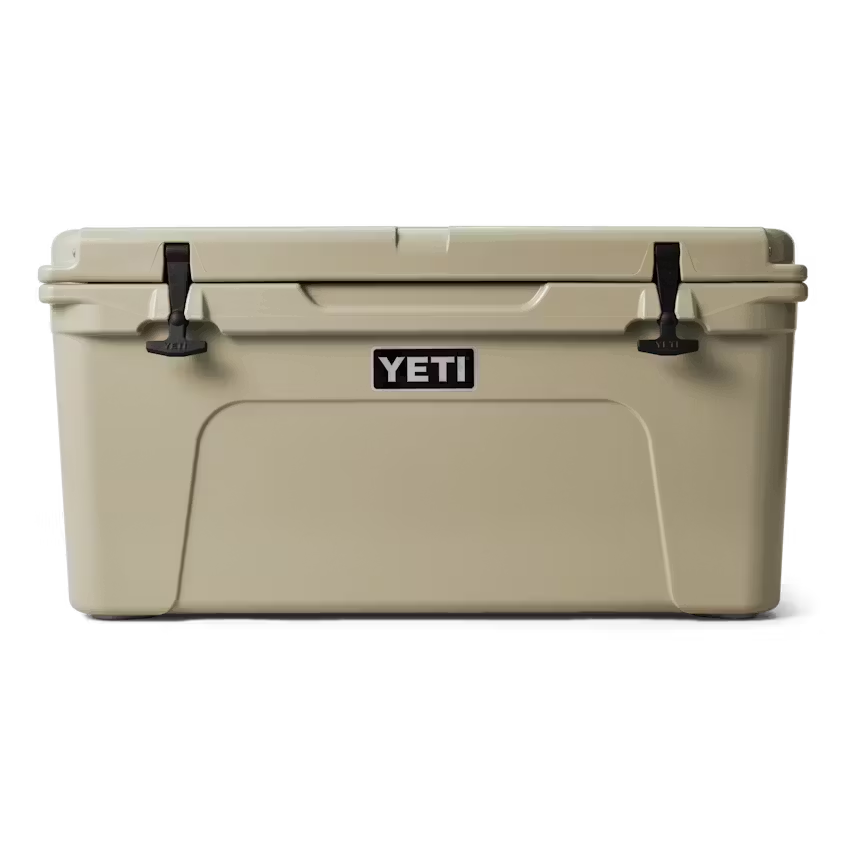
Specs & Key Features:
YETI Tundra 65
- Exterior: 30.8″ W × 17.3″ D × 16.0″ H
- Interior: 23.3″ W × 10.7″ D × 11.3″ H
- Empty weight: ~30.3 lb
- Capacity: ~77 cans
- Rotomolded construction, thick insulation
YETI
GoBox 30
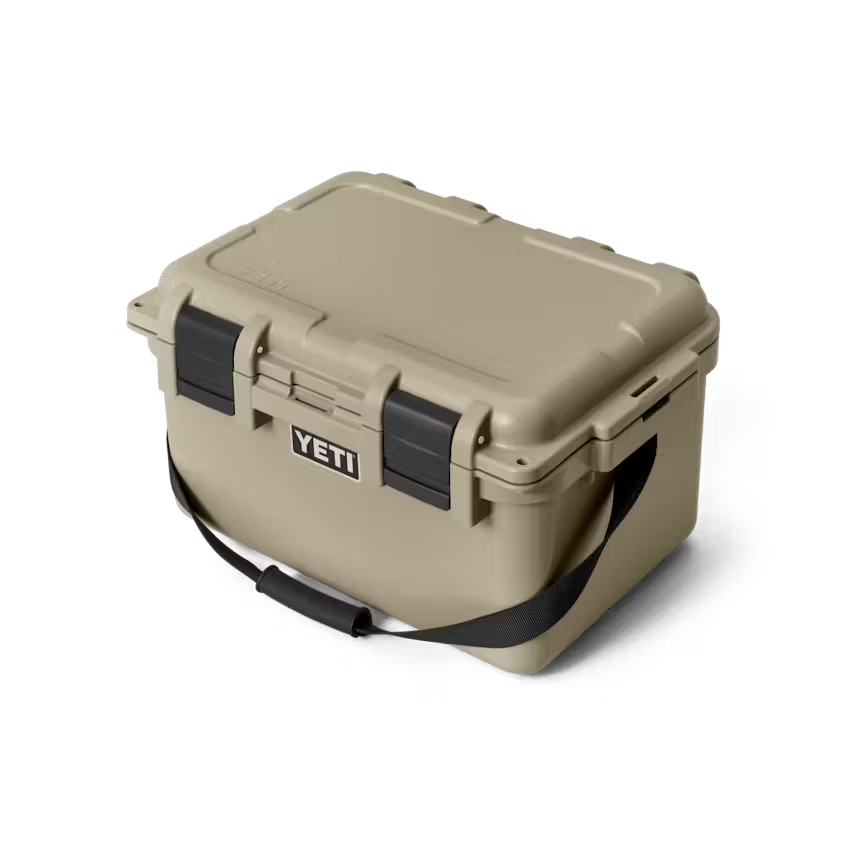
Specs & Key Features:
YETI GoBox 30
- Exterior: 20.4″ W × 14.8″ D × 11.3″ H
- Weight: ~12.1 lb
- Rated IP65/IP67: dustproof and submersible
- Stackable with rugged latches
YETI
LoadOut 5-Gallon Bucket
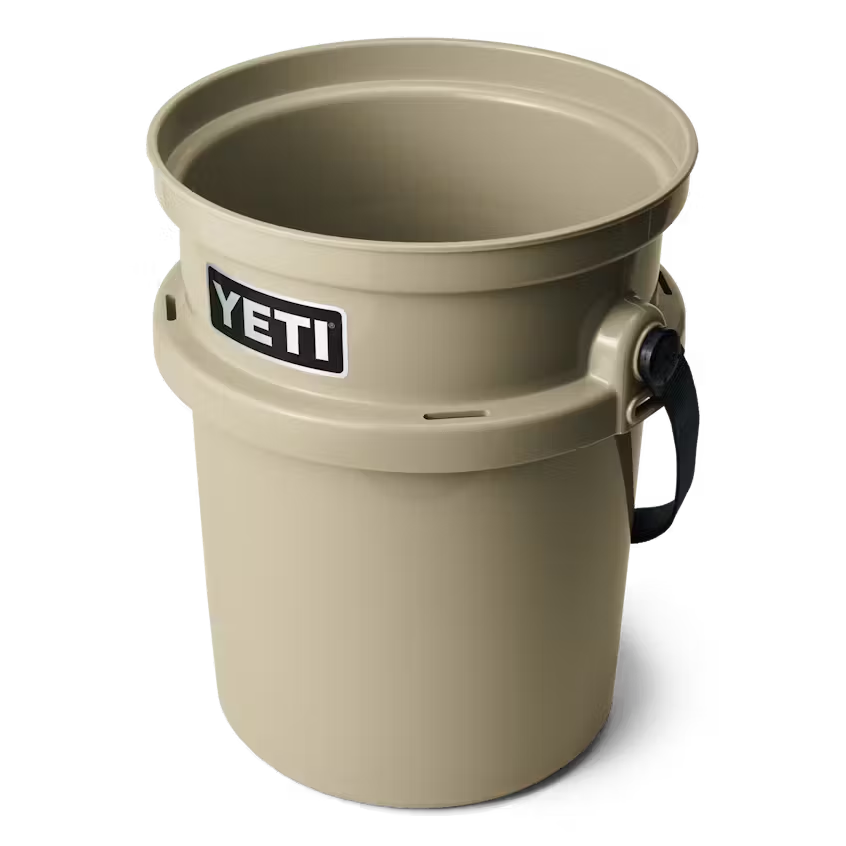
Specs & Key Features:
YETI LoadOut 5-Gallon Bucket
- Exterior: 10.3″ W × 12.9″ D × 15.9″ H
- Weight: ~5 lb empty
- Thick HDPE walls, AnchorPoint tie-downs, non-slip base
YETI likes to say their gear is built for the wild, and after more than a decade of heavy use, I can confirm—it is. I run a YETI Tundra 65 in front of my console, which doubles as a cooler and a seat. A lot of Delta 18 owners prefer the Tundra 45 (and I’ve run that setup too), but as long as you turn the 65 sideways, it fits perfectly. Both sizes work well on this boat.

Under the bench, I stash two YETI GoBox 30s—one for tackle and one for camera gear. They slide in clean, stay bone-dry, and don’t eat up deck space.

On the poling-platform ladder, Delta Boatworks welds a dedicated bucket holder. I drop a YETI LoadOut Bucket in there with an elastic mesh trash-can lid, which turns it into the perfect storage solution for trash, a small stern anchor, wet gear, or live bait (if you’re into that sort of thing). Every piece serves a purpose and fits seamlessly into the boat’s layout.

Tunes — TurtleBox Original (Gen 3)
Turtlebox
Gen 3 Speaker

Specs & Key Features:
- Up to 120 dB max volume
- IP67 waterproof + dustproof (fully submersible; floats)
- Battery life: 25+ hours
- Full-range sound: 6″ × 9″ woofer + 1″ titanium tweeter
- Party Mode pairing
- Weight: ~10 lb
- Dimensions: ~11.5″ × 7″ × 8.75″
I wanted music on the skiff, but had zero interest in drilling holes in a brand-new boat for speakers that would almost certainly corrode, crack, or short-circuit given enough time. The TurtleBox Original (Gen 3) solved that conundrum instantly. It’s a portable, bombproof speaker that cranks—loud enough to cut through wind, open water, and engine noise—without needing a permanent install.

The build quality is exactly what you’d expect from something designed for hunters, anglers, and guides. It’s fully waterproof, dustproof, shockproof, and even floats if it goes overboard. The sound stays crisp at high volumes, the battery lasts all day, and the long-range Bluetooth connection is rock-solid (I say that as someone who is highly critical of Bluetooth). I went with the tan model because it matches my deck paint perfectly, but they offer four other base colors plus rotating limited-edition runs, so no doubt, you’ll be able to find something that complements your rig. It’s one of those pieces of gear that just makes sense on a skiff.

Battery Power — Abyss Lithium Batteries
Abyss
Lithium Batteries

Specs & Key Features:
Abyss 12V 120Ah Dual-Purpose
- Nominal Voltage: 12.8 V
- Capacity: 120 Ah
- Bluetooth BMS
- Internal Heating
- Waterproof Rating: IP67
- Weight: ~25 lb
Abyss 24V 100Ah Trolling-Motor
- Nominal Voltage: 24 V
- Capacity: 100 Ah
- Bluetooth MBS
- Internal Heating
- Waterproof Rating: IP65
- Weight: ~48 lb
I run two Abyss lithium batteries, and they’ve completely changed my onboard power setup. In the console, I’ve got a 12V 120Ah Dual-Purpose battery that cranks the engine and powers my lights, bilge pump, and Humminbird. Up front, in the bow hatch, I run a 24V 100Ah battery for the Terrova. Dedicated lithium for each system gives me far more runtime and shaves serious weight.

That’s all well and good, but it’s the tech under the hood that really sold me. Both batteries use a Bluetooth Battery Management System (BMS) so I can check charge level, temperature, and overall health right from my phone—which gives me peace of mind out on the water and before ever leaving the ramp. Abyss also engineers their cells with a strong internal structure to resist vibration and impacts, which is ideal for boat use. The 12V model is rated IP67, the 24V is IP65, and both are designed to handle thousands of cycles, which means outstanding long-term value, especially when compared to lead-acids.


Notable Mentions
- MHX 23′ Carbon Push Pole: My go-to for poling. Ultra-light 100% carbon with a replaceable stainless tip. Available in 19’, 21’, and 23′ lengths.

- V-Marine Push Pole Holders: Low-profile and secure. Several mount options are available (permanent, quick-detach, locking plate). I use the quick-detach version to free deck space when not needed.

- V-Marine Push Pole Caddy: Simple caddy that swivels to temporarily stow the push pole while on the platform. Comes in super handy when taking a cast yourself or hopping down to land someone else’s fish.
- Carbon Marine LineLair²: Fly-line management mat that floats, won’t UV-degrade, and comes with adjustable spikes so your line stays at your feet, not blown all over the boat. Diameter ~21″ and weighs ~2.5lbs.

- Benchmade Fishcrafter Fillet Knife: My fillet knife for the boat: thin, sharp Magnacut blade available in 7″ and 9″ lengths — great edge retention and corrosion resistance for saltwater work.
- Hoss Straps: Strong, quick-release straps I use to secure the TurtleBox and miscellaneous gear.
- Stern Saver / Transducer Puck Mount: Low-profile puck mounted to the stern (instead of screwing into the hull) that I used to attach the transducer. Keeps the hull clean and avoids additional holes while giving a solid mounting point.
Final Thoughts
Building out a skiff is a lot like building out a good kitchen or tackle bag—the tools you choose shape the experience, not just the outcome. Every piece of gear on my Delta 18 was chosen because it solves a real problem and adds capability without clutter. When you spend enough time poling flats, crossing open bays, dodging weather, and fishing dawn to dark, you learn quickly what matters and what doesn’t.

What I ended up with is a flats skiff that feels like an extension of how I fish: quiet, efficient, and tuned to my home waters. From the power system to the electronics to the little accessories that make life easier, this boat is the product of trial, error, and a whole lot of time on the water. There’s no such thing as a perfect skiff, but this one checks the boxes that matter most to me. That’s the point after all—to build a platform that helps you focus less on the boat and more on the fish.

Until next time, good luck out there!
Article by Flylords Food Editor Kirk Marks, an angler, photographer, and culinary aficionado based in Kent Island, Maryland. Give him a follow at @kirkymarks.

