

Captains for Clean Water (CFCW) is the tip of the spear when it comes to the fight for clean water in South Florida. In just 10 years, the group has amassed support and real influence through an increasingly diverse coalition of advocates, guides, businesses, and major brands. All of which support Captains’ goal of restoring the natural southerly flow of freshwater through the Everglades to support healthy habitats, productive fisheries, and all the economic benefits that stem from clean waterways. We sat down with founders Daniel Andrews and Chris Wittman to look back on 10 years of fighting for clean water.

Flylords: Captains for Clean Water, and all of those who cherish South Florida’s fisheries, have a lot to celebrate in its tenth year of making positive changes. For folks who might not be as familiar with you, how did Captains for Clean Water start?
Daniel: It started out of frustration, really. Chris and I were full-time fishing guides watching the places we loved fall apart in real time. In 2013, and then again in 2016, the discharges from Lake Okeechobee absolutely crushed our estuaries. Places we grew up fishing turned into barren dead zones, grass flats disappeared, oyster bars died off. We kept asking, “How’s this acceptable?” and nobody seemed to have answers. Or if they did, nobody was doing anything about it. So eventually we realized if we didn’t fight for the water ourselves, nobody was coming to save it.
Chris: Neither one of us had any intention of starting an organization. We were guides. We wanted to fish and raise our families around healthy water. But once you start digging into the issue, you realize the problem isn’t just environmental; it’s largely political. There was this status quo that everybody just accepted for decades while the estuaries took the hit. We hit a point where enough was enough and started trying to educate people and rally the people who actually depend on clean water for their livelihoods and lifestyles. That’s really where Captains came from. A bunch of pissed off fishing guides that refused to stay quiet anymore.
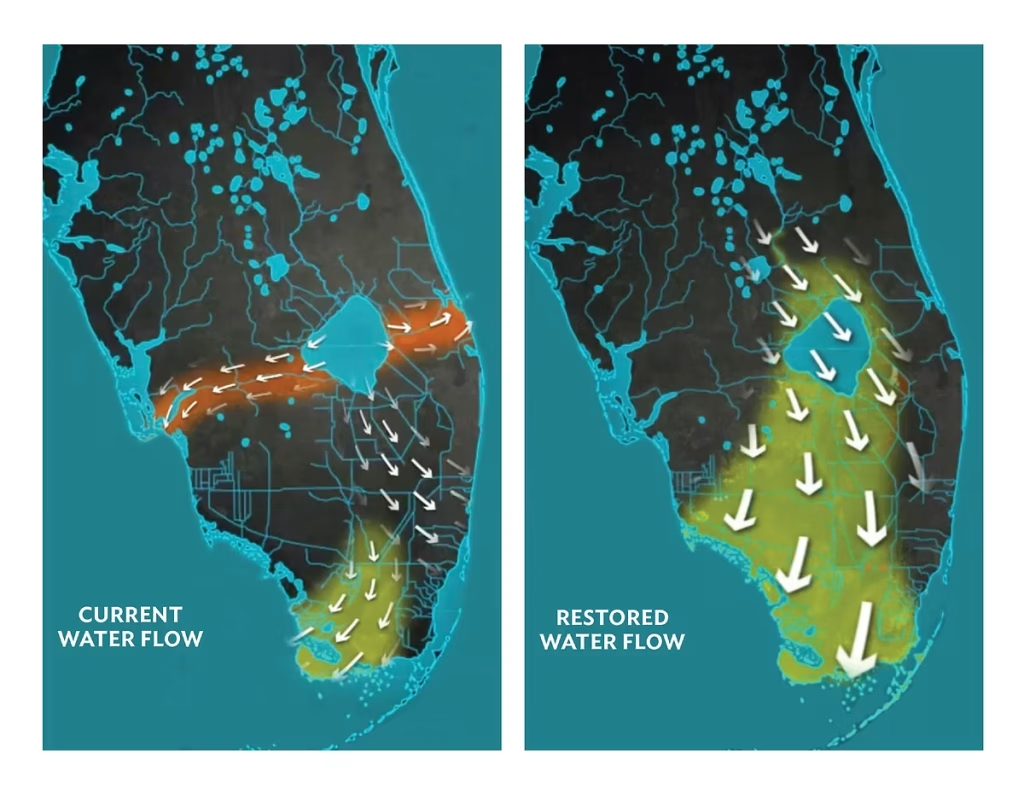
Flylords: And similarly, provide a summary of the water problem you are working to fix.
Daniel: At the core of it, Florida’s water doesn’t flow the way it’s supposed to anymore. Historically, water from Lake Okeechobee moved south through the Everglades into Florida Bay. Over the last hundred years, Florida engineered the system to drain the Everglades and prioritize agriculture and development. Now, instead of flowing south, huge volumes of polluted freshwater get dumped east and west into the St. Lucie and Caloosahatchee estuaries.

Chris: Those discharges wreck our estuaries. They fuel toxic algae blooms, red tide, seagrass loss, fish kills, you name it. Meanwhile, the Everglades and Florida Bay are starved of the freshwater they actually need. The frustrating part is the solution isn’t a mystery. The science has existed for decades. We need to restore the natural flow south by building the infrastructure to store, clean, and move water the way nature intended.
Daniel: The biggest challenge isn’t solving the science. The bigger challenge has always been the politics and special interests standing in the way. That’s really the fight we’re in.

Flylords: 10 years–just wow. You all have achieved so much since 2016. Let’s focus on the movement first. Describe how the network or army of “Hats” has grown over the years?
Chris: In the beginning, it was a handful of fishing guides fed up with the discharges and dirty water threatening their livelihoods. But what we realized pretty quickly is everybody around here depends on clean water, whether they fish or not. Restaurant owners, hotel owners, small businesses, divers, photographers, boating manufacturers, apparel companies, families. It touches everybody.
Daniel: What’s been really cool is watching it evolve from a guide movement into this giant coalition of people from completely different walks of life, all united around one thing. Clean water. The “Hats” became symbolic of people wanting to be part of something bigger than themselves.
Chris: And honestly, I think authenticity mattered. People could tell this wasn’t manufactured. It wasn’t some polished political campaign. It was people fighting for places they genuinely loved. That resonates way beyond Florida now. We’ll run into people wearing Captains hats all over the country and even internationally. That still blows my mind sometimes.

Flylords: Now with that growing community of clean water advocates, CFCW has contributed to some pivotal wins for restoring the Everglades. Can you hit some of the most important milestones you have helped with?
Daniel: The biggest thing is probably helping disrupt the old status quo around water policy in Florida. For decades, restoration moved painfully slow and special interests dominated the conversation. One of the biggest wins was helping build momentum behind the EAA Reservoir project, which is absolutely critical to restoring the flow south and reducing harmful discharges. Seeing that project now under construction is massive.
Chris: There’ve been a lot of important policy fights too. Passing Senate Bill 10 back in 2017 was huge because it authorized the EAA Reservoir. Defeating SB 2508 in 2022 was another major moment because that bill was basically an attempt to hand control back to special interests and undermine restoration progress. More recently, we’ve had to play defense a lot too. Whether it’s bad legislation, lawsuits against restoration projects, or attacks meant to intimidate the movement, there’s constant pressure trying to slow progress. Protecting momentum is just as important as creating it right now.

Flylords: How have you seen the CFCW reach and impact grow, and how important has the support from brands like Costa Sunglasses been?
Chris: The outdoor industry has been incredibly important because these brands understand that clean water isn’t optional for them. If the water quality declines and fisheries collapse, the entire outdoor economy suffers. Brands like Costa, YETI, Hell’s Bay, Orvis—they’ve helped amplify the message in a way we couldn’t have done alone.
Daniel: What’s powerful is when industries stand united. When policymakers hear the same message coming from guides, business owners, brands, and communities all at once, it changes the conversation. It stops being framed as a niche environmental issue and becomes what it actually is: an economic issue, a public health issue, and a quality-of-life issue.
Chris: Brands like Costa have shown up. They’ve used their platforms. They’ve brought their audiences into the fight. Those kinds of partnerships have been huge for growing the movement.

Flylords: What has been the highlight of your 10 tireless years of fighting for clean water?
Daniel: For me, honestly, it’s hope. Ten years ago this felt almost impossible. We were watching ecosystems collapse, and it felt like nobody cared. Now you’ve got hundreds of thousands of people engaged and restoration projects actually moving forward. My kids are growing up in a very different reality than I thought they might.
Chris: I think the highlight is realizing the movement is bigger than us now. There are people all over Florida, and well beyond Florida, who genuinely care about protecting these waters. Seeing young guides and kids getting involved now is really special. You start to believe future generations might actually get to experience these places the way we did growing up. There’s still a lot of work left, but for the first time in a long time, real restoration feels achievable.


Flylords: What’s next for CFCW and Everglades restoration?
Chris: The biggest priority is keeping restoration moving forward and making sure special interests don’t undo the progress that’s finally happening. We’re at a really important moment right now because projects like the EAA Reservoir are getting close enough that people can actually see the finish line. That’s exactly when opposition ramps up.
Daniel: We’re going to keep pushing on policy, more infrastructure, and public education. Restoration is a long game. It took generations to break this system, and it’s going to take sustained pressure to fix it. We can’t take our foot off the gas now. The movement still needs to keep growing. The more informed and engaged people are, the harder it becomes for bad actors to quietly undermine restoration behind closed doors.
Flylords: How can our readers get involved and help CFCW?
Daniel: The biggest thing is just paying attention and staying engaged. Follow along, learn about the issue, sign up for updates, and be ready to speak up when it matters. A lot of these policy fights are won because regular people decide to get involved at the right moment.
Chris: People underestimate how powerful public pressure can be. We’ve seen it firsthand over and over again. Whether it’s helping stop a bad bill, protecting restoration funding, or fighting off a threat like the rock mine proposal, decision-makers notice when thousands of people start paying attention.

