Home Blog Page 70

Best Coolers for Fly Fishing 2025

Whether out on the boat or out exploring your local rivers, a good cooler is an essential piece of gear. Keeping food, beverages, and, in some cases, even fish cold is a necessity when you’re off the grid. These days, it seems every day there is another cooler brand touting their products as the most rugged and reliable solution to hold ice longest. With brands like YETI, RTIC, Pelican, and more dominating this space, we felt it necessary to round up a bunch of coolers and see just how they stack up against one another. These are the best coolers for fly fishing.

How We Made Our Picks

Like fly rods, certain coolers are meant for certain tasks. A 65-qt chest cooler is great for multi-day fishing trips but overkill for an afternoon float. Boat anglers also have different requirements than wading anglers. In an effort to make sure all bases are covered, we tested coolers across categories, including chest coolers, backpack coolers, and soft coolers, and for an all-encompassing rundown of angling needs.

All products featured on Flylords are independently selected by our editors. However, when you buy something through our retail links, we may earn an affiliate commission.

To make this list, we judged coolers by three main categories: their ability to hold ice, their user-friendly features, and their practicality from a fly fishing standpoint. If a cooler met all three requirements, we could be sure it was ready for the day-in and day-out abuse of fly fishing. 


Things to Consider Before Buying

A good cooler can be a decent investment. That said, in the cooler space, you often pay for what you get. There are some exceptions where brand names may increase the cost compared to competitors. In an effort to make sure you find the right cooler for your needs, consider these three requirements.

Size:

When buying a new cooler, consider where you’ll be using it most. For anglers with a boat, you may have ample room for a bigger cooler, but anglers who are wade fishing should likely consider a smaller size. A good rule of thumb is to fit the cooler to the general style of fishing you do most. This way, you get the most out of your investment. 

Angling Needs:

To choose the best cooler for the job, consider your style of fishing. This goes a lot further than if you are on foot or fishing off a boat. For instance, if you find yourself taking long trips camping and fishing in remote areas, you’ll want ample cooler space. If you live in a tropical area like Florida, you’ll want the cooler with the best possible insulation. This ensures you’ll have ice longest. If weight is an issue, you may want to consider a soft cooler to cut weight down and make it easier to transport.

Pre-Chilling:

Any cooler you buy will benefit from pre-chilling. This is a technique of placing sacrificial ice or ice packs in a cooler prior to using it for a fishing trip. Coolers act as insulators, meaning they hold cold and heat. If your cooler is in a hot garage, and you throw ice directly in it, the ice will absorb the retained heat and melt faster. Using a sacrificial bag of ice prior to loading up the cooler will ensure you get the best performance out of your cooler.


The Best Coolers for Fly Fishing

Best Overall

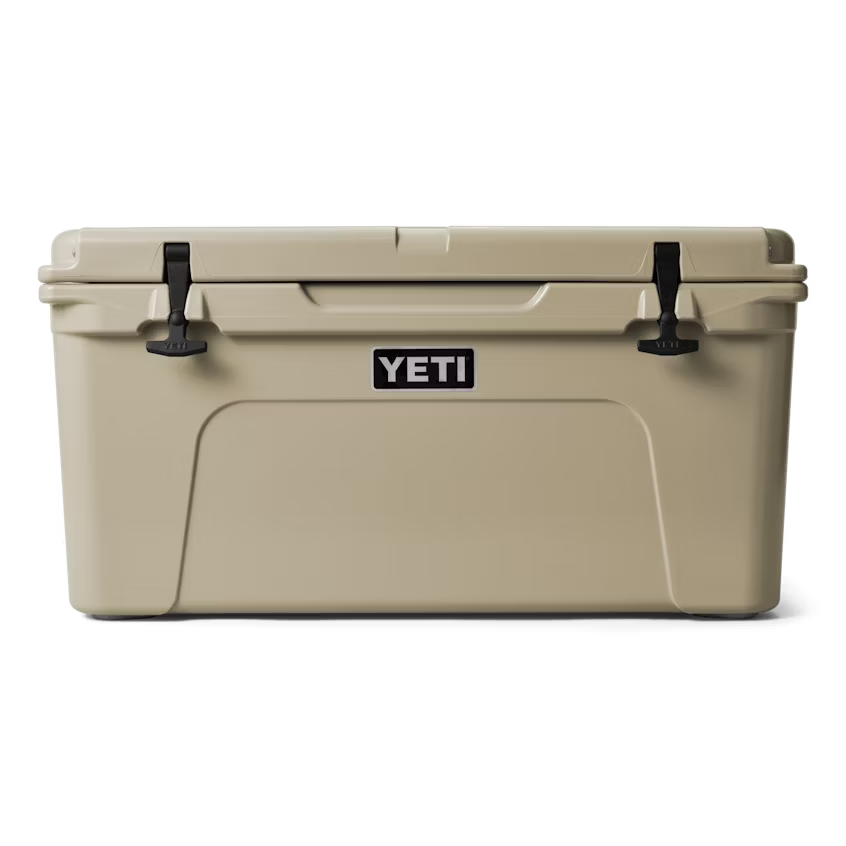
YETI Tundra 65
Buy Here

Key Features:

  • Storage Capacity: 65 Qts
  • Weight: 30.03 lbs
  • Warranty: 5-year warranty

Pros:

  • Rugged and simple design withstands abuse
  • Holds ice incredibly well
  • Sturdy and can double as a casting platform

Cons:

  • Fly line will occasionally get caught on handles
  • Expensive

YETI is a giant in the cooler world, responsible for bringing the first roto-molded cooler to market. To this day, that design holds up, earning the YETI Tundra 65 its spot as the best overall in our list. The 65 Qt size is a perfect middle ground. It has ample space for a multi-day camping trip and doubles as a great boat cooler. In addition, YETI’s rotomold design is as bombproof as it gets. We’ve dropped ours a fair share of times with only the smallest scuffs and scratches to show for it. 

When it comes to holding ice, the Tundra is more than capable of holding ice for days, even on hot summer days. Our one gripe with this cooler is the handles will occasionally snag your fly line if you plan to use it as a casting platform. That said, the handles can be removed and turned around to sit flush and prevent this problem from happening. For its versatility and reliability, the YETI Tundra makes the cut for our longer drift boat trips, along with our other favorite essentials.


Best Value

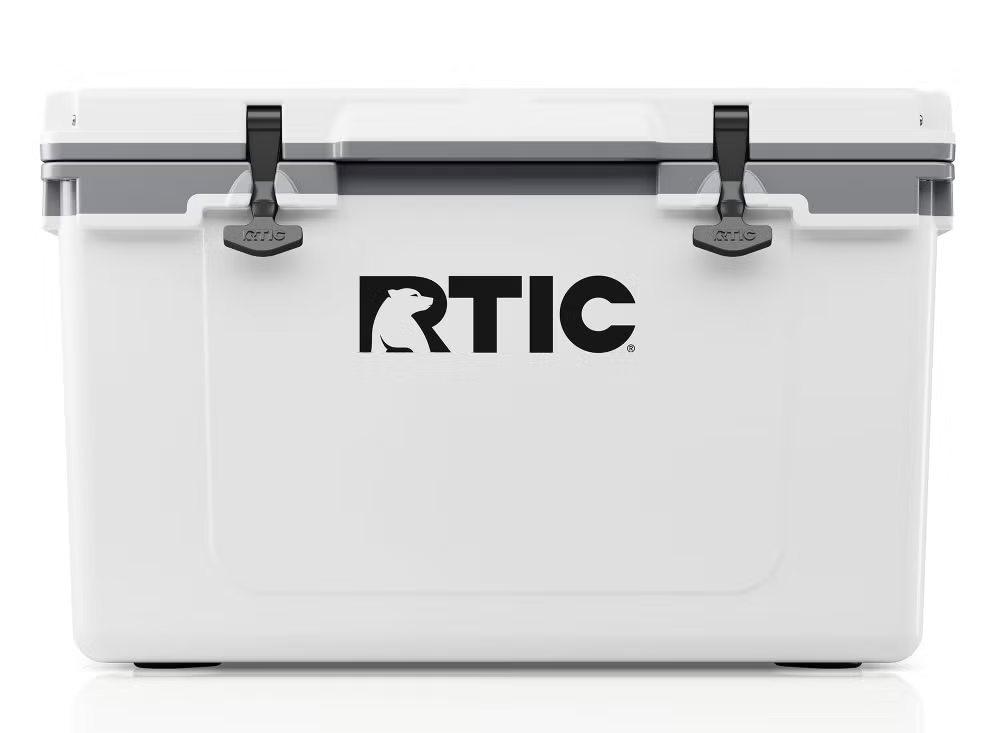
RTIC 52 QT Ultra-Light
Buy Here

Key Features:

  • Storage Capacity: 52 Qts
  • Weight: 21 lbs
  • Warranty:  3-years

Pros:

  • Great value
  • Lightweight but durable design
  • Holds ice incredibly well

Cons:

  • Not as durable as RTICs Ultra-Tough line
Photo courtesy of RTIC.

RTIC came into the cooler space with the goal of delivering premium products for a fraction of the price. Their Ultra-Light line is no exception. As its name implies, the RTIC Ultra-Light coolers use roto-molded injection and weight-saving technology to lighten the cooler by up to 30% compared to its competitors. That is a large claim, but in testing on the water and lifting this cooler in and out of boats, we found it significantly easier—even when loaded up. The real dealbreaker for us is the price point. At $200, you get a lightweight cooler that holds ice and several accessories included. While it may not be as rugged as their Ultra-Tough line, the lightweight construction showed no signs of failing anytime soon. 


Best Soft Cooler

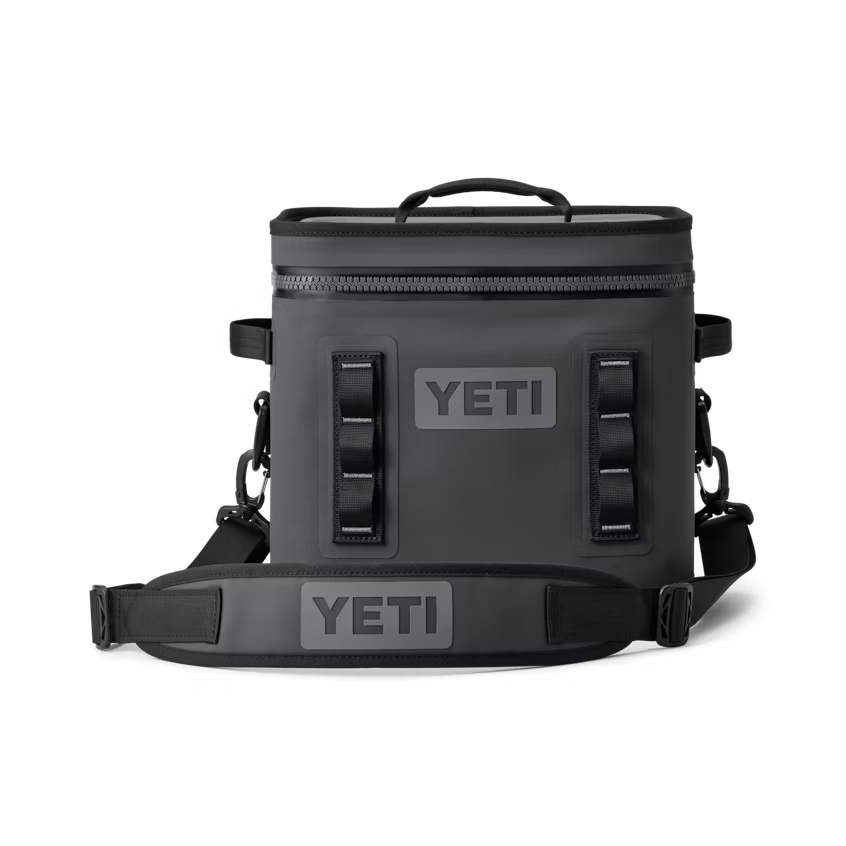
YETI Hopper Flip 12
Buy Here

Key Features:

  • Storage Capacity: 12 Qts
  • Weight: 3 lbs
  • Warranty: 3-year warranty

Pros:

  • Lightweight and easy to pack for day trips
  • Ample storage space for a day of fishing
  • The soft-shelled design is waterproof and floats

Cons:

  • Expensive
  • Not the best cooler for large groups

Recently, soft coolers have begun to take over the market. This popularity can be attributed to their lightweight and easy-to-transport design. One of our favorites is the YETI Flip 12. The Flip series comes in three sizes: 8, 12, and 18-Qt offerings. Of these, we have found the 12 to be the most useful. This size offers plenty of cold storage for lunch and beverages, along with a few snacks. Its soft-sided design makes it easy to transport whether wading or floating a river. In addition, YETI pairs this bag with a YKK zipper. This fully waterproof zipper allows the Flip to double as a dry bag, keeping essentials dry or keeping ice in the cooler. It is currently offered in seven colorways for all anglers’ liking.


Best Backpack Cooler

ICEMULE Boss

Buy Here

Key Features:

  • Storage Capacity: 30 L
  • Weight: 7.5 lbs
  • Warranty: Lifetime

Pros:

  • Comfortable backpack straps
  • Additional pockets for added storage and fishing gear
  • Roll top design is waterproof

Cons:

  • Expensive

The Boss from ICEMULE is a backpack cooler that set out to solve the main issue we have with backpack coolers—storage. Unlike traditional backpack coolers that have a central compartment and no other storage, the Boss has two side pockets and a main front pocket. For fly anglers, this opens up the possibility to pack a cooler and all the essential gear at once. In addition, the Boss, at 30L of dry storage, has ample cold storage. Rounding out the pack are two padded shoulder straps and a padded waist strap to disperse the weight of heavy loads. Like other soft coolers, the waterproof design also doubles as a dry pack in a pinch.


Best for Day Trips

Pelican 30QT Elite

Buy Here

Key Features:

  • Storage Capacity: 32 Qts
  • Weight:21.67 lbs
  • Warranty: Lifetime

Pros:

  • Push button latch closures
  • Holds ice incredibly well
  • Added cupholders on the lid come in handy

Cons:

  • Expensive
Photo courtesy of Pelican.

Pelican, a company known for its hard cases, implemented its technologies into coolers, and they are a winner. The Elite line features several sizes and configurations, but the 30-qt model is ideal for day trips. Whether on the drift boat or in a truck bed, the Elite 30QT gives anglers the perfect amount of cold storage for a day on the water. It does so without taking up too much space and getting in the way of effectively fishing. On this particular cooler, Pelican opted to mold cup holders and a tape measure into the lid. Having this extra security definitely comes in handy when floating down the river and keeping your drinks in place. In addition, this cooler gets the same push button latches found on Pelican hard cases. These latches are easy to operate and secure flush to the cooler, making it nearly impossible for line to jump off the deck and getting snagged.


Best Floating Cooler

Rugged Road 65 V2

Buy Here

Key Features:

  • Storage Capacity: 65 qts
  • Weight:13 lbs
  • Warranty: Lifetime

Pros:

  • Incredibly light
  • Reversible lid with cup holders
  • Floats upright

Cons:

  • Not as durable as traditional roto-molded coolers
Photo courtesy of Rugged Road.

Every cooler on this list will certainly float, but the Rugged Road 65 V2 is the only cooler that floats upright. Now, we don’t expect you to be wading through the river with a cooler attached to your waist, but this does come in handy. If you’re anything like us, your life revolves around the water. Inherently, you’ll find a situation where this comes in handy, like floating the river in the summer. This cooler also made the list for its incredibly lightweight design. At just 13 pounds, this cooler comes in at half the weight of roto-molded coolers. That said, this cooler is not roto-molded, but the team at Rugged Road made sure it would hold its own in terms of durability. The last handy feature is the reversible lid. One side is flat, and the other has cup holders, so depending on your needs, you can change it on the fly.


Final Thoughts

A good cooler can go a long way on the water. Keeping your drinks iced down and cold on a hot summer day is a welcome treat when baking in the sun. With the cooler market exploding, it can be hard to find the best cooler for your money. Take into consideration your fishing style and the sizing requirements of any cooler before you make the investment. This guide to the best coolers for fly fishing should help steer you in the right direction with thoughts of warm summer days and rising fish on the horizon.


Best Headlamps For Fly Fishing 2024

The Best Rain Gear of 2024

Angler Story of the Week: Catching a Fish Without a Fly Rod?

A Note from Elmer Pillon (@captainelmerpillon)

“After being inspired by Flip at the BTT symposium, I had to give it a try. catching my first fish( a snook) on fly with no rod was super exciting and challenging at the same time. Now it’s time for a big one!” Captain Elmer Pillon

Angler Story of the Week from Captain Elmer Pillon, be sure to follow Elmer’s instagram at @captainelmerpillon! 


Check out the articles below:

Angler Story of the Week: Catching African Tiger Fish on Foot

A Note from Blaede (@blaede_russell):

“Sight Fishing Tigers on the Faro Flats?

Ever heard of fishing in Cameroon? The Gassa Camp, or the Faro Flats?

It is not—despite what the name might suggest—anywhere near the ocean. So, no need to pack the saltwater kit. 

Back in 2018, after over a decade of searching for a feasible Nile Perch destination (yes African Waters were that determined), finally led the first of two exploratory trips. What we found? One of the last remaining, ecologically intact west African fisheries that has Giant Nile Perch that you can catch on foot and on fly, a rare sight these days is an understatement !

But here’s where it gets really interesting. As the videos show, the daytime fishing here is spectacular, with most of it done by sight. And if that wasn’t enough, this place also offers sight fishing for three different species of Tiger Fish all of which, rather conveniently, seem to have developed a taste for flies. 

So, if stalking aggressive predators in crystal-clear water sounds like your kind of thing, you might just want to put the African Waters – Gassa Camp on your list.”

Angler Story of the Week from Blaede Russel at African Waters, be sure to follow Blaede’s instagram at @blaede_russel! 


Check out the articles below:

2025 F3T Behind the Lens: Mouse Trap

Fishing Tips: Future Water


2025 F3T Behind the Lens: Mouse Trap

The 2025 Fly Fishing Film Tour is fast approaching, bringing another exciting lineup of captivating stories from the water. To get you pumped for this year’s films, we’re sharing an exclusive look at the filmmaking process through our F3T Behind the Lens series. Be sure to check out the full 2025 schedule HERE and grab your tickets today!

In this Behind the Lens article, we sit down with filmmaker Jack Beaudoin to discuss his newest film, Mouse Trap. The film dives into the obsession of hunting trophy brown trout at night with mouse flies. Set on the White River in Arkansas—a giant brown trout factory—the story embraces the grind of trophy hunting. We sat down with Jack to learn more about the film, the grind of night fishing, and his journey into filmmaking in this exclusive interview. Check out the full interview below!


Flylords: First off, excellent job with the film Mousetrap. Can you give us a little background on who you are and your journey into filmmaking?

Jack: “Thank you! My name is Jack Beaudoin, and I grew up outside of Detroit. My journey into filmmaking started about ten years ago when I started freelancing. In 2019, I hit the reset button on the direction my work was going and began to pour it all into building a fishing portfolio. It was a big leap, but I couldn’t be happier with that decision. This latest film, Mouse Trap, is a culmination of this journey and the friends met along the way.”

Flylords: Can you tell us about the films characters and how you crossed paths wth them?


Jack: “As is the catalyst for many friendships these days, Trevor, Westley, and I met through Instagram in 2021. With Trevor running Stealthcraft boats in Baldwin, Michigan, Westley guiding on the river that’s right next to the boat shop, and me a couple of hours away with a camera, it was only right we team up. Through fishing and filming, they are now some of my best friends.”

Flylords: What is it about the White River that compelled you to shoot your film there?

Jack: “The White River is a trip that Westley, Trevor, and some of their friends have taken for the last five years. These guys are true mousing and brown trout addicts; if there is a river with both quality AND quantity like that, they’ll be there to fish it. Creating a film around it was the next natural progression. They had the experience on the White, so it was up to me to tell the story.”

Flylords: Filming a mousing film at night seems tricky. What challenges did you face along the way?

Filming at night and capturing the story is no easy task.

Jack: “This was by far the most challenging and taxing film I have ever shot… from 9 pm to 6 am every night, sitting in the pitch black..waiting and waiting and waiting. Shooting at night is a very restrictive feeling. There are no natural light sources, so you have to get creative. Unfortunately, there is only so much that can be done, and when you are just trying to stay awake, having nothing to shoot is not ideal. Despite all that, we were able to get the shots and tell the story we were after.”

Flylords: What went into preparation for this film and the two-week journey?

Jack: “For me personally, I had just returned from Alaska for a job, so I was already in fishing film mode rolling into this Arkansas trip. The equipment was ready to go, so I really didn’t have too much prep work. Westley, on the other hand, spent countless hours tying mice flies in every variation. You can even see in the film that the tinkering never ends. Throughout the week, he was constantly altering patterns, sizes, and colors until we had it dialed in.”

Flylords: At the beginning of the film, the crew is catching a lot of good fish but not a true giant. What was going through everyone’s heads as the days were counting down?

Jack: “When you’re filming a fishing film, there’s always pressure to catch fish. After the first week, we caught some nice fish, but not the one we were after; the pressure absolutely started to mount. I questioned what the hell I was doing in a boat in the dark for nine hours every night. Is this worth it? Is this river overhyped? Should I go back to school and get a desk job? You begin thinking about the time, money, and effort this is all taking. Those thoughts got louder and louder with each unsuccessful night that passed.”

Flylords: Looking back, were there any fish that got away that the crew thought might have been true giants, and if so, tell us a little more about it.

Jack: “The first few nights, we were losing a lot of fish, but we believe that’s because they were small. Once we dialed in our tactics and switched up flies, we weeded those out. From then on, it seemed like every fish that ate and was hooked stayed hooked. That being said, there were absolutely some rolls and attempts to eat that sounded like boulders hitting the water…Hey, at least they let us know they’re around!”

Flylords: At the end of the film, Trevor finally hooks the giant you were after. Take us through what was going through your head from a filmmaker’s standpoint.

Trevor and Westley with the true giant they were after.

Jack: “When Trevor hooked that fish, it was absolutely the most surreal handful of minutes that I have been a part of on the water. I don’t think more than a few words were said by any of us during the whole fight. Our trip, film, and what felt like our lives were in Trevor’s hands! The initial moments of ‘Oh my God, it’s actually happening,’ to ‘Oh my God, he could lose this fish,’ to the most relieved and excited I’ve ever been when it hit the net. It was a top life moment for all of us, and the question of ‘did that really just happen?’ was repeated often as we passed a bottle around.”

Flylords: After night fishing for two weeks, how was it coming off the “night shift” and returning back to normal life?

Jack: “Surprisingly, adjusting after coming home wasn’t too bad. My internal alarm woke me up at 4:30 for about a week, but that was about it. That said, getting adjusted at the start was much tougher. Staying up all night for a moment’s notice to get the shot was definitely tricky.”

Flylords: At times, this trip seemed like a bit of a grind. Looking back, was the hype of the White River worth it? 

Jack: “The fact that you have a chance at a fish of true trophy proportions, in my opinion, makes a trip to the White River worth it. But would I go down to mouse it? Absolutely not. I think that’s a one-and-done mission for me. That trip took years off my life.”

Flylords: What makes these giant White River brown trout so difficult to catch?

Jack: “The trickiest thing about the White River is one hundred percent its extreme fluctuations in flows from the dam. It’s a tailwater fishery, but unlike most Western trout rivers, flows can change in an instant. You could catch a fish at noon in a 10-foot pool, and at night, that same spot is now barely covered by water. We saw multiple boats stranded on the riverbed who had no choice but to wait for them to raise the water.”

Flylords: Who are some of the people who made this film possible? Any ‘Thank you’s” or dedications you want to make? 

Jack: “I would like to give a huge thank you to Scientific Anglers for always backing us on our adventures and Stealthcraft Boats for making sure we get around on those adventurers. I also have to give a special thank you to Westly and Trevor. Without these two and their dedication, this film would not have been possible. 

For more F3T Behind the Lens content, check out these articles below:

2025 F3T Behind the Lens: Left Field

2025 F3T Behind the Lens: Bumpyland

Arctic Grayling Are Back in Michigan: A Big Step for Conservation

For the first time in over 90 years, Arctic grayling are swimming in Michigan waters again! Thanks to a collaborative effort by the Michigan Department of Natural Resources (DNR), the Little River Band of Ottawa Indians, and other conservation partners, this historic species is making a comeback in the Manistee River.

The grayling’s reintroduction hit a major milestone in the Fall of 2023 when more than 4,000 juvenile fish raised at the Marquette State Fish Hatchery were released into a controlled stream in the Manistee River watershed. Earlier this month, an additional 4,000 grayling were stocked, with more releases planned for 2025.

These fish aren’t just beautiful—they’re important. To the Odawa, Ottawa, and Chippewa peoples, Arctic grayling are a sacred part of their heritage, symbolizing the balance and abundance of Michigan’s natural world. Their involvement has been key, offering traditional knowledge to help ensure the project’s success.

Bringing grayling back is also great news for Michigan’s rivers. Their return signals healthier waters and restored habitats, which benefit all the wildlife in these ecosystems. The project aims to establish a thriving grayling population by improving cold-water habitats and educating the public about protecting these environments for the future.

Of course, challenges remain. Ensuring the grayling’s survival and adapting the ecosystem to support them will take time. However, this project demonstrates the power of collaboration. Conservation groups, tribal communities, and state agencies have joined forces to bring Arctic grayling back—a major win for Michigan’s rivers and for anyone who loves the outdoors.

Want to learn more about Michigan’s Arctic grayling comeback? Check out the full story on Lansing State Journal.

How to Clean a LEGO Chinook Salmon…in Stop Motion

Chances are you’ll never need to know how to clean or eat a fish made entirely out of LEGOs, but if you do, we have you covered. Recently, we stumbled upon Youtuber “I Like Home,” showing just how to clean a LEGO salmon. This calming stop-motion short film shows how to clean a chinook salmon at home, and it’s quite a treat to watch. Check it out!

6 Tips for Catching Peacock Bass in Miami

South Florida and Miami, specifically, are hotspots for exotic fish. Snakehead, clown knife fish, jaguar guapote, and peacock bass all call the canals and waterways of the Sunshine State home. In addition to a myriad of other native species—tarpon, bass, and snook—this urban fishery is a destination fishery on its own. Yet more anglers travel to South Florida in search of peacock bass than any other freshwater fish. Their vibrant colors and aggressive personalities make them a great species to target on the fly. Add to that abundant access and a much more affordable price tag than heading to the Amazon, and it makes sense why anglers are obsessed with the butterfly peacock bass. Whether a summer vacation or a winter escape from cold weather, these 6 tips for catching peacock bass in Miami will turn a day exploring new water into a successful trip.
 

History of Peacock Bass in South Florida

Peacocks display vibrant colors and a distinct hump on the head of male fish.
Florida has been battling invasive species since the 1950s when Oscars, a popular aquarium fish, began showing up in coastal canals. Since then, a number of South American cichlids have made their way to Florida waterways, displacing native species. With a growing number of invasives and no native predators, the Florida Fish and Wildlife Conservation Commission (FWC) sought to change that—enter peacock bass. In 1984, butterfly peacock bass were introduced by the state in an effort to manage invasive cichlids. Since peacocks were introduced, they are technically managed as game fish and are not an invasive species. This means they have bag limits of two fish per day, of which only one can be over 17 inches. 
 

6 Tips for Catching Peacock Bass in Miami

South Florida is one of the best Do-It-Yourself Fisheries in the Southeast United States. you can explore new water with minimal gear, and access is abundant. Luckily for anglers, fish can be abundant, too, if you know where to look. In Miami, water is everywhere, so it’s important to know where, when, and how to fish this phenomenal and challenging fishery. These 6 tips for catching peacock bass will cut down on the learning curve and save you fishing “dead” water. 
 

1. Don’t Be Afraid to Throw Meat!

Peacock Bass were introduced to Florida in the 80s to aid in invasive species management and to create a sport fishery. Since then, they have taken control of these new waters, growing to impressive sizes (the state record is a whopping 9.11 pounds). While plenty of fish are around in the 10 to 14-inch range, true trophies are out there. While you may not get as many bites, throwing larger flies will help target trophy caliber fish. They are ambush predators and find it hard to resist a tasty big bug zooming past them. 

2. Strip Fast and Throw Shiny Flies

Peacock bass are predatory fish and will turn on their aggression at a moment’s notice. The key to triggering this response is moving your fly fast, taking it away from them. If you see a fish following your fly but not committing, burn it back to you; chances are this will cue the response you are looking for. A good two-hand strip is a handy tool to have in your quiver of tricks.  

Keep in mind that man-made canals are often pretty deep, so something with a little bit of weight will yield the best results. Flies like Clouser minnows, deceivers, and other small baitfish patterns are a good place to start. For colors, chartreuse, yellow, and white with added flash are the go-tos. When the opportunity presents itself, try to work the fly so it tracks under the fish instead of over the fish. When the fly comes up from under them and shoots away, more often than not, it will draw a strike.

As for gear, a good 6-wt, like the Lamson Cobalt, will handle most fish. If you are strictly targeting trophy fish, then opt for an 8-wt. For leaders, a standard 7.5 to 9-ft bass leader with a 12 to 20-lb fluorocarbon tippet is what you want. The fluoro is key here, as peacocks have an incredibly abrasive mouth.

3. Target Structure In Canals

Structures like bridges are key to finding peacock bass in canals.

The man-made canals of Miami and South Florida are square-cut canals with little structure. These unnatural, disturbed habitats were perfect for non-native peacock bass to colonize and call home. That said, peacocks are like any fish and still prefer some form of structure. The best things to look for in canals are bridges, pipes, or even a shopping cart. In these deep-cut canals, the littlest piece of structure will attract peacocks looking for a spot to ambush bait. Peacocks also prefer rock piles over natural structures like weed beds. If you find a pile of rocks, chances are bass will be lurking off of it.

4. Use Satelite Maps

Maps will help narrow down potential access areas in urban fisheries.

Mapping tools like onWater Fish or Google Maps are your best friends for finding new fishing spots. A quick glance at satellite imagery will reveal countless canals and ponds within a short drive. Unfortunately, much of the water in South Florida is in private communities, which means no fishing. Scan the map for canals near malls, industrial areas, and parks with good access and public parking. Scout maps prior to fishing so you have several spots and backup plans in case your first spots don’t pan out. For bank access, look for canals with grassy edges, sidewalks, or bridges.

5. Shorten Your Fly

Shortening your fly will minimize short strikes.

Peacock bass have a tendency to short-strike flies. The best thing we have found to stop this from happening is to shorten the tail of your fly. With a knife or scissors, trim off excess material so that the hook bend is about an inch from the tail of the fly. If you continue to get short strikes, trim it more. You can also add a stinger hook if needed, but the trimming technique is a quick way to make any fly fishable.

6. Watch Water Temperatures

Peacock bass are cold-sensitive. The warmer the water, the better the fishing.

Peacock bass are an Amazonian fish, and they love warm water. Contrary to what most trout anglers know, the warmer the water, the better the fishing. The peacock bite typically starts to pick back up in February as spring is around the corner. That said, be careful of the occasional cold front. Even a two-day front will chill the water temperatures and make peacock bass incredibly lethargic. Ideally, bright sunny days with water temps in the 80s will produce the most active fish.


Get Out and Explore

Florida has plenty of peacock bass, so get out and explore!

Peacock bass fishing is some of the most fun you can have fishing in freshwater. These fish are colored up, uber-aggressive, and pull hard. A trip to Miami and a little time on the water will set you up for a new species on the board (and save you from heading to the jungle). Peacock bass can be caught throughout the year, but spring to summer are some of the best times to get out and chase these exotics. These 6 tips for catching peacock bass will give you a good starting point for solving the Miami fishery. 


Abel Reels: SDS Peacock Bass

How to Catch Massive Jungle Peacock Bass

A Fly Fishing Adventure in the Colombian Jungle

Fishing Tips: Future Water

If you can understand the term “future water” and apply it to your fishing approach, you will undoubtedly catch more fish. Check out this video from the Huge Fly Fisherman for his take on “future water.”

How to Tie: Pheasant Tail Nymph

In this week’s “How to Tie” video feature, InTheRiffle ties one of the most popular and productive patterns ever developed, the Pheasant Tail Nymph. 

Learn About This Fly:

Difficulty: Easy

When it comes to fly tying, there are few patterns that have stood the test of time and evolution. Some that may ring a bell are the Grey Ghost, Parachute Adams, and Hares Ear Nymph. These are flies that can produce in nearly any trout filled river in the world and receive praise whenever tied on the end of a line. One of the most notorious patterns in fly fishing that should be in all angler’s nymphing box is the Pheasant Tail Nymph, an effective subsurface fly that produces with the best of them. 

For novice tyers, this is a great pattern to learn on. This was the first fly I tied many years ago in a pizza shop on a winter Tuesday night. I like to believe my skills have gotten better since, but learning with fragile natural materials is crucial to understanding pressure and break strength. Having a grasp of what each material can do and how to use it is invaluable in tying and the Pheasant Tail Nymph is the perfect fly to start that journey. 

This pattern will fool trout during any season and often times is best suited in a double fly rig, whether that be dry dropper or double nymphs. The variations are endless with this fly and adding a hot spot or bead are just two of many very productive examples. If there was ever a pattern to fish with confidence, this is certainly the one. Get your best fishing buddy into tying this winter with the Pheasant Tail nymph and watch them spiral into true fly fishing addiction. 

Ingredients: 

Now you know how to tie the Pheasant Tail Nymph!

Video and ingredients courtesy of InTheRiffle.

20 Reasons You Know You’re a Fly Angler

You know you’re a fly angler when your car’s interior smells like wet waders, your hands are perpetually glittered with UV resin, and your friends have to remind you to take a shower after being on a boat all day. Fly fishing isn’t just a hobby—it’s a personality trait and obsession—just ask anyone on the Flylords team. That’s why we decided to share our curated list of the 20 Reasons You Know You’re A Fly Angler.

You might get a laugh or just realize how deep into the fly-fishing rabbit hole you’ve gone. From finding stray flies in your laundry to secretly enjoying the smell of a freshly opened fly box, this list captures the quirks, habits, and outright obsessions that come with chasing fish on the fly. If you’ve ever named your favorite rod or consider a rising trout the most romantic thing you’ve ever seen, keep reading—you’re in good company.

20 Reasons You Know You’re a Fly Angler

11. You own more flies than you could ever use but still need more. 

12. Getting irrationally territorial over “your” spot on the river.

13. Saying a fish you lost is “huge,” but you never even saw it. 

14. Sneakily planning all family vacations around fishing and pretending it’s a coincidence.

15. Swearing, you’ll just fish for “an hour,” then stay out till dark.

16. Telling your friends you pack light but somehow bring every piece of fishing gear you own. 

17. Finding bobbers in your pocket, car, and your bedroom, but somehow never when you need them.

18. Owning a lanyard, key chain, or bracelet that is made from used fly lines. 

19. Spending hours fishing a hole, only to realize it’s just a weirdly shaped rock.

20. Spending more time talking about fishing than actually fishing.


Check out the articles below: 

2025 F3T Behind the Lens: Left Field

5 Tips for Big Winter Brown Trout