
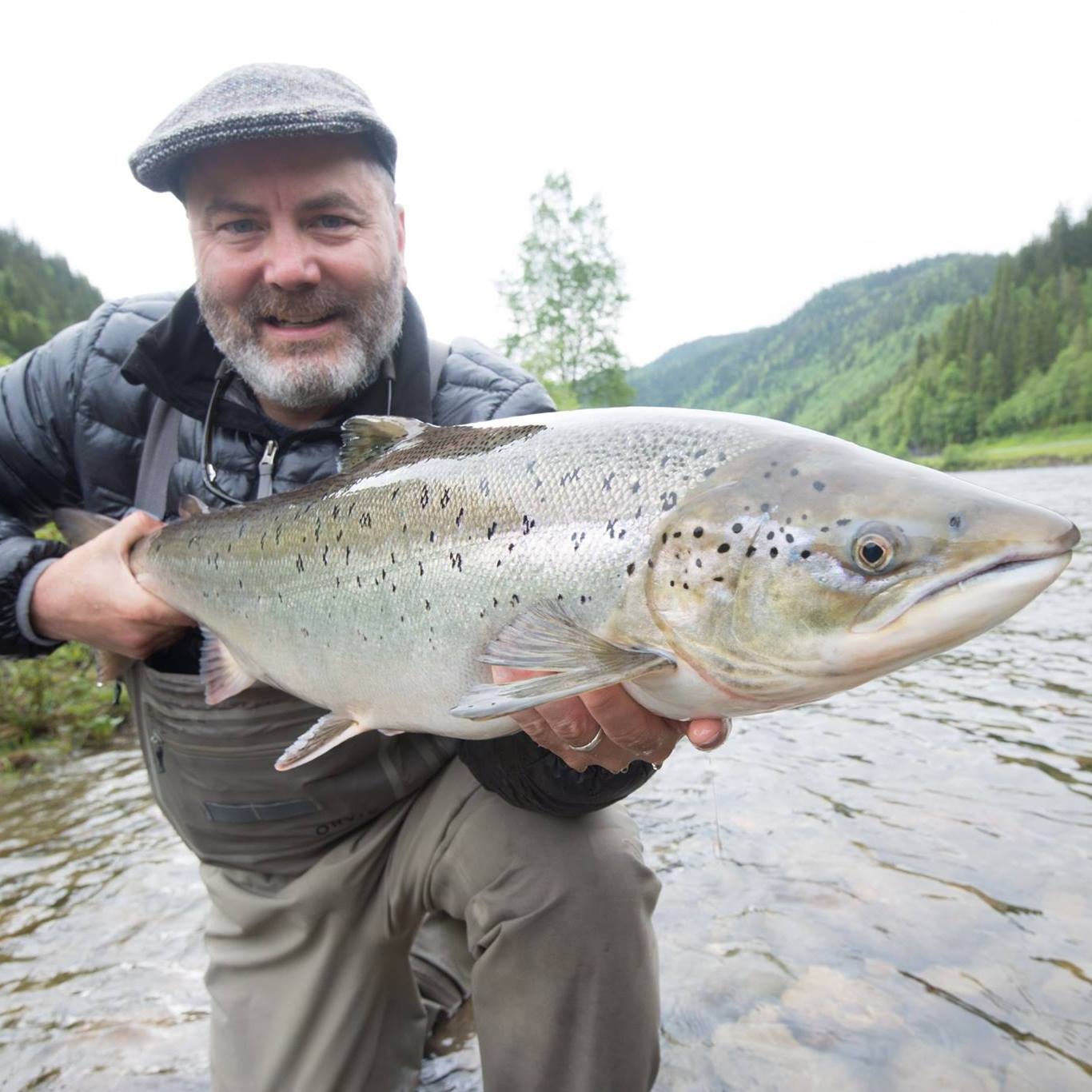

Excerpted from The Orvis Quick-Start Guide to Fly Fishing, by Philip Monahan. The book is not a comprehensive guide. It is written to help you achieve an initial level of competence, to provide the basic instruction and know-how that will allow you to enjoy your first forays on the water.

Aside from insects, trout feed on smaller fish, crayfish, leeches, and other organisms that inhabit rivers and streams. Anglers imitate these prey items with streamers, which come in a wide variety of styles and sizes, but all are long and thin. Because these larger prey items provide a high-calorie meal, they often attract bigger trout, and fish are more willing to chase down such a potential windfall. This means that casting accuracy is not as important as it is with dry flies and nymphs, and you are able to cover a lot more water with a streamer.
As with nymphs, most of the action occurs below the surface–depending on the depth you’re fishing–but because you are usually fishing streamers with an active retrieve, strike detection is rarely a problem. The line is usually taut between you and the fly, so you’ll feel the take. If your fly is close to the surface or is tied with bright colors, you may be able to see the fish strike, and in many cases, the fish hits the fly so hard that it hooks itself.
The depth at which you fish streamers depends on several variables, including the depth of the water, current speed, water clarity, and temperature. In general, you want to be close to the bottom, which is usually where the fish are holding, but aggressive and active trout will move quite far, both laterally and up in the water column, to eat a well-presented streamer. The caveat is that the trout aren’t always in the mood, and you may bonk a trout right on the head with your offering and get no reaction.
Streamer Presentations
There are three basic ways to fish a streamer–swinging, stripping, and dead-drifting–all of which are quite simple and don’t require perfect casting or delicate presentations. The main goal in streamer fishing is to cover a lot of water, so you can get your fly in front of as many trout as possible. Obviously, you’ll want to take extra care to get your fly into likely trout-holding spots, such as in front of rocks or near fallen trees, but you’ll often be surprised to pick up fish in places you might not expect to. Plus, some trout will follow a fly for quite a while before they eat it.

When you’re fishing a streamer, you’ll often want to try a few different presentations and speeds to see what the trout want on that day. Sometimes, a slow, steady retrieve will draw strikes, while at other times, only a fast, varied retrieve will produce fish. It’s one of the mysteries of fly fishing that makes the sport endlessly fascinating. So before you try changing flies, try changing retrieve speed and cadence.
Swinging a streamer is both easy and effective: all you do is cast the fly, perhaps make a mend or two, and then hold on. This makes the presentation perfect for beginning anglers. Start by casting downstream at a 30- to 45-degree angle, pin the fly line against the cork handle with the fingers of your rod hand, and then let the pressure of the current against your fly line cause the fly to swing across the water downstream from you. The fly will look like it is swimming across the stream until it comes to the end of the swing, where it then looks like it is holding in the current.

You can control both the depth of the fly and the speed of the swing through mending. If you cast across a fast current and don’t mend at all, the fly will swing across the current very quickly. To slow the swing, make upstream mends to reduce the amount of pressure the current is putting on the belly of your line. Experiment a bit with how mends affect the speed of your swing, and you’ll quickly become adept at adjusting your presentation.
Trout will often strike right at the end of the swing–perhaps they think that the prey is about to get away–or while the fly is stationary at the end of the presentation. This is why it’s important that you don’t give up on a swing too early. Instead, let the fly dangle in the current for a few seconds, and then give it a few strips. This new motion may trigger a strike from a trout not sure if it wants to commit. I’ve caught many trout on “the dangle” over my career–sometimes when I’ve simply left the fly hanging in the current as I do something else, such as take a drink or look through my fly box.
Stripping is the preferred presentation for most streamer anglers, as they believe that an active fly looks more lifelike and triggers a trout’s predatory response. Stripping a streamer involves the same process as stripping in slack: you simply hold the fly line against the cork with the first one or two fingers of your rod hand, and use your line hand to pull the line through that pinch point. It’s important that you keep your rod tip low, just above the surface of the water, so that your connection to the fly is as straight as possible. This will make setting the hook easier and more effective.

You can vary your retrieve by making each pull longer or shorter, faster or slower. You can even mix things up by going short-short-long or fast-fast-slow or any other combinations you can think of. The trout will tell you when you’ve gotten it right.
When you’re stripping a streamer, the possibilities for presentation are wide open. You can start by making the same quartering-downstream cast described above, but instead of letting the fly simply swing, you can add stripping motion. Or you can cast straight across the stream and strip the fly quickly back to you. Try to change things up as much as possible until you get a strike. For instance, try a down-and-across cast followed by an upstream mend, then try the same cast with a downstream mend. There really are no wrong answers, as long as your fly is getting down in the water column and is moving through places where trout might live.
One way to pinpoint your presentation is to arrange it–via casting, mending, or your position–so that the fly moves or swings right in front of a good trout lie. So, for instance, if there is a boulder two-thirds of the way across and 30 feet downstream from you, you could cast quartering downstream and then make several upstream mends, which would place more line directly upstream of the fly. The tension of the line on the water would cause the fly to swing farther away from you. Experiment with how you can change the dynamics of the fly’s swing, and soon you’ll be able to determine, with a fair amount of accuracy, where the fly swings.
Dead Drifting a streamer is a less common tactic, but it works surprisingly well, especially in situations where you want to keep the fly in the strike zone a long time or where your target area lies parallel to the current. If there’s a deep slot or a log against the far bank, for instance, stripping or swinging a fly would quickly take the fly away from the target area. In this case, fish the streamer as you would a nymph: cast to the upstream end of the lie, make the appropriate mends to achieve a dead drift, and then let the fly drift through with the current. Watch the end of your fly line for signs of a strike, or you can even use a strike indicator, if you wish. Since trout will generally eat a streamer with more aggression that they would a nymph, strike detection isn’t as much of a problem, but this technique works best with a short line.

Streamer fishing is great for beginners because it involves less precision. You’re usually not trying to target a specific fish, your cast doesn’t have to be delicate, and achieving a dead-drift is not a requirement (although, as you’ll see below, it does work). Since the fly moves across the current and downstream, you have the potential to get it in front of more trout in a given stretch of river. And since the fish are willing to chase, you may have more opportunities to draw a strike.
Last Updated on March 16, 2026 by Max Inchausti