Home Blog Page 67

2025 F3T Behind the Lens: Iconic Rises

The 2025 Fly Fishing Film Tour is almost underway, but before you see the films, get an inside look into what went into making each film in this year’s “F3T Behind the Lens” series. Also, be sure to check out the 2025 Film Tour Dates HERE to see the schedule and get tickets!

Next in this year’s F3T Behind the Lens series is Iconic Rises, a film by Anthony (A.J) Swentosky that highlights the resilience of the Snake River and its native cutthroat trout. We spoke with Anthony to learn more about the challenges this river faces and the uncertain future of its native fish. From dry fly fishing heaven to picture-perfect backdrops in the Grand Tetons, this is a film you won’t want to miss. Check out the full interview below. 

Flylords: What an amazing story of resilience for native cutthroat trout in the West. My first question for you, Anthony, is: What was the motive or inspiration for creating this film, and is there a connection you have to the Teton region? 

Anthony: “I lived in the Jackson, WY/Teton Region for over 10 years until recently moving to Bend, OR. The trout fishing in that area is truly amazing, and I’m forever grateful I was able to spend so much time exploring the local rivers, streams, and stillwaters. As water demands, climate change, fishing pressure, invasive species, and other factors compromise and threaten many of our fisheries across the West, the US, and the world, we have the Snake River Headwaters and Fine Spotted Snake River Cutthroat trout that are doing relatively well. That being said, it’s imperative not to take this fisheries’ health for granted, especially as water demands and climate change continue to worsen. As we move forward, it’s important for us to invest in the health of fisheries that are currently doing relatively well or even thriving, as threats and challenges are only likely to grow. This Snake River fishery is in a very favorable geographical region, but we also have a lot of great work and advocacy going on at the government, non-profit, and local community levels that will need to continue.”


Flylords: This film features many individuals from Trout Unlimited to guides and even the Science Branch Chief of Grand Teton NP. What was the most memorable part of working/filming with this cast and crew?

Anthony: “There were a lot of great times and experiences throughout filming and even the post production process, but I’d say that the opportunities to spend quality time with so many different people who care deeply about this resource are probably most memorable. Some of these people work in the fly fishing industry, some work in the conservation and non-profit world, some from government organizations, and others are simply recreators who appreciate this environment and fishery. It was rewarding to spend time with people across different professions and walks of life who are all truly passionate about this river and fishery. There were also two truly epic fishing days I had with some of the anglers (one day with Scott Smith and one brief 4-hour session with Josh Gallivan) that I’ll never forget.”


Flylords: On the flip side, what was the most challenging part of the film? 

Anthony: “I’d have to say that the list of challenges could be worse, which is great to say at this point! Sure, we had tough weather at times, we had some significant wildfire smoke in the summer that we had to work around, runoff and outflows were too high on a scheduled day of filming with Boots Allen and his daughter, the fish didn’t always cooperate on cue, etc. That being said, we did the filming over 3-4 different windows of time, so we had the luxury of being flexible and adjusting to conditions. Many thanks to the talent and filming crew as well for being flexible throughout! Perhaps the most notable challenge, which is certainly not unique to this film, was trying to ensure all parties involved felt like their perspectives were adequately represented. There’s so much to unpack related to the concepts of climate change, fishing pressure, water management, etc. that any one of these topics warrants their own film to adequately and most accurately tell the story.”


Flylords: This film encompasses issues regarding climate change, water diversion, and flow regimes. Was there a point in the creation of this film when you observed the effects of these ongoing issues?

Anthony: “Sure, almost two years ago, there was a proposal to temporarily reduce the Snake River outflow to 80 cfs, which, as we discussed in the film, would be extremely detrimental to the cutthroat trout and other species. This issue, as well as how the community positively responded, advocated, and collaborated, helped further inspire us to commit to doing the film in the first place. During our summer filming sessions, we had wildfires in the area that reduced visibility and air quality. We also had some high water temperatures on some Snake River tributaries relatively early in the summer season, which caused us to adjust our specific filming locations. That being said, at the end of our filming window, we were able to get some footage of TU removing a diversion dam on Lava Creek (a tributary of the Snake). This footage didn’t make it into the film as we were already pretty far through the edit, but it was great to still get some footage and overlap with this work.”


Flylords: What a great dry fly fishery! What was it like experiencing the liveliness of this ecosystem despite its recent hardships?

Anthony: “As I mentioned, I’ve been fortunate enough to live there for 10 years and experience much of the dry fly fishing this area is so well known for. It’s amazing. Every winter, I think and dream about all of the rising fish and dry fly opportunities from years past and, hopefully, ones to experience in the future. The backdrop, scenery, and diversity in fishing opportunities are truly remarkable. It’s easy to understand why so many people are committed to the health of this region.”


Flylords: Anthony, did you get a chance to catch a native snake river fine-spotted cutthroat? 

Anthony: Those who fish and/or film with me know that I definitely prioritize the camera over the rod these days. This absolutely was not always the case, but time and again, I’ve missed memorable moments shortly after putting the camera down. Nowadays, I tend to be a bit rigid; I’m either filming or fishing, but doing both ends up being distracting for me. For this project, I would occasionally get a free day, or filming plans would change, leaving me with some personal time to go out and chase the exact trout that were the focus of the film. Although I’m no longer in Jackson, I still like to travel back there a good bit and always find a way to get some personal fishing in.


Flylords: What advice, if any, would you give to someone looking to travel out west for a chance at one of these native fish? 

Anthony: “For one, it’s probably going to be a good time. While the weather is constantly changing, you’re usually able to find productive fishing if you know where to look. Great people run the fly shops in the area, and you’ll likely be pointed in the right direction. While you are a short drive to other subspecies of cutthroat trout, this area is home to both the Fine Spotted Snake River Cutthroat and Yellowstone Cutthroat. It can be fun to move throughout the watershed and different concentrations of each.

While we tend to immediately think of dry fly fishing when targeting cutthroat, these trout can provide some great streamer fishing and stillwater fishing, too. I personally don’t love throwing large double-hooked articulated streamers for these specific fish, as we’ve noticed they can cause some serious damage a little too frequently, and they tend to prefer smaller streamers anyway. While the fishing is truly amazing, it’s not just about catching a bunch of fish. As Scott Smith alludes to in the film, if you’re able to spend time here and be present, you can make a connection to a special place.”


Flylords: Although this film’s message regarding the protection of our native species, watersheds, and flow regimes is pretty clear, what would you want the audience to take away from “Iconic Rises”? 

Anthony: “There are a few things that come to mind here. One hopeful takeaway is the idea of investing in and protecting watersheds that currently may be “okay” at the moment. We obviously must respond to rivers and streams when they’re in an emergency state due to water temps, water quality, development, drought, etc., but sometimes prevention can be much more effective than intervention. I really think the collaborative work going on in this Teton Region across government agencies, non-profits, the fly-fishing industry, and local stakeholders can serve as a helpful model for fisheries in other regions.

The other key message is just for all anglers to be stewards of their waters so, as an angling community, we can do our part in preserving our fisheries as much as possible. The Friends of the Bridger Teton National Forest, the presenter of this film, has a community-wide motto of Responsible Recreation, which, among other things, locally promotes low-impact fishing practices (e.g., barbless hooks, keeping fish wet, minding water temperatures, etc.), avoiding the spread of Aquatic Invasive Species (AIS), and simply being good stewards of the river by respecting other recreators. As climate change increases and fishing pressure grows, the need for anglers and recreators to engage in low-impact fishing practices isn’t really a luxury but has evolved into a necessity. As fly fishing continues to grow, more experienced anglers, guides, and fly shop owners can play a pivotal role in providing modeling, support, and education for those either new to fly fishing or who are more casual anglers.”


F3T Behind the Lens 2025: Shadow People at The Falls

2025 F3T Behind The Lens: Dan’s Pain 2

10 Best Drift Boat Accessories

Once you get a drift boat, the first thing that comes to mind is outfitting and accessorizing it to fit your fishing program. Let’s face it, the moment you get it, you just want to hit the water. To make it easy to hit the water, these drift boat accessories have become essential items on any trip.

Trying to stay minimal, but maybe you’ll see a piece of gear in this guide that you never would have thought about. Given the minimalist mind, we have even jumped into trailers and a few pieces that can make your experience even better. That being said, some of these items aren’t completely necessary but could make or break your day the next time you drop your boat in the water. 


Tornado Anchors

Swivel Block (2:1 Pulley System)

Buy Here

You might not think this is the sexiest piece of gear, but when it’s attached to your anchor, it makes it so much easier. Having a pulley system consists of two things. One, you will need longer anchor line. I like to start with 50 feet of .5 anchor line that you can pick up at your local hardware store or boat shop. Two, the swivel pulley will not spin your line. On typical pulley systems that don’t have an integrated pulley system, your anchor line will spin and get twisted up. The Swivel Block from Tornado Anchors answers the problem: easier to pull your anchor up, and eliminates twisted line. 


Master Lock

Trailer Lockbox

Buy Here

Some of the places we like to fish are weird. That being said, don’t just throw your keys in your gas cap for the shuttle driver, keep a lockbox on your trailer and make sure your vehicle stays locked at all times. Sometimes I’ve worried about my shuttle driver having issues getting into the lockbox, however, make it known that your car keys are in a locked unit on your boat over the phone, or in a notes section of any shuttle form you fill out. Rule of thumb: put-in time, take-out time, car model, color, license plate number, and where your keys are located. 


Yeti

Rambler 20 oz Stackable Cups

Buy Here

YETI

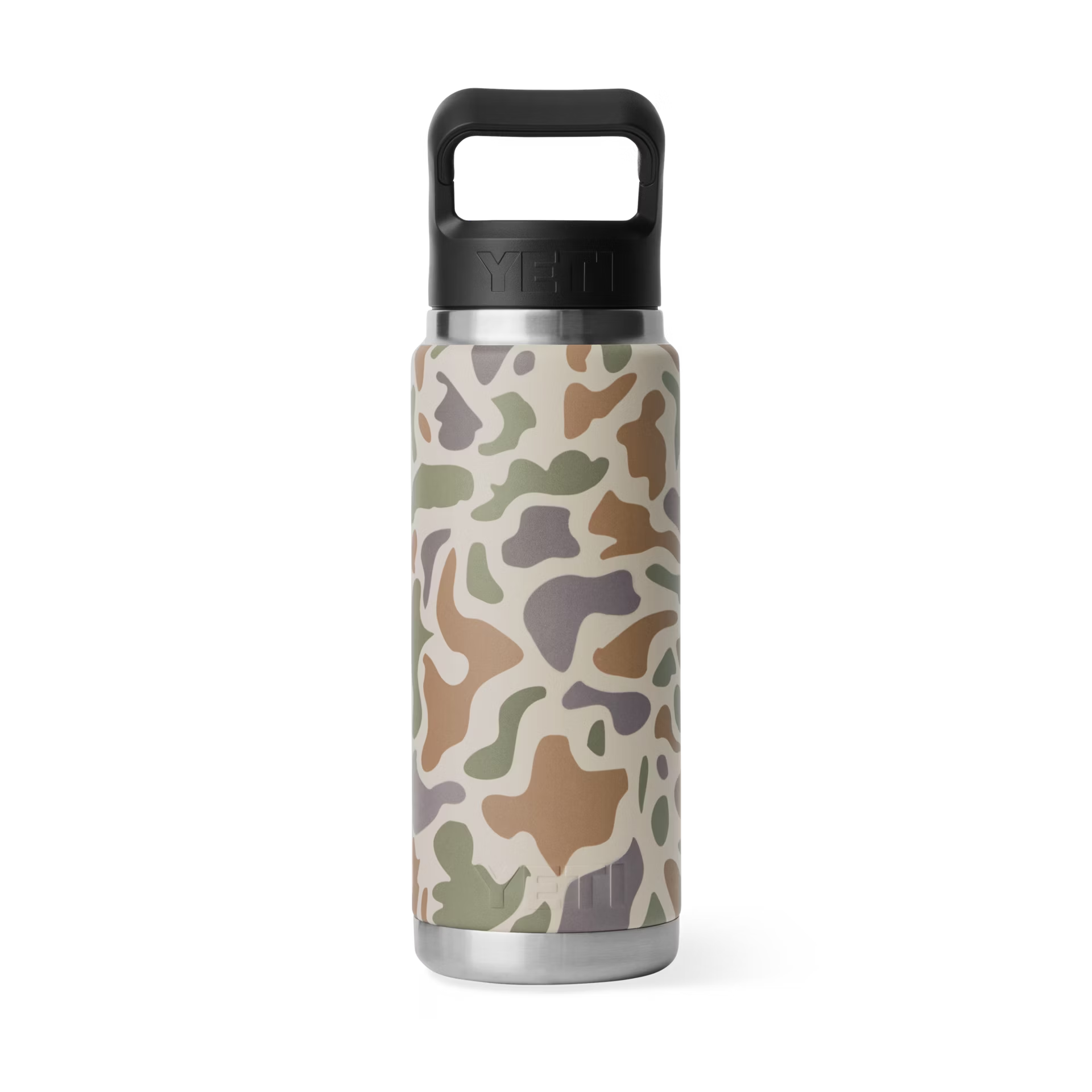
Rambler 26 oz Straw Cap

Buy Here

Coffee mugs & insulated drinkware designated for your drift boat. That’s all. Whether or not you’re doing a couple days on the water and overnight, having coffee mugs that are easy to clean and stack nicely when stowed away, the Stackable Cups from YETI are a must. Like your typical Rambler from YETI, we like these mugs due to their stackability and how easy they are to organize. That being said, once you finish your morning cup of Jo, you can refill it with dedicated bottles throughout the day, eliminating the use of water bottles and keeping everyone happy in the boat. Typical days on the drift boat can be hot, tiring, and exhausting by the end of the day, check out our article on how we pack for a day on the water with YETI


Adventure Medical kits

Sportsman Series

Buy Here

Might not be the sexiest piece of fishing gear, but a necessary piece in the field. Whether hooks get caught in someone or there’s a light scrape, having a kit that you can rely on when the time comes is always a good call. The Sportsman’s Series 300 Medical Kit from Adventure Medical Kits has everything you need and more to stay safe on the water when you’re out on the drift boat. 


Boat Flooring

Buy Here

You might have just gotten your boat, it may be used, but how can you make it look and feel comfortable? SeaDek is a company known for making flooring products for boats. Big in wake-board or water skiing boats, drift boat companies have adopted SeaDek, and some even sell it as an a-la-carte option. If you’re looking for a cheaper option and a DIY project, SeaDek sells sheets you can customize for your boat. We like these for the bow and the stern of drift boats, but the customization is endless when it comes to making it your own. The best part, it’s easy to clean, nice on the feet, and durable. 


Yeti

Ice

Buy Here

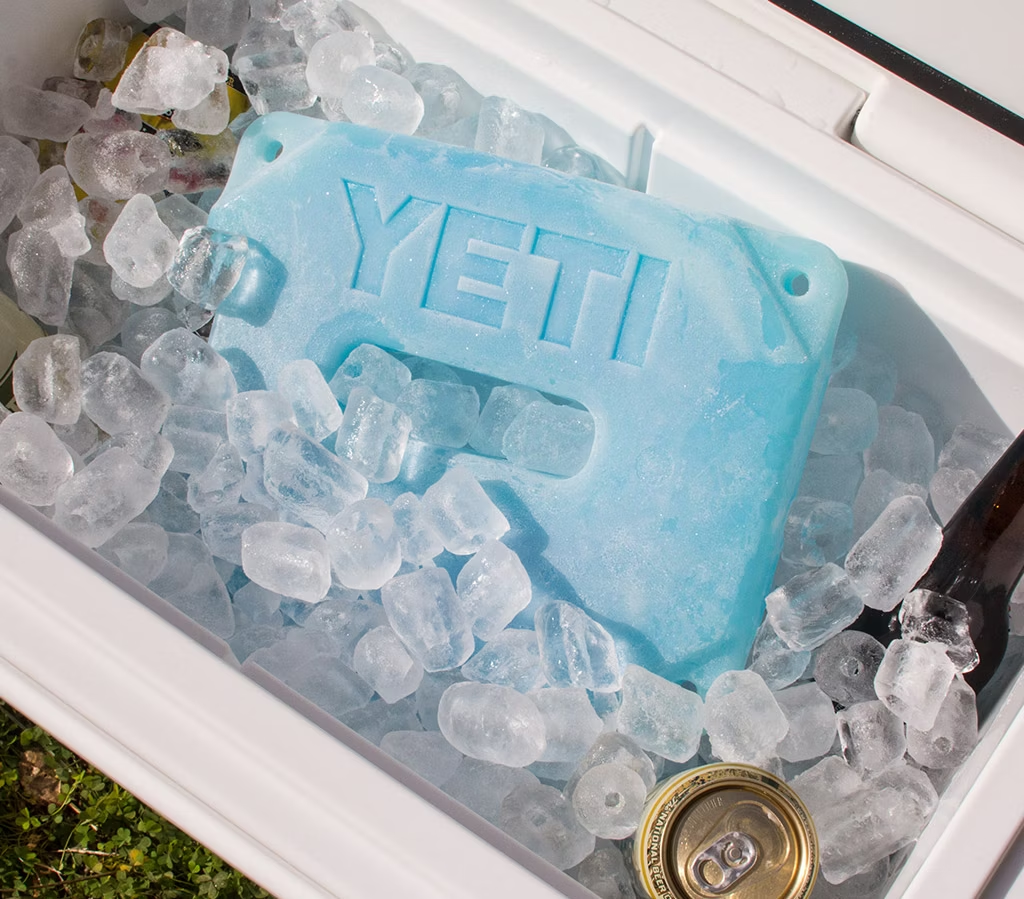
Forget buying the $5 bags of ice at the gas station. One, it gets old. Two, it comes in plastic and melts quickly. YETI, once again, has delivered a product that changes the game when it comes to keeping cold-cut sandwiches cold, and beer frosty. YETI ice is awesome, take it out of the freezer and throw it in your cooler to keep everything chilled for days spent on the water. 


boatbuckle

Gunwale Transom Tie Downs

Buy Here

Boat buckles are a great addition to your trailer. They are super nice as they self-contract and go right onto your gunnels for an easy strap onto your trailer. With that, they are versatile with your mounting points. Typically, most drift-boat owners mount them near the rear of the boat trailer close to the roller bar. Personally, I’m due for a new set, as they are the original boat buckles from 2008. They are durable and super easy to use when your boat is ready for tow. 


Fishpond

Nomad Boat Net

Buy Here

You may call a net necessary. However, most people bring a net with a handle that is way too short for the boat. We like having a longer boat net handle for getting over the gunnels, and so the fish is easily caught. Having a little extension goes a long way and there’s even a few brands that have made nets that have removable handles for wade or float fishing. We like rising nets for that reason or a dedicated net that you keep in your boat, like the Fishpond Boat Net. 


sawyer

Spare Tire Oar

Buy Here

There’s no reason for a full oar in a drift boat. Many companies have made break-down-oars to keep in your boat so they can be stored away easily. I like the option from Sawyer Oars, which they call their “Spare Tire Oar.” Designed to be split into three 36” pieces, it’s a spare oar you can rely on and keep in your storage box when you’re floating. 


NRs

Titanium Co-Pilot Knife

Buy Here

Having a knife on board is necessary. For emergencies, opening something up, or just having on your PFD you cannot go wrong with a dependable knife. NRS makes some awesome knives for different occasions. Personally, I really like the Titanium Co-Pilot Knife since it’s lightweight, stronger than steel, and the blade holds a keen edge. Take a look at the Titanium Co-Pilot Knife to add onto your PFD or to keep in your boat at all times. 


Bonus: 

Rocky Talkie

5 Watt Radio

Buy Here

Good, reliable communication is something that is very important when it comes to float fishing. Here at Flylords we utilize the Rocky Talkie 5 Watt Radio for our communications on multi-boat floats. Check out our ‘Guide Test’ article on the 5 Watt Radio from Rocky Talkie. 


Reusable Rain Ponchos

Buy Here

Rain will come. Colorado is a place we call “never summer.” Having at least 3 reusable rain ponchos is a great call. The people you take fishing will thank you later. 


Spare Boat Plugs

Buy Here

Do not forget your plugs. That’s why you should just have them everywhere. Just like bobbers, you can never have enough. Keep them in a bag in your boat, and never change the spot you put them in. 

Whether you take your drift boat out a handful of times each summer or keep it rigged and ready year-round, we hope these accessories will enhance your time on the water. While not every item is essential for every outing, a few of these products have made a noticeable difference for me—starting from the moment I hitch up the trailer to when I pull the boat out at the end of the day.

Flylords Holiday Fly Fishing Gift Guide 2024

5 Best Trout Streamers for Fall Fishing


Fishing Tips: How to Improve Your Backcast

Your backcast is one of the most crucial parts of your cast. Check out this video from the Huge Fly Fisherman for tips on how to improve your backcast.

Angler Story of the Week: Showing Grandpa The Fish I Caught

A Note from McKenna (@mckennahulslander):

“My grandpa is close to 90 years old and has slowed down a lot and so is no longer able to get out and fish. He is always so eager to hear of what adventures I’ve been on and of course all the fish I’ve caught. So I started this tradition of putting a slide show together for him. I never planned on putting a reel together but my mom took some videos of the visit and I think captured how fly fishing is so much more than catching fish. I love that he enjoys it as much as I do!” – McKenna

Angler Story of the Week from McKenna Hulslander, be sure to follow McKenna’s instagram at @Mckennahulslander! 


Check out the articles below:

Reel of the Week: The “Check My Fly Cast”

A Note from Mathias (@Mathiaslilleheim):

This is a cast that I use a lot to check if my fly is doing ok. Some call it the Snap C. First, I slowly lift my rod, then comes the downward snap, immediately followed by a sideways movement of the rod (for directional adjustment). In this video, I catch the leader in my hand, but when I fish, I must admit that I catch it on the rod (much easier). – Mathias Lilleheim

Reel of the week from @mathiaslilleheim, be sure to follow Mathias on Instagram here!


Check out the articles below: 

Fishing Tips: The Davy Knot

Fishing Tips: Casting a Sinking Fly Line


Video of the Week: Into the Wild West with Blue Line Co.

Image Courtesy: Blue Line Co

We’re back! In this Week’s Video of the Week, we catch up with Adam and Steve from Blue Line Co in their most recent film exploring some of Idaho’s untouched wilderness. They have been working on restoring a 1991 Isuzu Trooper and had plans to go overlanding with it in this film but the Trooper had other ideas. They ended up taking Adam’s truck and still went for it. The crew dealt with very odd, clear weather for fall in Idaho which led to tough fishing. But as we all know, not all fishing trips go to plan. Sit down and enjoy some awesome camaraderie and a few killer fish!  

Here at Blue Line, we have been tying flies for about as long as we have been fly fishing. We started tying because we had to. The lack of fly fishing shops and good bass and warm water patterns drove our passion for the vise. We found patterns from saltwater and trout fishing. We would tie bigger or smaller sizes and better colors of some popular flies. Over the years this turned into fly design. We have a different approach here at BLC on flies. Figure out what triggers fish and put those aspects into a fly design. We use these aspects to design flies that catch fish, not fishermen. We only sell flies that we trust ourselves and personally use in our fly boxes. Check us out here: bluelineflies.com

Check out these other awesome articles as well! 

Video of the Week: Blue Line Co Project Isuzu Episode 2

Video of the Week: 5 day Fly Fishing Adventure with White Pine Outfitters

Video of the Week: “The Last Day” by Brookbow

Fishing Tips: What You Need for a Bonefish Trip

Planning a trip down to the salt? Check out this video from InTheRiffle for what you need for a bonefishing trip.

Giving Tuesday 2024: The Fly Fishing Community’s Chance to Make a Difference

There’s a very good chance that your inbox is totally flooded with thanksgiving week sales marketing emails, and those Giving Tuesday emails from the many great non-profit organizations in the fly fishing world might have been overlooked. Here at The Flylords, we’ve worked with and supported countless organizations over the years and have seen tangible progress to restore and protect so many of our wild places. While this list includes several of our favorite organizations, it is by no means exhaustive, as there are so, so many great groups out there doing fantastic work. So, on this Giving Tuesday, do what you can to support the groups doing important work to protect the places, fish, etc you hold dear.

  1. Trout Unlimited

  2. Project Healing Waters

  3. Casting for Recovery

  4. Captains for Clean Water

  5. Bonefish & Tarpon Trust

  6. Backcountry Hunters & Anglers

  7. American Saltwater Guides Association

  8. Elevate Youth

  9. The Native Fish Society

  10. Science on the Fly

  11. Wild Steelhead Coalition

  12. Utah Stream Access Coalition

  13. Wild Salmon Center

  14. Indi Fly

  15. American Rivers

  16. Keep Fish Wet

  17. Fly Fishing Collaborative

  18. Running Rivers

Also, we’d be remiss to not explicitly highlight the Blue Ridge Relief Giveaway to assist all those devastated by Hurricane Helene a couple months ago. The remote fishing communities of the Blue Ridge Mountains are resilient but could use support to get back on their feet. Plus, a donation today enters you into an incredible raffle including a on-of-a-kind Adipose drift boat!

Again, if your favorite local organization did not make the list, we apologize! But, today and the rest of the year, go and support all the great organizations out there to whatever tune or however you can! 

Reel of the Week: Simple Reminder on Why to Fly Fish

A note from Kari (@akkenaigirl): 

“Fishing has been a part of my life since I was 4 years old when my family moved to Alaska. My dad took our family fishing most summer weekends and brought me along on his fishing trips with his friends which instilled in me a deep love for the sport.”

“I lost my mom 5 years ago—though she wasn’t as passionate about fishing, she loved the Alaskan outdoors. Now, fishing on the Kenai River makes me feel so close to her, and every time I catch a monster like this I can’t help but wonder if she’s celebrating with me. For many of us, fishing is so much more than the sport of it. These trophy trout are just an added bonus.”

Reel of the week from @akkenaigirl, be sure to follow Kari on Instagram here!


Check out the articles below: 

One Way Ticket to Grab City: An Alaskan Angler Story

DIY Float Fishing in Alaska

Complete Guide to Idaho Steelhead Fishing

Steelhead have a way of humbling even the most seasoned angler, and Idaho is no exception. These ocean-run fish run nearly 700 miles hundreds of miles upriver, making them the furthest inland steelhead. Steelhead fishing in Idaho isn’t for the faint-hearted; it’s a pursuit that demands patience, grit, and an unbreakable spirit with a fly. Just when you think you’ve figured them out, they vanish, leaving you casting again and again, but it’s this challenge, this relentless pursuit, that hooks you. Known as the “fish of a thousand casts,” these “chrome ghosts” retreat in the runs and swift currents of Idaho’s rivers, waiting for us to try them.


Overview of Idaho: The What, Where, and Why

Before I moved to the Pacific Northwest, I thought of steelhead as exclusively coastal fish – limited to the oceanfront rivers stretching from Northern California, up through Oregon, onto Washington’s coast and the Olympic Peninsula, now British Columbia, and even reaching Alaska. I was aware of the Great Lakes “steelhead,” but there’s already enough debate on whether they’re truly steelhead or simply adapted rainbows. That’s a discussion for another time. Yet, these fish make a remarkable journey 500 to 900 miles away from the Pacific Ocean, pushing deep into the mainland—all the way to the Gem State of Idaho.

The steelhead’s journey to Idaho is nothing short of epic. It begins at the mouth of the Columbia River, just northwest of Portland, Oregon, a point where they’re still in brackish water, getting their last taste of the ocean. From there, they enter the mainstem Columbia River, making their way northeast, eventually across the Oregon border and into Washington. Finally, they hit a major branching point, the Snake River’s confluence near Washington’s Tri-Cities. From here, the Snake River serves as the only ‘one-lane highway’ that brings these fish into Idaho’s waters. The Snake River is essential; without it, Idaho would never have had these fish to begin with. This interstate lets these fish enter Idaho’s Clearwater River, the Salmon River, and continue up the Snake. These are some of the most fabled steelhead fisheries in the lower 48. These fish were all born in these rivers before they made the backward journey down these rivers to grow into adults at sea. 


History and Habitat

Idaho is home to strictly summer-run steelhead, although confusingly, winter months are often a good time to catch them. These fish begin their migration up the Columbia in the summer, with the quickest of these swimmers arriving in Idaho as early as July, hence the name. While many coastal rivers have winter-run fish and summer-run fish, they all get their categorical definition from when they start their trek out of the saltwater. Not to make this any more confusing, but there are two main steelhead runs in Idaho: A-run and B-run – both of which are summer run variants. A-run fish are typically smaller, spending only one year in the ocean, while B-run steelhead spend two or three years growing in the ocean, reaching impressive sizes of 15 to 20 pounds. Anglers casually throw terms around like “one salt” or “three salt” fish to talk about these steelhead and the estimated number of years they ate live seafood. A-run steelhead are found in all 3 systems of Idaho – the Clearwater, the Snake, and the Salmon but are more common in the Snake and Salmon rivers. B-run steelhead are almost exclusive to the Clearwater River, though some stray into the Salmon and Snake Rivers and their other tributaries.

This wonderful little A-Run steelhead was caught on a black and purple muddler in Snake River country. This is about as small of a steelhead as you will see in this area. Photo by Rock Dai.

Once in the Snake, Idaho steelhead face even more challenges. Dams make every mile harder, demanding energy and persistence as they navigate upriver. Yet they press on, with instincts finely tuned to lead them up these rivers that might be foreign to them ever since their conception. Their journey isn’t just a biological marvel – it’s a testament to their resilience and strength. The four giant dams on the Columbia River and the four more dams on the Lower Snake River present formidable obstacles. Though I’m not a fisheries biologist, I’ve done some minor work with Trout Unlimited, and even with some regular common sense, it’s evident that these dams have severely impacted steelhead migration and reduced their populations to a fraction of historic numbers. This article is not about these dams, but I do encourage you to look into the effects of the lower 4 Snake River Dams. If these dams don’t receive some attention, these Idahoan gifts may become extinct in the near future. 

The rugged scenery surrounding each of these rivers is breathtaking, from rolling hills covered in sagebrush to higher-elevation pine forests full of wildlife. Wherever these fish may be, expect some of the most gorgeous Pacific Northwest scenery you can imagine.

This image, taken on the Clearwater River, portrays the classic canyons and landscapes you can expect to find on Idahoan Steelhead Rivers.


How to Target Steelhead in Idaho: What to Look For

Steelhead have a tendency to migrate at night and in low-light conditions, think morning and evening. During the day, they take refuge in deeper pools and runs. This is the time of day when it’s best to target these fish. When fishing for steelhead, imagine yourself as the fish: you want to seek out resting spots sheltered from the main current. Deep troughs, boulders, and pockets of structure are ideal holding spots where steelhead can pause during their journey. Target these areas, and you’ll have an ideal chance at finding a fish.

Access to steelhead fishing in Idaho varies by river. The Clearwater River offers extensive highway access, with classic stops at memorable destinations like the Red Shed Fly Shop. The Snake River is more remote, particularly in Hells Canyon, with few roads providing easy entry on most of the river. Jet boats can access Hells Canyon for those looking to explore this less accessible area. If you have a boat, sections of the Clearwater are also easily accessed. There is great raft access on both the Clearwater and Salmon River systems, too. The Salmon River is renowned for its untouched wilderness and rich fishing culture – in towns like Challis, Salmon, and Stanley. This country will make even the most experienced outdoorsman’s jaws drop. This area represents some of Idaho’s most pristine landscapes, and a trip down the Salmon River, or any of its forks, is an experience anglers, rafters, and any outdoorsman cherish alike.


Fly Fishing Techniques and Gear

Targeting steelhead in Idaho is one of the most thrilling experiences you can have with a fly rod. If you’re set on pursuing steelhead with a fly, there are two main methods: fishing with an indicator or fishing a swung fly. If you’re after the true Idaho steelhead experience, a swung fly is essential. I would encourage you to try Spey fishing with a two-handed rod, but single-handed swinging is just as common on these rivers. Fishing with an indicator is a simple and reliable way to target steelhead on the fly. The rig consists of an indicator on a 9’ 8wt fly rod, or perhaps a switch rod, with a weighted stonefly, jigfly, nymph, or egg fly. Cast up stream of holding spots and drift your indicator rig through likely areas. Watch the indicator for any movement indicating a strike and set the hook.

Swinging flies for steelhead is the preferred method of targeting these wild fish. While it can be, and is, done on a single-hand rod, the common setup consists of a two-handed rod, often ranging from 11 to 15 feet in length, and a shooting head. Anglers make downstream casts at an angle and “swing” the water with a tight line and Spey flies. When a fish takes your fly on the swing, the ensuing chaos and power makes it all worth it. Every single fish you are fortunate enough to have an encounter with brings this immense feeling of power followed by explosive runs.

Swinging traditional flies is what Idaho steelhead fishing is all about. Anglers often fish a more traditional, longer, and thinner Scandi-style line with a floating leader on a Spey rod with a size 4 to 8 wet fly. You’ll see a range of Spey rods out there, from 11-17 feet and 6-10 weight fly rods. Though this is the case, the standard Spey setup is a 13-foot-7 weight paired with a Scandi-style head (more on Skagit-style heads later), as this will tackle any steelhead river you fish. The 13-foot 7wt is the “9-foot 5wt equivalent” in Spey fishing as it is pretty much the most universal rod for all tactics and sizes of fish. Swinging with a standard 9’ 8wt is common, as well, for the single-hand variation of swinging, and having a selection of leaders/tips gives you great access as well with a standard floating line.

Fishing with classic click and pawl Spey reels, like this Hardy Marquis Salmon No. 2, are what all the purists are fishing with, which adds even further to the charm of steelhead angling. Photo by Cade Crookshanks.

Traditional flies – like the Green Butt Skunk, Purple Peril, or Lady Caroline – are fished near the surface, often just a couple of inches below it. These flies, and thousands of similar flies, are the main flies you’ll see from late summer and throughout the fall. They’re small, anywhere in sizes from 2-12. With most falling in the size 4-8 range. These flies measure 2 inches all the way down to 1 centimeter… or maybe even smaller. You’ll be shocked at the willingness of a steelhead to chase one of these flies down. If you’re after the ultimate thrill, try throwing a skater up on the surface. Idaho is one of the few places in the world where swinging a skater gives you a fair shot at a hookup with a steelhead, and it’s as exciting as fly fishing gets. 

My Wheatley fly box filled almost to the brim with traditional flies, awaiting their opportunity to come in contact with a “silver bullet.”

For the more modern approach of Spey angling, Skagit-style lines are also popular, and they let you throw heavier, flashier flies like intruders and large egg-sucking leeches. These thicker shooting heads have a more bulky taper, allowing the ability to throw sink tips and more weight. Sink tips on a single-handed rod will also do the same. When starting with two-handed rods, Skagit is more user-friendly and could even be slightly more effective, though this is an area up for debate. Although Skagit setups work year-round, traditional flies and a Scandi rig, or a floating leader on a single-handed rod offer a great chance for fall anglers. While traditional-style flies are fun to fish, steelhead are opportunistic and aggressive, and they’ll eat a variety of flies. Use what excites you! One of the incredible things about swinging a fly is that you can fish in whatever fashion brings you confidence. Small and thin traditionals or huge and bulky leeches – they all work. 

As fall fades into December, these fish become less likely to chase a traditional fly from a distance, which is when you should switch to a Skagit rig (with sinking tips) and a larger profile fly. By late winter (February and later) many anglers hang up their rods, including myself, but some anglers keep fishing on until April or May. These fish have been pressured and are starting to show signs of the long season, and it is time for them to fulfill their reproductive journey. It is here where we get the smolts that will navigate their way out to the ocean and grow so they can journey right back up as adults to where they hatched in the river, perpetuating this amazing cycle. Though it is late in the season, and these fish are likely spawning, they’re still there to be caught if regulations allow it.

My best steelhead I have landed this season. This fish was caught on a size 4, green butt, purple Spey fly. Photo by Cade Crookshanks.


Final Thoughts

These fish can take hundreds, sometimes thousands of casts, before you feel even the slightest tug. I once heard it said that your first steelhead on the swing might take 10,000 casts, and after that, each fish will still take a thousand more. Steelhead fishing isn’t about catching big fish; it’s about something deeper and harder to explain – the word “mystical” is the best thing that comes to mind.

The magic of steelhead fishing lies in the experience itself – standing in the same water that these fish have traveled in that connects all the way back to the ocean. You’re in the presence of creatures that have survived an epic, exhausting journey hundreds of miles upriver. Just being near them, casting a fly, carries a sense of awe that’s impossible to put into words. The goal isn’t simply to land a fish… it truthfully is to engage with this timeless, remarkable species on its own terms.


Special Note

I want to thank my friend Cade Crookshanks for inspiring my love for steelhead and traditional fishing methods. Steelhead fishing is more than the catch; it’s the time shared with friends. Cade and I have grown close on the river, and he’s taught me why these fish are so special. Steelhead fishing isn’t about numbers. I started fly angling Euro-nymphing and evolved through dry-dropper rigs to Spey angling – and I’ve learned each method has its place. For steelhead, it’s all about swinging for me… and for most serious steelhead anglers. Cade’s knowledge and passion have shaped my journey. Without him, I wouldn’t be the angler I am today. A friend like Cade brings meaning to every moment on the river, showing the true power of steelhead fishing, and I encourage you all to go fishing with someone like Cade to enhance your steelhead journey.

Record Breaking Steelhead Caught In Idaho

Fishing Tips: Salmon and Steelhead Fishing Tips