Utah senator Mike Lee and representative Celeste Maloy, both Republicans, are pushing for congress to vote on changes to the Grand Staircase-Escalante National Monument under the Congressional Review Act (CRA). If leadership agrees to hear their argument, a vote could happen as early as next week.
This is the same mechanism that was just used to overturn protections for the Boundary Waters in Minnesota, allowing mining to occur in an area where that activity has strictly been off-limits. If Lee and Maloy are successful in changing the management plan for Grand Staircase, the CRA could continue to be a tool used by congress to force changes to land management plans over the objection of agencies and voters.
Land Tawney, co-chair of American Hunters and Anglers, recently wrote that “Once Congress establishes that national monument management plans can be erased with the stroke of a pen, places all across the country become vulnerable… especially public lands and waters rich in wildlife, hunting and fishing opportunity, and natural resources that some politicians and industrial interests see as available for development.”
How The CRA Works
The CRA allows congressional representatives to unilaterally change management plans for areas under federal control, like a national monument. The CRA was originally implemented in 1996, and states that all federal agencies must report all the rules they issue to Congress, and that Congress has authority to undo those rules if a simple majority in both houses agree to do so.
Photo: Bureau of Land Management – Utah/Flickr
Lee, Maloy, and other proponents of the CRA claim that land management plans, such as those issued by the Bureau of Land Management, are “rules” and can therefore be amended directly by Congress. This gives them essentially unchecked authority to change land management decisions at their whim.
While the CRA was used to allow mining in the Boundary Waters, this is the first time it has been attempted to be used on a National Monument. Any decisions made under the CRA aren’t allowed to be challenged in court.
What Would Change
It’s not completely clear what changes Lee and Maloy wish to make to Grand Staircase. Writing for Utah News Dispatch, Annie Knox reported that “Maloy has said if the CRA effort is successful and signed by the president, the measure would revert the monument’s management plan to a prior version under Trump’s first administration. But that plan didn’t cover its current boundaries … leaving questions about the rules that would apply to the rest.”
The changes would also specifically state that the BLM couldn’t manage Grand Staircase in a “substantially similar manner” to how it was previously managed, which doesn’t give current officials much, if any, guidance on what activities would or would not be allowed on the land.
Photo: Bureau of Land Management – Utah/Flickr
Knox also reported that, under current management, cattle grazing is allowed on 93% of the monument, while recreational target shooting is allowed on roughly 90%. All of Utah’s congressional delegation has said that the current management plan is “federal overreach” and that it “limits grazing and recreation.”
Moving Forward
If successful, this could pave the way for future changes to many areas throughout the west, especially as data center development ramps up in the Rocky Mountains. Opponents of the CRA worry that protections for some of the country’s best hunting and fishing could quickly be at risk.
With Father’s Day right around the corner, the search for the perfect gift for dad has officially begun. Our team is proud to present some of the hottest fly fishing gifts on the market in this year’s Father’s Day Fly Fishing Gift Guide. We took the time to find gifts for every price point that will actually get put to use on the water. No matter your budget or angler, there’s a gift for them on this list.
We try to do our part and encourage all of our readers to make the extra effort to shop locally, and that’s no different than through this Father’s Day Fly Fishing Gift Guide. When you shop local, not only are you giving Dad the gifts he wants, but you’re also gifting your support for the backbone of the fly fishing industry.
All products featured on Flylords are independently selected by our editors. However, when you buy something through our retail links, we may earn an affiliate commission.
Gifts Under $50
If you’re looking for something that won’t break the bank but will actually get used, we’ve got you covered with ideas under $50.
For the dads who are always on the go, premium drinkware is an essential. This Father’s Day, consider adding a YETI Tumbler to his collection of hydration essentials. Whether they have a collection of YETIs or this is their first, you can’t go wrong with a tumbler. Plus, the new summer camp artwork features outdoor-inspired art made for the outdoorsy dad.
If your dad’s love for fishing rivals his love for you, chances are he could use new tippet. Rio’s Headgate tippet tender paired with Powerflex Tippet spools is the perfect gift. Not only does it restock the most commonly used tippets (size 2X-6X), but it also includes a handy tippet tender to keep everything organized and within arm’s reach on the water.
If dad is constantly fine-tuning gear, swapping out fly lines, and obsessing over the slightest details, the Scientific Anglers Regulator Spool might be the perfect gift. This handy little tool allows you to spool and unspool fly reels with fly line in minutes. It also prevents you from having to unspool an entire line onto the floor, avoiding a knotted mess.
Duck Camp hats are always a great gift, and this Father’s Day, there’s one option that stands out above the rest. The limited-edition collab with Captains For Clean Water, one of our favorite conservation organizations, features a clean patch featuring a snook and a blue-winged teal. Add to that, a portion of each hat sold goes to support Captains and the incredible work they do, and this is a gift dads will proudly show off.
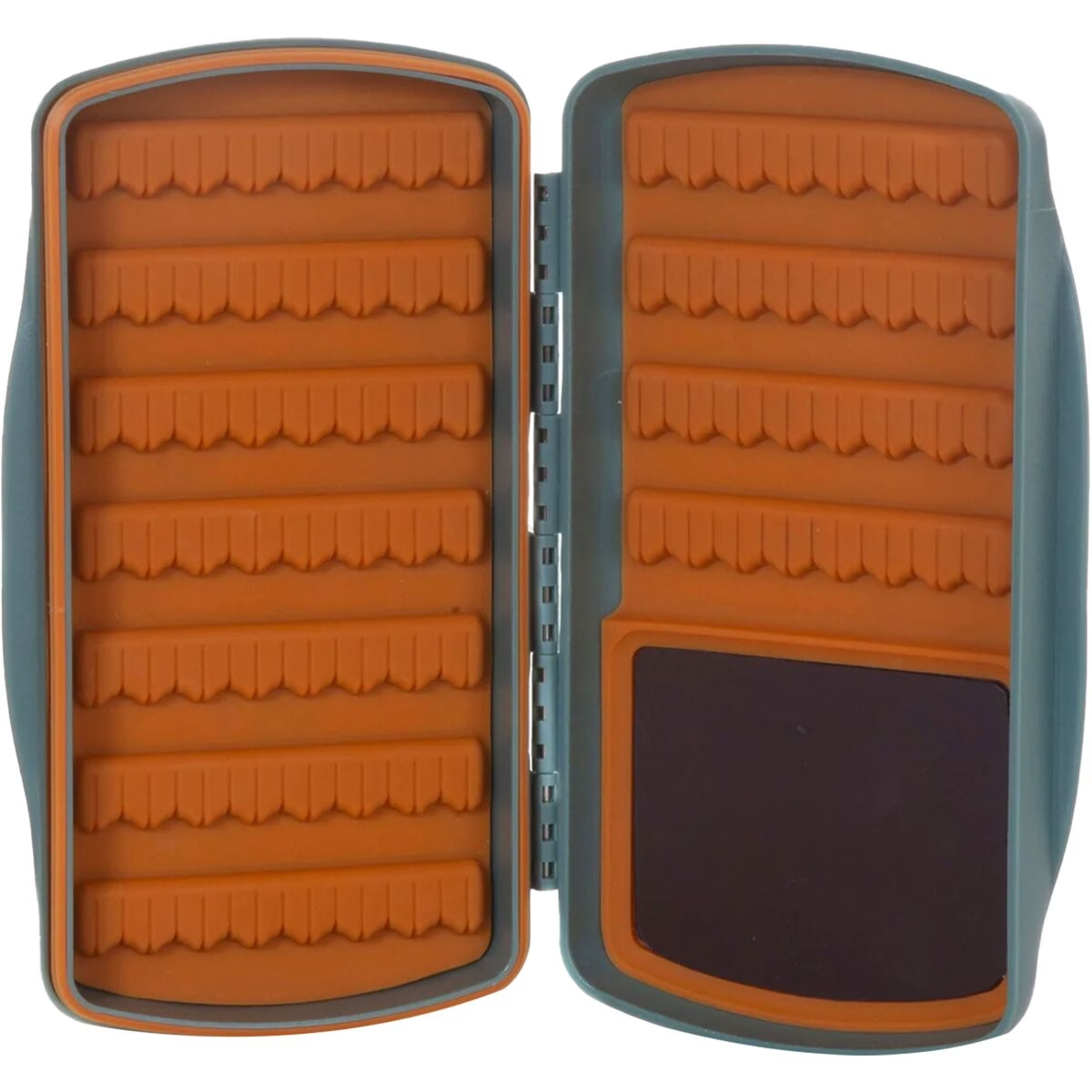
Fly boxes are the one piece of gear anglers never have too many of, and one of the best is the Fishpond Tacky boxes. The Pescador MagPad box features silicone inserts to firmly hold your flies in place. In addition, a small magnet holds loose flies and small midge patterns that won’t fit in traditional-style boxes. At just $30, this is a gift that will be used for years to come.
Gifts Under $100
If you’re looking for something that’s a step up, check out these $100 and under gift ideas.
Regardless of what type of boat your angler owns, a Mag Grab Delta can go a long way when it comes to staying organized. This magnetic plate can be easily attached to boat gunwales, coolers, or vehicles and provides a landing place for tools and flies. No longer do you have to worry about stray hooks on the floor with this handy accessory. You can also add custom engravings to any Cling accessory.
Every saltwater angler could use a good stripping basket like the Ahrex FlexiStripper Basket. This stripping basket is the lightest and least cumbersome version on the market. Fitted with pegs to hold fly line and available in a wide variety of color options, this basket will surely get put to use in any flats fishery.
Quality tools go a long way when it comes to tying flies, so get dad an upgrade this season. The Loon Core Tying Kit features all of the basic tools needed to tie flies for a reasonable price, at just $60. While this makes a great starter kit, the tools are all high-quality, making it a great gift for any fly-tying enthusiast.
For Father’s Day this year, consider some new fishing apparel; it’s always a welcome sight. The Simms Solarflex Hoody is a lightweight sun hoody that is designed for the hottest days of the year. Simms synthetic knit blend provides UPF 50+ sun protection while wicking moisture and drying fast. Best of all, it doesn’t have the sticky feel other sun hoodies get when you’re sweating.
A technical fishing shirt that can be worn on and off the water will get more than its fair share of use. Poncho has been building shirts that fit this bill since day one, and its newest Bow to the King collection is no exception. One of our favorites in this launch is the 12-Weight, a long-sleeve performance nylon button-up. Classic styling paired with features like back vents makes this shirt just as comfortable chasing tarpon in the Keys or worn out around town.
Gifts $100-$250
From essential gear to premium apparel, check out these gift ideas for dad.
The newest iteration of the Rising Lunker Net features a new and improved handle design that is lighter and more ergonomic than the previous handle. Other than that, the frame is the same design anglers have grown to love. The Lunker size is a perfect do-it-all size for wade or drift fishing, and the package includes two different handle sizes. Depending on how or what you are fishing for, simply swap out the handle to accommodate your needs.
RepYourWater and their state and fish-themed apparel have always been gift-giving favorites, and the same is true for their newest technical fishing apparel collection. One product that stands out above the rest is the Roaring Fork Pant, packed with features like cinchable pant cuffs that double as gravel guards for wet wading. It also features a durable and quick-drying fabric for comfortable summer fishing.
The Grundens Turbulence Hybrid Hoodie is the perfect gift to show you care about how comfortable his days on the water are. Designed with body-mapped insulation, this jacket keeps you warm when you need it but won’t overheat when you’re active. It’s perfect for early spring mornings and crisp fall days, plus pair it with an outer layer for cold winter days.
If you’re looking for a gift that will see some serious use, consider a pair of deck boots. While they’re designed for fishing, they work great anywhere you don’t want your feet getting wet (like working around the house). The Dry Tortugas Deck Boot from Columbia is one of the most comfortable and durable options on the market. It also comes in plenty of color options to find the perfect boot for dad.
The new Free Fly Marquesa Guide Pant is perfect for dads who love spending time on the skiff. These pants combine the fit and feel of the Breeze Pant with the technical fabric and features from the Topogrid Pants. This translates to a pair of pants that feels like a pair of joggers, but with breathable and quick-drying fabric in addition to belt loops. Now your angler can fish all day comfortably with their favorite pair of pliers belted to their side.
Gifts to Splurge On
Here’s our picks for gear Dad’s will love and use for years to come.
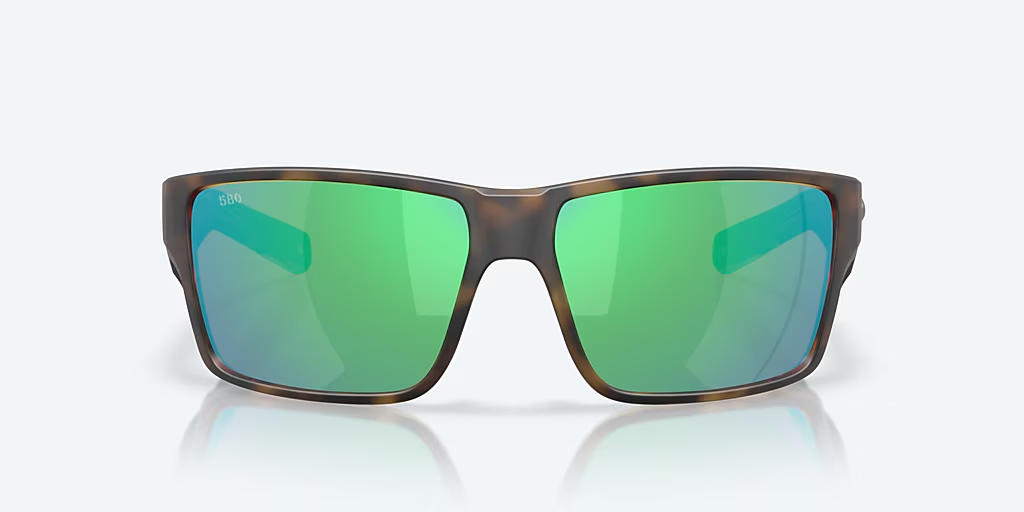
Sunglasses protect your eyes and are worn every day on the water, so why not splurge on the right pair? The Costa Reefton Pro Sunglasses are a versatile frame that fits comfortably and comes in a wide variety of lens and frame colors. For freshwater fishing, we highly recommend the copper silver mirror lenses to cut glare and make fish pop. Sure, they’re pricey, but this is a gift dad will use every day, whether or not he’s fishing.
If you’re looking for the very best in bad weather protection, then the Sitka Cat-5 Bibs are for you. These Gore-Tex bibs feature the right amount of stretch to move with you during a day of fishing. Comfortable shoulder straps, an easy-on/off system, and a well-laid-out pocket scheme round out the best fishing bibs currently on the market.
Is $400 a lot for pliers? (yes). Are these the best pliers out there? (also yes). The Van Staal 6-inch Titanium Pliers are overbuilt to last a lifetime in the harshest saltwater conditions possible, and never fail. Paired with a leather sheath and lanyard, this is an investment that will last a lifetime and a gift that will solidify you as the favorite child.
Quality rain jackets go a long way when fishing in less-than-ideal weather. The Skwala RS Jacket is our go-to lightweight, breathable jacket that keeps you dry. It’s also packed with fly-fishing-specific features like large chest pockets for fly boxes. Rounding out this jacket are adjustable cuffs that ensure you stay truly dry when it counts.
Terminal Tackle
We saved the best for last: rods and reels that any angler will be thrilled to get as a gift this year.
The Ross Reels Cimarron LT is a versatile fly reel offered in a variety of sizes and color configurations for the angler wanting the most out of their gear. The LT is the lighter-weight, slimmed-down version of the Cimarron that anglers know and love. This new version features similar aesthetics and the same great performance in a lightweight package that balances out modern fly rods.
The newest iteration of the Orvis Recon is a performance-driven fly rod that rivals many flagship rods at a fraction of the price. Available in both freshwater and saltwater configurations, there is truly a rod for every species and style of fishing. If we were to recommend one model for dad, it’s hard to go wrong with the 9-foot 5-weight.
TFO released the Moment last year, and it’s quickly risen to the top as one of our favorite rods to fish in the salt. It retails for $650, which while expensive for a TFO, is significantly less than other flagship saltwater rods. What impressed us was the performance, considering the price. The Moment features a fast action, light swing weight, and premium components you’d expect in a rod double the price. When it comes to performance on a budget, this is you best bet and a gift dad will put to use.
The Tibor Everglades is a timeless classic when it comes to fly reels, known for its ability to tame big, powerful fish. Now, thanks in part to 239 Flies, you have the option to fully customize your own Everglades. You can choose custom colors, reel handles, and even add a personalized name plate. When it comes to personalized gifts, this is as good as it gets.
If dad loves to get away from the crowds and fish small water, then the G. Loomis IMX-Pro Creek is the rod for him. This lineup of rods is designed for tight spaces and close casts. While all the rods in this lineup are stellar, our personal favorite is the 7’9″ 3-weight. It’s a responsive and fun rod to fish that’s perfect for small stream bow and arrow casts.
Whether you spend time with your dad having a barbecue in the backyard, watching his favorite sports team, or taking him to his favorite stream, spending a day with him is just about the ultimate Father’s Day present.
Consider some of these awesome fly-fishing gifts for your dad this Father’s Day. From new gear like a rod or reel to his favorite apparel, there’s something for every fly-fishing dad in this year’s Father’s Day Fly Fishing Gift Guide.
One guide on the Missouri River has completely stopped fishing nymphs with clients in his boat.
Not because he thinks dry flies are morally superior. Not because there’s something inherently “wrong” with nymphing. But because, as he told the folks over at Skwala, “I no longer wanted to fish for people. I did not want to be the guide that facilitates catching through non-action.”
Mark Raisler is a co-founder of Headhunters Fly Shop, and one of the best guides on the Missouri near Craig. He has quite a few opinions on guiding, but it’s this one about nymphing that really raises eyebrows.
Skwala, the technical apparel company based in Bozeman, did a great interview with Raisler, where he dives deep into why he quit nymphing in his guide boat. You should read the entire thing to grasp all the nuances.
Teaching, Not Catching
The gist of it, though, is distilled in a post he wrote announcing the change of no nymphing back in 2023:
“There are plenty of fantastic teaching/Disneyland type guides who are really good at bringing anglers into fly fishing, deep nymphing, and making anglers smile. Not all anglers want to learn. Some just like to catch fish, and leave all that learning stuff to others. That is not my cup of tea any longer. I have to teach. It is thread into my angling fabric.”
For Raisler, fishing dry flies presents more teaching opportunities, especially with clients in the boat. Nymphing is too effective, too simple, that Raisler feels it often becomes transactional.
“I just dislike non-learning,” he told Skwala. “I dislike the model where the only value is entertainment. No learning, only catching.”
Photo courtesy of Kubie Brown.
Impact On Fish
Another aspect of nymphing from a drift boat that Raisler talked about with Skwala is its potential impact on fish and their overall health. Because fly anglers have become so good at nymphing from a drift boat, catch rates are up. Anglers expect tons of fish in the net, and it’s hard to change expectations. But what’s all that catching doing to fish, even with proper catch-and-release techniques?
Well, this might not be the case on the Missouri, but on the North Platte in Wyoming, regulations have been changed to lessen the impact of catch-and-release fishing on its famous Gray Reef and Miracle Mile stretches.
Barbless hooks are now mandatory on most of the river’s most pressured stretches, because Wyoming Game & Fish biologists found evidence of more than 75% of fish within the Gray Reef section of the North Platte had noticeable “hooking injuries,” or injuries from barbed hooks. Of those, 22% had massive injuries, which include broken gills, blind eyes, or missing mandibles.
Of particular note is what impact those injuries can have on a trout population. From the study:
“While few hooking injuries are alone fatal, studies show that fish with greater body reserves and conditions have higher quality egg and sperm production. Whereas diminished body conditions, like those caused by hooking injuries, correspond to poor growth and compromised disease resiliency, which means the growing pressure on North Platte is undermining its trout populations at large.”
Fewer Fish Is Better?
It’s not so much nymphing that’s a problem on the North Platte, but the pressure the river receives in general. The Missouri is likely similar, although there’s no one saying that nymph anglers are harming fish populations. But with increased pressure, there’s always the increased likelihood of harming the resource.
That was a driving factor in Raisler forgoing nymph trips in his guide boat.
He’s also not saying that everyone should follow his lead, or that he’s “right.” Another big part of the reason Raisler quit nymphing is due to anglers’ attitudes.
“I don’t want to go nymphing because the people don’t care about anything other than the number (of fish),” he told Skwala.
Again, there’s a lot of nuance to Raisler, and it’s worth reading his thoughts in their entirety.
It’s also worth thinking about our potential impact on the resource we love so much, especially as we deal with drought in the West this summer.
Runoff finally started almost a month later than normal. With no snow down low to melt, we had to wait for what little was up high to make its way down into the canyons and valleys, muddying up the water and turning my local creek into a roiling mess. It’s fishable at these flows —a heavy nymph rig tossed near the edges usually produces a few trout—but the sight of brown water and rapids where there’s normally gentle runs turned me off the creek. I wanted clear water and fish rising to dry flies.
So I drove further up the mountain, looking for water that would provide the kind of fishing I needed after a rough week.
Moose were out in bunches, munching on freshly-greened willows. A few elk meandered through a meadow, and I had to stop a few times for clusters of mule deer to cross the road, too. The wildlife was putting on a show, and I halfheartedly wished I hadn’t left the camera at home.
Once I’d crested the pass at 9,000 feet, I started studying the small creeks on either side of the road. They were high, tea-colored, but not muddy. If these creeks were in decent shape, the one I had in mind likely would be, too. For a moment, I entertained the idea of a short hike to some lakes, but a glance towards the east and a looming wall of clouds quickly put an end to that idea. I’d rather fish in the relative shelter of a creek canyon, where I could stay out of the wind, and if I was lucky, the rain, too.
I turned off the asphalt and onto dirt, spooking another moose from the willows off to my right. This area is lousy with moose, especially early in the season. I’ve not had one charge me – yet – and they seem fairly docile. Once, a couple of years ago, I turned the corner while wading a nearby stream and almost walked into a cow moose and her two calves drinking from the pool I wanted to fish. They flicked their ears at me, snorted, then went back to drinking and rooting around for grass. I could have touched the cow moose with my fly rod if I wanted; they were that close.
The dirt road wound through willows before diving into the lodgepole forest, where I took a familiar turnoff into a meadow where the stream slows down, flattens out, and turns into some of the best dry fly water in the whole mountain range. I jumped out of the truck and walked to the creek before rigging up, though. I wanted to make sure the water was in good shape before going through all the trouble of getting ready to fish.
This creek was high, tea-colored, and a bit fast, but I could still see fish darting back and forth in the calm water near the banks. One even rose at the head of the run. It wasn’t exactly what I envisioned, but it was good enough. I went back to the truck, only to realize I’d left my 4-weight reel at home. I had a 3-weight reel, but only had a 4, 5, and 7-weight rod in the truck.
Grumbling about not using the rig that would have been perfect for the conditions, I rigged up the 5-weight with a small hopper on top and a larger perdigon as the dropper.
My first few casts were clunky, and spooked every self-respecting trout within spitting distance. I hadn’t been on the water for a while due to moving and work, and up until this week became too much to bear, I didn’t think I’d fish until after we finished unloading the moving truck in a week.
Eventually, I managed a decent cast, tucking the dry-dropper rig up against the far bank, where a decent brown promptly ate the hopper without a second thought. The fish up here rarely top 10 inches, but this trout was in good shape, still in its parr marks, and happy to swim back into the icy water.
I fished the rest of the meadow, then followed a feeder creek into a narrow grove of aspens, where I spooked a brookie that was easily over 10 inches. Eventually, that creek petered out into seeps from the spongy forest floor, so I backtracked and kept working the main creek, fishing up into the pocket water. The fish were stacked on the seams and in the slow water, but still wanted a good drift.
In one spot, the water was clear enough that I could watch the fish dart out from in front of a submerged boulder to eat my drifting nymph. In another, two fish fought over my dry fly before both gave up.
At one point, the creek split around an old lodgepole with half its root pan exposed. I thought I saw something big move in there when I drifted my rig past, but all that came to hand were the six-inch brookies that clean up whatever the larger fish ignore.
It felt like I’d only been fishing for 20 minutes, but a glance at my phone told me I’d been on the water for two hours. If I wanted to get home in time to help out with my daughter’s bedtime, I didn’t have time to explore what was around the next bend, part of the creek I haven’t fished yet. Promising that I’d come back to see what that part of the river held, I started the surprisingly long haul back to the truck. Between the trees, where the sunlight is sparse, deep snowdrifts still blocked my way.
I saw another five moose on the drive out, including one bull with its budding horns wrapped tightly in velvet. A herd of elk milled around at the junction of the dirt and asphalt roads. The cows picked their heads up to sniff the air in my direction, while the only bull, its antlers in velvet too, kept its head down and continued munching the grass.
As I drove back down the mountain towards home, I crossed a bridge over the first creek I saw that day. It was higher and muddier than when I’d passed it a few hours ago.
It won’t be in good enough shape to fish for a few weeks, I thought. I’ll wait until it’s perfect.
And in a fit of irony, that made me realize something: I’d almost passed on fishing at all today. The creeks were high, the water wasn’t clear, and I only caught one fish on a dry fly. I had this idea, this image of perfection in my mind, of how I wanted the day to play out. Because things didn’t measure up to those expectations, I almost traded an afternoon on the water for a long drive in the truck.
How often do we build things up to be perfect, or expect perfection? From our fly selection, to our drifts, to our hook sets and fish fights? And how often do things actually work out that way?
I can count on one finger the number of “perfect” days I’ve had on the water, and even that day has an asterisk next to it. I spent the day fishing from a float tube on an alpine lake full of cutthroat and brookies. I hooked every fish that ate my flies, didn’t tangle my rig once, and never had to make a fly change. But all I caught that day were smaller cutthroat, compared to the pair of three-pound brookies my buddy reeled in.
I think, too often, we get upset when a day on the water doesn’t live up to whatever expectations we had. And I think we put too much focus on achieving “perfection” in our fly fishing. Nothing in nature is perfect, so why would we expect our drifts to be that way? Often, close to perfect is good enough, and sometimes, we need a gentle reminder of that.
If you’re not utilizing an indicator while fishing lakes and ponds, chances are you’re missing out on a lot of action. While many of us die-hard fly fishermen try to avoid nymphing at all costs, there are several advantages to presenting bugs vertically in the water column rather than relying solely on dry flies and streamers. As with virtually all realms of fly fishing, you can make stillwater nymphing as complicated as you’d like, but with just a handful of patterns and a simple leader setup, you can quickly find success. Here are my favorite tips and tactics for stillwater nymphing to help give the bobber life another chance.
When To Utilize an Indicator While Fishing Lakes and Ponds
Time of year
While the prime season of every stillwater fishery is different due to a wide variety of influences, there are some overarching seasonal factors you should be thinking about.
Modifying your stillwater techniques to different seasons can be incredibly productive, like this trout caught during ice-off by the author.
If you’re fishing stillwater in a four-season climate with a significant temperature difference between summer and winter, then the lakes will undergo a water column turnover effect as the water warms in the spring and cools in the fall. Being based in Massachusetts, where lake turnover is a major factor, I’ve found that fishing around these turnover periods can be very productive. Fishing can be slow when my local lakes and ponds are actively turning over, and the water clarity is turbid, but as soon as things clear up, the fishing picks up. If a lake or pond freezes over in the wintertime, there’s potential for some excellent fishing when the ice melts off in early spring (known as ice-off), before the turnover effect even begins. Springtime typically brings fish closer to the surface, where insect and baitfish life is thriving, and oxygen is plentiful.
When the Fish Are Deep
Often, during the spring and fall months, there seems to be an optimal depth range where the fish are holding and feeding. When fish aren’t on the surface, utilize a nymph rig to pinpoint where they are in the water column. Sure, you can strip a streamer on a sinking line and cover a lot of the column, but nothing is as precise as adjusting your rig from 6 feet to 9, and then finding the bite.
Targeting trout and even warm-water species such as bass in the summertime can be difficult because water temperatures increase while oxygen levels decrease. Fish are less likely to be actively feeding higher up in the water column, typically preferring the deeper, colder sections of the lake. During peak summer, I’ve had success fishing with particularly deep nymph rigs to get down to where the fish are comfortably holding. An eight to ten-foot rig has worked wonders for me when no other tactics seem to entice a bite, so don’t overlook a deep nymphing setup when the fish are seemingly inactive during peak summer.
When its Windy
One of the best parts about stillwater indicator fishing is that the wind typically works in your favor. Sure, casting into heavy wind with a long nymph rig can be a drag, but once you’re out there, some heavy chop is your best friend when it comes to enticing a bite. Remember that your fly or flies are of course directly connected to your indicator, so when the wave action of the lake makes your indicator rise and fall, your flies are doing the same thing down below. Stillwater fisheries don’t enable your flies to be carried down current like they are in a stream, so getting some lifelike movement through wind energy can be super helpful.
Windy conditions can help animate your flies and improve the bite.
My opinion is that this goes double if you’re fishing larger patterns like balanced leeches and baitfish. Some of my very best days stillwater nymphing have been out in 20 knot conditions, fishing the lake when it looks like an ocean, so even more violent forecasts can be worth fishing. My buddies and I refer to nice and windy bobbering conditions as “chop-timum”, so if you’re struggling to present a dry fly or to consistently cast a streamer, remember that indicator fishing in the wind is quite user-friendly.
When You’re Experiencing Slow Fishing
Similar to fishing a stream, it’s always worth considering switching to a nymph rig when other tactics aren’t producing eats. When I streamer fish shallow structure for largemouth bass in the summertime, I always rig an additional rod with an indicator setup in case the streamer fishing is slow. Sometimes the fish don’t want to run anything down and are more inclined to passively feed on a mostly stationary nymph, leech, or baitfish pattern presented below an indicator. By having a nymph rig at the ready, you can check all your boxes for feeding the fish the way they want to be fed.
Where Should You Stillwater Nymph?
Depth Changes
Abrupt changes in depth are a fantastic place to focus your stillwater nymphing efforts. Drop-offs make for excellent ambush territory, where predatory fish can target food sources in shallower water without straying too far from the depths. Big changes in bottom topography, where you go from shallow to deep water, also inherently promote greater bug and bait life, so it’s quite likely the drop-offs are holding some solid calories. You can think of it as a zone where two different habitat types collide, and therefore, a higher diversity of prey items theoretically occurs.
Quick changes in depth create underwater shelves that fish cruise looking for food.
Hanging some bugs just out in front of a shelf is a great way to see your bobber go down. If I’m fishing from a boat, I like to get beyond the depth change and position myself more or less parallel to the drop-off, pointed towards shore. That way, I can fish the drop-off to both my left and my right, and then move along the shelf once I’ve thoroughly soaked some bugs in each zone. I do my best to imitate this same tactic while wade fishing, except I’m positioned on the shore-side of the shelf. I typically start with a shallow rig and then lengthen it until I find where the fish are holding. If I spend time soaking my fly or flies all the way through each section of the water column to the bottom without a bite, then I’ll switch up my bugs and start again.
Structure
We all know fish like structure, so don’t skip nymphing around any rock piles, fallen trees, mooring fields, docks, or other unique features. That being said, if you’re fishing a longer nymph rig around a bunch of dock pylons or sunken trees, be prepared to maneuver a fish out of there. I’ve lost countless flies by edging my nymph rig closer and closer to structure until my indicator finally plunges and gets pulled into the danger zone, so be mindful of your leader length and fly position when trying to present your bugs close to snaggy habitat.
Mud Lines and Wind Lines
Moving sediment from tributaries flowing into or out of a lake system can create a turbid zone of water with a definitive edge, or “line” where it meets the clearer water of the lake. I’ve had particularly great luck targeting trout around mud lines, but it’s a feature most species seem to gravitate to. Because turbidity results from the bottom substrate being mixed into the water column, I imagine invertebrate life is more concentrated and/or more readily preyed upon in the muddy, clouded water. Based on that assumption, it makes sense that predatory fish would target the edges of these plumes because of the increased abundance of prey.
Mud lines and other structures will attract all stillwater species, including smallmouth bass.
I’ve also seen plenty of mud lines form due to aggressive winds, so they’re not necessarily always a result of inlets/outlets. High winds can churn up shallower sections of a lake that then become turbid swaths of water, so keep an eye out for big mud plumes when the wind is blowing hard, especially around depth changes and shallower shelves.
If I see a mudline virtually anywhere on the lake while nymphing (or streamer fishing for that matter), I almost always go running to it. I like to position my flies just outside the turbid water, hoping the fish pacing the edges find my rig. Alternatively, I’ve had great success fishing especially bright and flashy flies within the turbid zone. When foraging fish are moving through muddy water with poor visibility, they need all the help they can get finding your fly or flies, so consider tying on bigger and brighter bugs that are easier to root out.
Fly Selection
Stillwater fly selection will force you to think about available food sources in your local lakes and ponds more than usual—and that’s a good thing. Similar to stream fishing, observe the environment you’re fishing in to discern what bugs are present. Scrutinize any flying insects you see and turn over some rocks to observe the active bug life to get an idea of what’s on the menu. If there are no bugs in the air or rocks to turn over, then at the very least, spend a bit of time observing aquatic vegetation and structure for invertebrate life and baitfish, and see what you discover. If you can match the hatch, fantastic. Having a basic pulse on what bugs and bait typically occur at which times of year is also a good starting point, so don’t overlook breaking out a field guide or simply chatting with your local fly shop.
Balanced Flies
Balanced leeches and baitfish patterns have changed stillwater fishing forever. The idea is that by tying your tippet to a more central eyelet that suspends, or “balances” your fly parallel to the bottom/surface rather than perpendicular, you’re left with a more realistic presentation. Leeches and baitfish don’t naturally point straight up towards the surface, so why would you attempt to imitate that positioning? By using blanched flies and even flies tied on jig-style hooks, your presentation will improve dramatically.
A largemouth bass caught on a balanced leech.
This goes double when you’re fishing with very little wind, and therefore a lack of natural fly movement. I’m a firm believer that a traditionally tied wooly bugger or thin mint will behave and fish very comparably to a similar size/color balanced leech as long as it’s getting substantially pulled up and down by the wave action on the surface. No movement due to a lack of chop equals a less lifelike presentation, so do what you can to best imitate whatever food source you’re attempting to mimic.
This tip is only really relevant when you’re fishing and finding success with larger patterns; I’ve never been all that concerned about how my teeny tiny zebra midge or itty-bitty scud is riding along down there.
One vs. Two Bug Rigs
Ahhh, the classic one vs. two bug conundrum. Simply put, more flies equals more problems. It can be difficult to distance cast long nymph rigs with cumbersome flies, so if you’re relatively confident that you’re fishing the right bug at the right depth, then leave it at that and avoid unnecessary tangles and re-rigging. On the other side of the coin, if you’re still trying to get your fly selection dialed in, having a few bugs in the water rather than one is definitely in your best interest.
Fishing with two flies can improve your odds when fishing new bodies of water.
I’d say my go-to stillwater nymph rig across all fisheries and target species is a small choronomid tied about 2 feet above a balanced leech. If I catch more than a few fish exclusively on the leech or the midge, I’ll lose the other fly and keep things easy-breezy.
Indicator Selection
Whether you call it an indicator or a bobber is entirely up to you, but wise anglers will take a moment to briefly consider what style, size, and color is best for their nymphing needs.
Size & Color
Do yourself a favor and pick up some indicators that you can comfortably keep an eye on without overstraining your eyes. I’ve found that orange is my favorite color to stare at without getting eye fatigue, but everyone has their preference. If you don’t know what your preference is, then buy a few different colored indicators and find out; it’s worth it.
Try different indicator types and colors to find what you can see best on the water.
When it comes to size, go with the largest diameter indicator you can get away with. The main advantages are that bigger bobbers are easier to watch and can support heavier nymph rigs. I often fish a heavy, balanced leech with a smaller scud or midge pattern below it, so having an especially buoyant indicator is essential to maintain natural fly movement. I’m typically fishing nymph rigs that are at least five feet deep, so I don’t worry too much about my larger bobber size spooking the fish below.
Type of Indicator
Unless the fish you’re targeting are known to be impossibly spooky, you likely don’t need to overthink your choice of indicator style. Whatever you already have experience with will work just fine, so you can ignore this section if you already have a favorite indicator.
I’ve always loved a simple cork bobber for its awesome sensitivity, but I’ve recently converted to Oros indicators, and I’ve been really loving them. It’s a brilliant design that pinches your leader between two smooth, dirt and water-repellent foam hemispheres. They float great, protect your tippet, and the pressure-fit lock ensures they stay put and don’t slide around. Having the ability to quickly and easily move my indicator to adjust the depth I’m fishing at is crucial.
If you’re targeting ultra-aware fish in shallow, gin-clear water, then chances are you’re not throwing a nymph rig. If nymphing is, in fact, the best way to feed those spooky fish, then consider switching to a more subtle indicator type, such as a New Zealand strike indicator.
Leader and Tippet
Fluorocarbon is the best option for most effectively fishing a nymph rig. Fluoro sinks great, so it will enable your nymph rig to descend and straighten out better than more buoyant mono/nylon tippet. Fluoro also has a refractive index closer to water’s, so it reflects light at a similar angle, making it nearly invisible when submerged. A stealthy leader is especially important when stillwater nymphing because, unlike stream fishing, where they only get a quick glance, the fish are able to take a long, hard look at your fly or flies. Another benefit of utilizing fluorocarbon leader is that it has less stretch than mono/nylon, so you have a more sensitive connection to your flies when watching your indicator like a hawk. The most subtle of takes can very well go unnoticed when conditions are choppy or the lighting isn’t great, so any advantage to increase your indicator’s sensitivity is appreciated. Lastly, fluorocarbon has greater abrasion resistance, so if you’re fishing around structure (which is never a bad idea), you’re giving your leader the best chance of surviving any unwanted chafing.
In terms of tippet strength, it’s important to once again remember that the fish are getting a good, hard look at your flies, so you’ll likely have to utilize lighter tippet than you may be used to fishing in moving water. This is even more of a factor if the lake has good clarity, so don’t hang your nymphs from 3X if you’re fishing in gin-clear aquarium conditions.
Final Thoughts
At the end of the day, stillwater nymphing with an indicator is arguably one of the simplest and most effective fly fishing tactics. Once you learn and become comfortable with the mechanics of casting a few different weight and length nymph rigs, you’ll be off and running in no time. A user-friendly way to have fun and success on the water, especially in windy, cold, or turbid conditions, stillwater nymphing is a great way to add some extra days to your fishing season that you might otherwise pass up. While watching a bobber may seem boring, as soon as you begin to figure out your fishery and get some eats, you’ll very likely find that waiting for that next indicator twitch, stop, slide, or plunge is incredibly addicting and exhilarating. Don’t say we didn’t warn you!
In this week’s “How to Tie” feature, InTheRiffle shows us an easy way to create crab bodies for your next in-shore or flats adventure using EP Fibers.
Learn How to Tie This Fly:
Difficulty: Easy
Crab flies have become essential patterns for anglers targeting flats species as they imitate some of the most common and calorie‑rich prey items available in shallow saltwater environments. Species like redfish, bonefish, and stripers instinctively hunt small crabs that scurry along sand and mud bottoms, and a well‑designed crab fly offering the right profile and sink rate will fool hungry prowling fish. The wide, compact shape of a crab silhouette triggers an immediate feeding response, especially when presented low and slow across the bottom. EP fibers are key for creating crab patterns with the profile and density that fish look for and is a material all tyers should be comfortable with.
Tying crab bodies with EP fibers is all about controlling bulk and layers. One gauge to determine if you are using the right number of fibers is by estimating to about half the diameter of a pencil, which creates a dense shell when repeated several times. Adding rubber legs will create movement and variation to your crab fly and can be a simple way to differentiate yourself from others on the water. EP material is forgiving, buoyant, and easy to sculpt, making it ideal for creating durable, semi-lifelike crab bodies that maintain their shape even after repeated casts and strikes.
Fishing this fly is all about subtlety and precision. Present it ahead of cruising fish, let it settle to the bottom, and use short, gentle strips to imitate a crab’s defensive scoot. When a fish approaches, stop the fly completely as many flats’ species will pin a motionless crab before eating it. Use long leaders, light fluorocarbon, and quiet casts to avoid spooking fish in shallow water. With the right presentation, an EP crab fly becomes one of the most reliable patterns on the flats, capable of turning wary tailers into confident eaters.
“I was kayaking a small creek in Charleston when it got too shallow, so I ditched the kayak and started wading.
Around the next bend, I found fish tailing, waking, and blowing up on bait everywhere. I threw a black and purple shrimp pattern into the mix and got an explosive swing and miss on the first cast, which is where the video starts. On the second cast, I hooked up.”
Angler Story of the Week from MakeTimeforFishing, be sure to check out his Instagram HERE!
There’s a sentiment you’ll find on fishing forums, in club meetings, at fly shops—basically, anywhere that fly anglers gather. Some newcomers to the sport will ask questions about improving their fly rod setup, and at least one person will say, “Don’t worry about the rod, just buy good line. That makes all the difference.”
I bought into that theory wholeheartedly the first time I heard it. That I kept hearing it only reinforced its supposed veracity. Out went my cheap lines, in came the great ones, and so too, I thought, did some great fishing.
Now, I’m an unabashed proponent of matching your fly rod to the right fly line. Sticking a true-to-weight line on a fast-action rod designed for big flies and bigger fish won’t result in the best performance. And a half-weight heavy line on a delicate dry fly rod can make it tougher to land flies softly.
What doesn’t sit right with me anymore, though, is the idea that somehow “good” fly line is the make-or-break component in your setup. First off, who gets to define what a ” good ” fly line is, and does it really make more of a difference than the rod?
Good vs Great Lines
The make-or-break point in fly line quality for me isn’t based on price. Instead, it’s based on the line’s taper. That’s the demarcation between “good” and “great” lines, in my experience.
I’ve long been a fan of Scientific Anglers’ Infinity taper, and it’s become my go-to for most of my 5 and 6-weight rods. Since I’m fortunate enough to be on the water fairly often, I opt for the Amplitude line. I want something that’ll last long enough to make the cost worth it, and that series has always been a decent bang for the buck.
A few months ago, though, I picked up that same taper in the Mastery Series, which is cheaper. So far, I haven’t noticed any real performance difference between the Mastery or Amplitude, especially since I bought the same taper in both.
The Infinity taper isn’t available in the Frequency lineup, but the company’s new Trout GP taper is.
RIO has a similar lineup, where some of its lines are available in Premier or Elite designations, with the more expensive lines boasting a slicker coating and less memory. Nice features, to be sure, but what you’re really paying for there is the taper itself.
Again, this is where fly lines really separate themselves from each other. The price of a line isn’t a guarantee you’re getting something “good.” The taper, how it matches to your rod, and how it suits your fishing style, is much more important.
What About The Rod?
What matters most, though, is the fly rod.
Bad fly rods don’t flex well. They’re stiff and unresponsive. They lack torsional stability. In short, they throw far too many variables into the casting equation, especially for a new angler. It’s tough enough to learn fly casting as it is. Why would you stick with a rod that doesn’t let you feel and experience the casting motion? That’s the best way to build a casting stroke that’s not just matched to a rod, but that transfers from fast-action sticks to slow ones.
Yes, a competent caster can make any rod work for them. But that’s only after they’ve learned all the important fly casting lessons. Doesn’t it make sense to use a rod that makes learning those lessons more enjoyable?
Notice that I didn’t say cheap or expensive. I’m not advocating for a certain price point here. I’ve cast more than a few expensive rods that I’d consider bad, because they offered so little feedback during the cast. Some of my favorite rods run less than $250 and flex and feel almost as great as my top-of-the-line stuff.
When you pair a good line with a good rod, that’s when you’ll notice a huge difference in the quality of your setup, and hopefully, your casting and catching as well. A rod designed for the job you’re doing, paired with a line to match, can be the difference in getting that great drift, or going home skunked.
Again, I’m not saying that you’ll see a massive jump in your abilities if you just buy the right gear. But I think there’s something to be said for the mindset you have when you make the upgrade.
When I bought my first nice fly rod, I was quickly and painfully aware of just how much I needed to improve. I thought the problem was my gear, but it turns out it was me. Thankfully, I had a dad who took pity on me, showed me what I was doing wrong, and with some hard work, I started to see some improvement.
I don’t think I would have paid as much attention to my lack of skills if it weren’t for upgrading my gear. I thought that was the magic bullet, the ticket to fly fishing nirvana. Of course, it wasn’t, but in hindsight, I appreciate the nudge it gave me to get serious about improving.
Welcome back to “The Rundown,” an editorial series where we provide an all-encompassing look at the latest and greatest products from your favorite brands in the fly fishing and outdoor space. Here, we’ll run over high-level info, tech specs, and our opinions—all paired with a behind-the-scenes interview with product designers who have poured their hearts into bringing these creations from blueprints to the showroom floor.
In this installment of The Rundown, we take a look at RepYourWater, a fan favorite amongst the fly fishing community. Since its start in 2011, RepYourWater has redefined what it means to be an apparel brand in the fishing space, creating a line of gear that allows anglers to promote their favorite state, fisheries, and species, all while supporting conservation. This spring, they’ve launched their newest performance fishing apparel collection. So join us as we dive into the newest collection and sit down with Co-Founder Garrison Doctor.
Background:
In 2011, Garrison and Corinne Doctor started RepYourWater. It began as a lifestyle brand, inspired by their shared love of fly fishing and Garrison’s artistic talents. You may remember the early days of RepYourWater and their state and region-themed fishing apparel. The brand’s early success stemmed from these creative designs, which resonated with anglers and their local fisheries. Every angler cares about where and what they fish for, and RepYourWater gave them the gear to show that off.
Since the initial region-themed apparel, RepYourWater has continued to expand on its offerings to include socks, belts, and even drinkware. In addition to their success in the fishing space, they have also pushed into the hunt space with RepYourWild, bringing the same creative regional designs to the hunting world. As the brand continues to grow and expand its lines, it has never strayed from its core values of conservation. Today, a portion of every purchase is donated directly to conservation partners like Trout Unlimited, Backcountry Hunters and Anglers, The Wild Steelhead Coalition, and Bonefish and Tarpon Trust, and the brand is an active member of 1% for the Planet.
What’s New:
In 2026, RepYourWater launched its spring collection, an entire lineup of performance-driven fishing apparel, designed to bridge the gap between on-the-water comfort and off-the-water style. The collection includes four new apparel pieces, including the Bitterroot Shorts, Deschutes Short Sleeve, Roaring Fork Pants, and Wellfleet Long Sleeve. Follow along as we break down what each piece of apparel has to offer.
Wet Wading Shorts and Pants
One of the many highlights of RepYourWater’s newest apparel line is its bottoms, designed with features made for anglers who love wet wading. While these pants and shorts can be worn for everyday use, features like drain holes in the pockets and DWR finishes are just a few key technical additions anglers will appreciate. Here’s everything you need to know about these pieces of gear.
The Bitterroot Shorts, inspired by the legendary Bitterroot River in Montana, are a lightweight fishing short for summer fishing and wet wading. The shorts feature a hybrid elastic waistband, a 7″ inseam, and tight weave construction paired with a DWR finish. In addition to premium material construction, the shorts have a well-laid-out pocket configuration with two main, draining pockets, a zippered side pocket, and a zippered rear pocket.
Along with the Bitterroot Shorts, the spring collection includes the Roaring Fork Pants, inspired by the river we at Flylords are fortunate enough to call home. These pants are designed with angling and wet wading in mind. For starters, it features a side-zip pocket, two zippered back pockets, and a side stash pocket for easy access. RepYourWater took the design one step further with cinchable ankles, doubling as a gravel guard when wet wading. The pants feature a durable weave for longevity and are available in two colors and a variety of sizes.
Button-Ups for the Water
RepYourWater introduced two new button-up fishing shirts as part of the spring collection. Designed to bridge the gap between style and technical performance, these two shirts are at home on the water and around town.
The first new button-up is the Deschutes Short Sleeve shirt. This button-up combines the fit and feel of a lifestyle shirt with the materials and features of a technical fishing shirt. RepYourWater constructed this shirt from a recycled polyester blend, minimizing weight while maximizing breathability. In addition, features like a zippered chest pocket, a built-in sunglass cleaning panel, and a vented back make it an excellent choice for anglers on hot summer days. It’s also UPF 50-rated and available in four color options.
Another new shirt offering in RepYourWater’s spring collection is the Wellfleet Long Sleeve Button Up. This shirt shares many similar features with the Deschutes, like the zippered pocket and sunglass cleaning panel, but in a long-sleeve configuration. If you find yourself fishing in the shoulder seasons or simply want more sun protection, the Wellfleet is the shirt of choice. It is also available in four unique color configurations.
The Wellfleet shirt comes packed with features like the built-in sunglass cleaning cloth.
Performance Fishing Hoodies
Lightweight fishing hoodies are one of the most popular and versatile pieces of apparel that anglers rely on. RepYourWater took this into consideration when designing its new collection, releasing two new lightweight hoodies—one for sun and the other a baselayer.
The Flolite Performance Hoody is RepYourWater’s answer to a lightweight sun hoody. It’s constructed from a polyester blend that wicks away moisture and has a lightweight feel, perfect for hot summer days. In addition, this hoody has micro-perforations that aid in moisture wicking while adding another layer of breathability. It’s rated UPF 35+ and has silver-free odor control for extended trips when doing the wash is not an option. Lastly, RepYourWater included several signature art-themed offerings depicting big brown trout or the mythical permit.
The last piece of gear in this collection is the Merino Breeze Performance Hoody. As its name implies, this hoody features a merino wool-polyester blend. This translates to a material that wicks away moisture, maintains a lightweight feel, and naturally controls odor. For Western trout anglers, this is a do-it-all piece made to bridge the gap from chilly mornings to sweltering afternoons.
Our Experience:
Prior to RepYourWater announcing the new apparel collection, we were able to get our hands on it for a recent trip south of the equator to one of our favorite angling destinations, Argentina. The trip was slated for the end of April, which for US anglers means warming temps and the beginning of trout season. However, in Argentina, the seasons are reversed, meaning we’d be heading into fall, with a mix of cooling weather and lingering summer-like days. For our review portion, we’ll focus on the two standout pieces of gear we used most—the Merino Breeze Performance Hoody and the Flolite Performance Hoody.
Shoulder season in Argentina can be particularly fickle; one moment it’s windy and blowing 30 miles an hour, the next it’s high sun and dry as can be. These ever-changing conditions require clothing that adapts to keep you comfortable in every scenario. For that, the Merino Breeze Performance Hoody was our go-to piece of gear. On cool mornings, we wore it as a base layer, wicking away moisture and regulating our body temperature when paired with an outer layer like a puffy jacket. It’s also worth noting that the blend RepYourWater uses is one of the more durable merino garments we’ve tested, preventing pilling when worn under waders or other layers. As the day went on, we’d shed our outer layers, relying on the Breeze Hoody as a standalone piece of gear to protect us from the sun.
In Argentina, we also covered a lot of ground. Hiking around remote lakes and walking the river banks searching for rising fish will work up a sweat fast. Do this over multiple days, and most standard apparel will start to smell ripe. However, the nature of merino wool, combined with RepYourWater’s Optimer Freshguard technology, excels at controlling odors. On a multi-day trip in the middle of nowhere, this is a great perk.
On days with a good forecast and high sun, we opted to wear the Flolite Performance Hoody. As its name implies, this hoodie is designed to be as light as possible. As a result, we were able to fish comfortably even with the hot sun and dry air of Patagonia. What we liked most about this hoodie is its comfortable fit. Although it’s a performance fishing shirt, it is not skin-tight, allowing room to move around and breathe. The same comfortable fit also translates to a great piece to wear off the water around the lodge and around town. While we used this hoodie exclusively in freshwater, the lightweight feel and impressive breathability would make Flolite right at home in the salt.
A Short Interview with RepYourWater:
After testing RepYourWater’s Spring Collection in Argentina, we sat down with co-founder Garrison Doctor to learn more about this lineup of technical fishing apparel and what’s next for the brand.
Flylords: Who are you?
I’m Garrison Doctor, Co-Founder, Creative Director, and Marketing Director for RepYourWater. I’m also a passionate fly tyer, traveler, bird watcher, and artist. Art and fly fishing have really been the two throughlines that shaped my life and career ever since I picked up a fly rod at 10 years old. The artist path was already there, and fly fishing just gave it another outlet and direction.
Flylords: What is RepYourWater?
RepYourWater is an apparel brand born from my passions for art, design, and fly fishing. In the early days, simple, iconic regional graphics helped carve out a space for us in the industry. We grew slowly, but with intention, always trying to support conservation and constantly pushing creatively with new artwork and product ideas.
Over time, those graphic-driven pieces evolved into a much broader apparel line. Today, alongside the artwork people know us for, we’ve become a trusted source for lightweight performance hoodies, merino wool socks, technical outerwear, and now shorts, pants, and button-ups!
Flylords: Can you tell us a little about this new line you’re launching?
The 2026 line is a massive accomplishment for us. Our team spent years developing and refining these products. While every piece is rooted in fly fishing and designed for time on the water, versatility was a huge focus from the beginning.
We wanted gear that works just as well hiking, mountain biking, traveling, or simply wearing around town as it does during a long day of fishing. These are pieces designed to become staples in your everyday rotation, not just something you wear a few weekends a year.
Flylords: What inspired this line?
This line was inspired by utility, passion, and versatility. We want RepYourWater to feel like a true head-to-toe apparel brand with products people genuinely reach for again and again.
A lot of thought went into creating pieces that are functional and technical without feeling overly specialized or restrictive. We wanted apparel that performs hard outside but still feels natural everywhere else life takes you.
Flylords: What sets this line apart from all the other apparel brands on the market? (Why should it exist?)
I think our perspective brings something unique to the industry. We’re rooted in the Mountain West, but we also design with a much broader perspective shaped by travel and time spent fishing all over the world.
Every product in this line went through extensive testing, revisions, and refinements. These pieces were shaped by real experiences in varied climates and conditions, from road trips and airports to rivers, saltwater flats, and backcountry camps. We wanted apparel that could truly hold up to all of it.
Flylords: What are some unique approaches you took when designing these pieces?
When designing the 2026 line, we wanted to bring all of our accumulated experience to the table. From wet wading the Bitterroot River in Montana, to camping along the Deschutes in Oregon, to floating the Roaring Fork in Colorado, to wading the flats of the Seychelles, we know what good apparel needs to endure.
One thing we really believe in is creating products that transition seamlessly beyond fishing. We want every piece to work just as well, grabbing a beer after being on the water, walking around town, traveling, or just hanging out. The best gear earns its place because you naturally keep reaching for it.
Flylords: Do you have a favorite piece? If so, why?
For me, it’s definitely the Bitterroot Shorts. They’re lightweight, quick drying, super durable, and incredibly comfortable. Honestly, they’re the only shorts you need for the whole weekend. Hell, maybe the whole summer.
I’m also a huge believer in thoughtful pocket utility and organization. The pocket layout on the Bitterroot Shorts is excellent. The front drop-in pockets are deep and easy to access, and the side pockets make for seamless organization. I’ve gotten to the point where I choose these shorts even when I’m not fishing because I know exactly where everything goes. Keys in the side drop-in, chapstick in the zip pocket, phone here, wallet there… Once you get used to that setup, it’s hard to go back.
Flylords: What kind of angler is this line designed for?
Honestly, just about any angler. And truthfully, even non-anglers.
These pieces are rooted in fly fishing performance, but they’re intentionally designed to work far beyond that. The shorts are great for hiking, the pants are ideal for travel, and the hoodies work for all kinds of outdoor pursuits. The goal was to create apparel that performs exceptionally well on the water without looking or feeling overly technical everywhere else.
Final Thoughts
RepYourWater’s newest spring collection marks a pivotal change in the brand, focusing more on technical fishing apparel than lifestyle tees. This lineup is designed with wet-wading anglers in mind and, in our testing, excelled at just that. All pieces of the collection are lightweight, packed with features anglers expect, and some they didn’t know they needed. For more information on the Spring Collection, check it out at RepYourWater.com.