

There are few places as synonymous with fly fishing as the Northeast. It is considered the birthplace of American fly fishing, and on the banks of the Catskills, it is where modern dry fly fishing was born. Fly fishing’s roots are deeply ingrained in the Northeast, as evidenced by the number of anglers fishing its fabled rivers every year.
Despite the number of trout streams throughout the Northeast, anglers face a number of issues, including stream access, technical fisheries, and crowds. This is where OnWater Fish comes in handy. Their mobile fly fishing app, when used correctly, is an excellent tool for those looking to explore the iconic rivers of the Northeast. Follow along as we take you through how to get the most out of OnWater.
Northeast Trout Fishing Basics
The Northeast is riddled with trout streams and rivers—some famous and some under the radar. Unlike Western states, many of these rivers are too small to float, making wade fishing the predominant approach. While there are a few large tailwaters like the East Branch and West Branch of the Delaware, these are exceptions and not the standard.

A majority of trout rivers that anglers have access to fall into two categories: freestones or spring creeks. Freestone rivers rely on external weather conditions for their flow, like rain and snow melt. Spring creeks, on the other hand, rely on ground-fed springs for a constant flow and temperature throughout the year. In addition, bug life differs substantially between the two. Freestones are known for their abundance of mayflies and caddis, while spring creeks have fewer hatches and high numbers of scuds and cress bugs. Knowing what type of river you are fishing will determine how you fish and what flies you throw. In the Northeast, you may also encounter limestone streams, a particular type of spring creek that flows through limestone.
Stream Access
With wade fishing being the predominant access method, private and public legality is the biggest issue anglers face. Bigger rivers, which are considered navigable, generally have fewer restrictions for anglers looking to wade; however, this varies by river and state. For instance, Pennsylvania allows anglers to wade any navigable waterway, regardless of whether it is private property, as long as you stay below the mean high water mark. Other states, like New York, have more confusing access laws, often relying on programs like Public Fishing Rights, to grant anglers access to “Navigable in Fact” (waterways that have or had the capacity for trade) pieces of private water.

Depending on the state you are fishing in, wading access can vary dramatically, often presenting the biggest challenge to anglers who are not familiar with access rules. Knowing what the boundaries are and where you can and can’t fish falls on the angler. Learning these rules, and making the most out of access will allow you to get off the beaten path, explore new water, and find unpressured fish.
OnWater Features for Northeast Anglers
Successful fishing in the Northeast requires a combination of the correct river, flows, and flies. For new anglers, or those looking to expand their range, OnWater Fish has several features that can help cut down the learning curve, specific to the Northeast.
Water Body Identification and Flows

Determining which water body you plan to fish is the obvious first step for any trip. In the Northeast, anglers can filter to only rivers with trout using OnWater’s layering tools. Once you have a base of rivers to choose from, you can scout nearby haunts to determine which are suitable candidates. In the description of each river, it will differentiate between freestone, spring creek, and limestone streams. For the freestones, the OnWater flows feature allows users to view stream gauges, an essential indicator of how the river is fishing. You can also view spring creek and limestone stream flows; however, these rivers are less weather-dependent and will stay relatively consistent throughout the year.
Private/Public Map Layers

Once you’ve determined what river you are fishing, OnWater can help you find where to fish. Using the mapping layers, anglers are able to turn on private and public layers. These two layers, when looking at a waterbody, let you know what can be accessed and what is off-limits. In addition, there are layers that will show fishing access sites and private land access points. The public fishing access points show areas that are designated for public access along many of the best trout rivers. In addition, private land access points indicate parcels of land available for day leases. If you want to get away from the crowds, this can be an excellent way to gain access to unpressured river stretches for a nominal daily fee.
Hatches

While the Northeast may not get the fabled hatches of the Rocky Mountain West, if you time it right, dry fly fishing can be phenomenal. The OnWater app allows you to investigate the bug life and hatches on any river in the United States. Using this in the Northeast can help narrow down particular hatches to key in on and nymphs to fish subsurface. Use this tool religiously before fishing new rivers to have an idea of what flies to tie or buy in advance.
Angler Intelligence

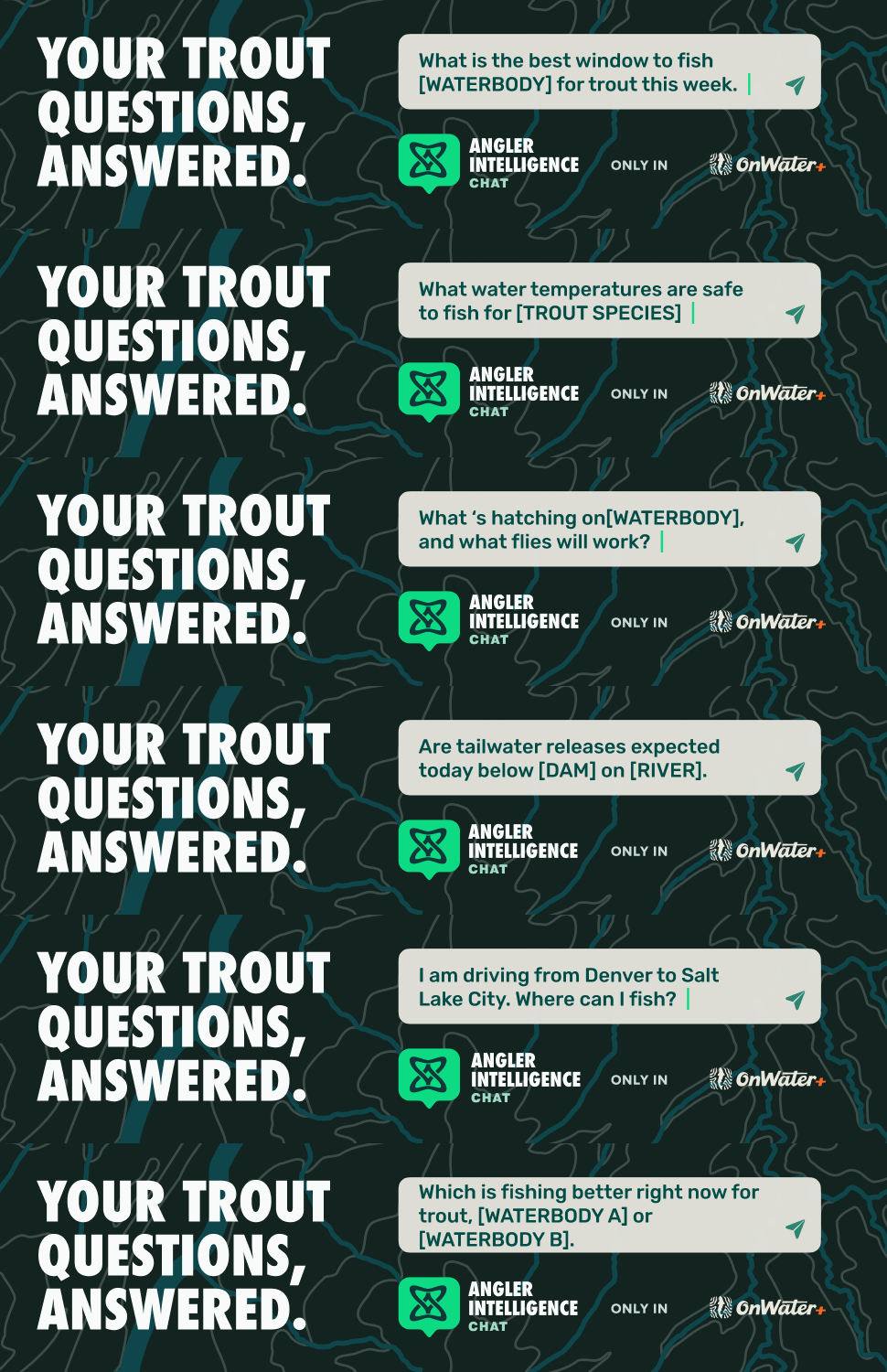
OnWater’s newest feature is Angler Intelligence, which is an ask-me-anything AI tool. For the Northeast, you can ask about state stream access laws, hatches, when the best time of year to fish is, and anything else you may think of. Rather than scouring the internet, this tool will give you the answers in minutes.
Fishing the Northeast

The legendary streams of the Northeast are responsible for shaping fly fishing into what it is today. Every time you step into one of these fabled rivers, you have the chance to experience what iconic fly fishing figures learned in years past. While the pioneering days have passed, with tools like OnWater, you can get off the beaten path and experience Northeast trout fishing at its finest.

