Home Blog Page 8

The Complete Float Fishing Gear Guide

Float fishing offers fly fishermen a means to escape the crowds and explore more water. At Flylords, we’ve fished in or rowed just about every boat on the market, including a number of rafts—our boat style of choice. We favor inflatable rafts because they are easy to transport, can be launched anywhere, and are much more budget-friendly than hard-sided drift boats. While there are several raft-style boats out on the market, NRS has been our go-to for several years now. Their boats and accessories are designed with intention, allowing any angler to customize a raft to their style of fishing. Add to that premium components, and your fishing raft will be ready season after season. Here’s our list of NRS favorites as well as raft essentials to build your own do-it-all fishing raft.

Float Fishing Gear Guide

Boats and Frames

NRS inflatable rafts come in all shapes and sizes, each with a specific purpose. Below are some of our favorite boats and frames we’ve used across every fly fishing scenario.

NRS Raft Fishing Frame

NRS

Raft Fishing Frame

You don’t always need to buy a fully ready-to-fish raft package to get on the water. Some anglers may already have access to a raft or might be on a budget. The solution for these anglers is an NRS Fishing Raft Frame. These fully customizable frames come in a variety of sizes to support just about any raft platform on the market. With a number of accessories, anglers can tune the frame to how they fish while ensuring comfort and stability on the water.

NRS Slipstream 142

NRS

Slipstream 142

At 14-feet 2-inches long, the Slipstream 142 is the biggest dedicated fishing raft that NRS makes. It has ample room for three anglers and is our pick for serious fly fishermen and guides. The Slipstream series also features the widest beam of any NRS fishing rafts, offering a stable and whitewater-capable platform. Additional features like dual rod holders and molded thigh hooks make this a ready-to-fish package out of the box.

NRS Approach 138

NRS

Approach 138

If versatility is important, choose the NRS Approach 138 Fishing Raft. At first glance, this three-person boat looks fairly simple, but a deeper dive reveals otherwise. The Approach series is designed with modularity in mind, including slot rails and a range of accessories to customize the raft to your fishing style. Just check out how we modified our raft across fisheries this summer.

NRS Boundary 100 Personal Fishing Raft

NRS

Boundary 100 Personal Fishing Raft

If you fall into the category of a solo angler, then the Boundary 100 Personal Fishing Raft is the boat for you. The Boundary 100 is a one-man boat built around the principle of versatility. It does this with an open bow design that enables anglers to row the boat or use it as a kickboat for still water. An additional slotted frame for accessories and stern storage completes this one-man fishing package.

NRS Riffle Packraft

NRS

Riffle Packraft

Sometimes less is more, and that’s the motto behind the Riffle Packraft. At just 12 pounds, the Riffle is designed for anglers who enjoy getting off the beaten path. You can hike in, inflate the raft in minutes, and fish the most remote rivers, streams, or lakes. The raft’s tube also doubles as storage, so all the gear you don’t need can be kept dry and out of the way.

Storage

On the water, storage is always an issue with fly fishing boats. Figuring out creative ways to maximize the limited space you have goes a long way in the quality of your fishing experience. Your line won’t get tangled with gear on the floor, and you gain extra space to comfortably move around. These are some of our favorite storage solutions to maximize space and stay organized.

NRS Fishing Rod Holder

NRS

Fishing Rod Holder

One of the biggest storage concerns with fly fishing rafts is where to store your rods. The nature of inflatable rafts means built-in gunwale storage is not an option. As a solution, NRS created its modular fishing rod holder, capable of holding two 9-foot fly rods. This setup mounts to your raft’s frame and is configurable for either side. Add one on each side, and you have enough storage for four rods.

NRS Boat Bag

NRS

Boat Bag

In an ideal world, you could keep your raft inflated and ready to go at all times, but this is not the case for most anglers. Rather than keeping your raft exposed to the elements, NRS created its boat bag to store and protect your raft tube from the elements. It’s available in four sizes, with the largest fitting most rafts up to 18 feet in length.

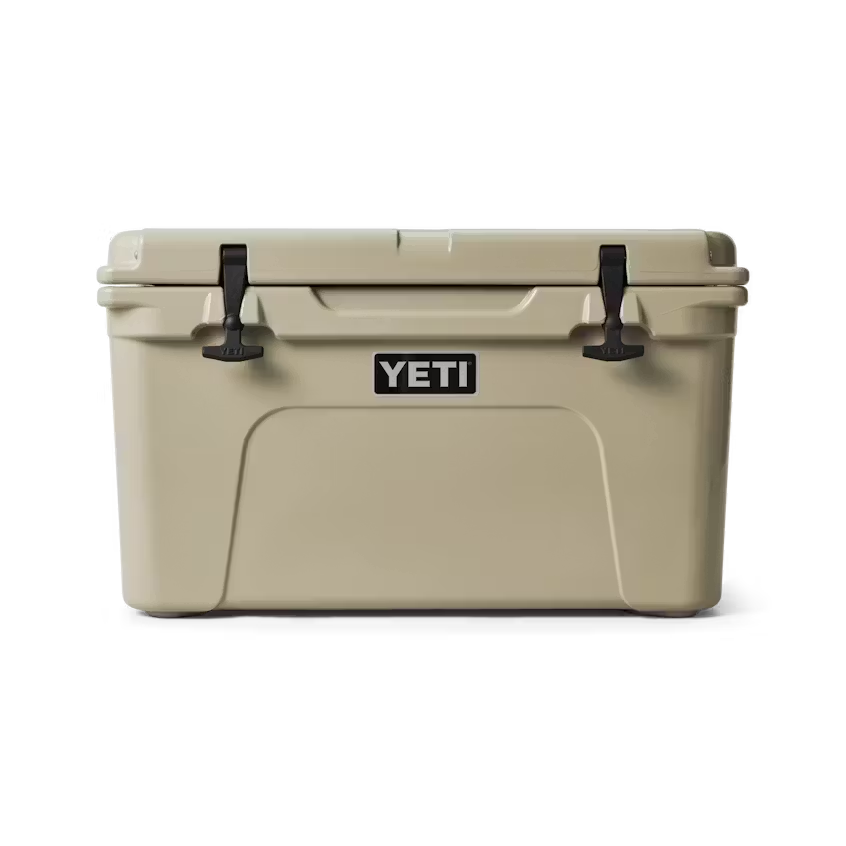
YETI Tundra 45

YETI

Tudnra 45

Adding a hard cooler to a raft is one of the easiest ways to gain extra storage. Not only does it keep food and beverages cold, but it doubles as extra dry storage when not being used as a cooler. You can also get creative with how and where you mount your cooler. Some anglers may opt to use it as a rowing seat, while others may opt to mount it on the back of the boat with the NRS Cargo Rack. Wherever you choose to mount it, a cooler is an essential piece of storage gear on our rafts.

NRS Approach Cargo Rack

NRS

Approach Cargo Rack

Some fishing situations call for extra storage, like multi-day floats. For that, NRS developed the Approach Cargo Rack specifically for the Approach series of rafts. This simple stern-mounted rack enables anglers to store extra gear, coolers, and duffels with ease. Even better, you don’t have to sacrifice the rear seat for this added storage.

Pelican R40 Ruck Case

Pelican

R40 Ruck Case

The Pelican R40 Ruck Case is one of the most affordable yet crucial pieces of gear on our fishing rafts. This small waterproof case is perfect for storing valuables like phones, wallets, and keys. Floating any river comes with a certain level of risk, so securing your valuables in case you get wet is a worthy investment.

NRS Throw Back Fishing Seat Bag

NRS

Throw Back Fishing Seat Bag

Figuring out creative ways to improve storage on an inflatable raft is the biggest issue most anglers face. Luckily, NRS took most of the guesswork out with the Throw Back Fishing Seat Bag. This nifty bag slots over the seatback on your raft and has ample room for all your flies, tippet, and other fishing accessories. A slotted back can also hold gear like a net.

NRS Aluminum Dry Box

NRS

Aluminum Dry Box

Depending on the raft you have, extra storage might be a requirement. NRS created the Aluminum Dry Box as a universal answer for dry storage. It’s available in two sizes and can double as a rower’s seat. Sturdy handles on either side support heavy loads and allow anglers to remove the box for a riverside lunch or overnight camping trip. No matter the raft, this is a piece of gear all anglers can benefit from.

NRS HDPE Frame Side Rail Racks

NRS

HDPE Frame Side Rail Racks

On a hardsided drift boat, the gunwales can serve as walking or storage space. However, rafts don’t have this benefit due to the nature of their soft tubes. To solve this issue, NRS created the Frame Side Rail Racks, which act as a hard-sided gunwale on your boat. Made from HDPE, these side rails are capable of holding some serious weight for extra gear or walking room.

YakAttack x NRS Slot Rail Net Holder

YakAttack x NRS

Slot Rail Net Holder

Landing nets always manage to be in the way when you don’t need them and buried in the boat when you do. Figuring out secure mounting solutions keeps the net in the same place every time for easy and quick access. For rafts with a slot rail system, the YakAttack x NRS Net Holder is an excellent choice for a plug-and-play option that solves net storage once and for all.

Accessories

The right boat accessories can make a day on the water more enjoyable, but the wrong accessories add weight and get in the way. Regardless of whether you’re building a custom frame or have a ready-to-go fishing raft, the following accessories will enhance your fishing experience.

NRS Frame Raft Motor Mount

NRS

Frame Raft Motor Mount

An easy upgrade for rafts and raft frames is to add a motor mount. This expands the raft’s use to stillwater lakes and allows anglers to put through long stretches of frog water. Depending on the raft frame, NRS has several options, including the Frame Raft Motor Mount and the Slipstream Motor Mount (specific to Slipstream Rafts). Once installed, anglers can opt for a small outboard or an electric motor depending on their needs.

Down River Double Cup Holder

Down River

Double Cup Holder

Down River specializes in creating useful products for rafts, and the Double Cup Holder is a perfect example. Fishing rafts in particular tend to lack cup holders, leaving your drinks rolling around the floor when floating. When they do have cup holders, rarely are they big enough to hold large water bottles that most anglers bring on the river. Down River fixed both of these issues with the Double Cup Holder. It attaches directly to raft frames, can hold large water bottles, and is made from recycled post-consumer waste and scrap webbing.

Deschutes Step Raft Step

Deschutes Step

Raft Step

One of the most overlooked things when buying a raft is getting in and out of it. The wide tubes can be tricky to get over, especially in water deeper than a foot. The team at Deschutes Step came up with a versatile solution for this with its inflatable raft step. It mounts on the raft frame and features a folding step. Simply fold it down, place your foot on it, and you can easily hop back into the raft.

NRS Stripping Basket for Molded Thigh Hook

NRS

Stripping Basket for Molded Thigh Hook

Rafts, like any type of fly fishing boat, can lead to tangled fly lines. The best solution to avoid this altogether is a casting bucket or basket, preferably one that mounts directly to a raft’s thigh hooks. The NRS Stripping Basket achieves this with a two-part mounting system, hooks that hang over the thigh hook, and micro straps to secure it to the posts.

NRS Advantage Oar Shaft

NRS

Advantage Oar Shaft

A simple yet valuable upgrade for any fishing raft is a quality set of oars. The NRS Advantage Oar Shaft is an affordable aluminum offering that doesn’t sacrifice performance. They are available in seven different lengths and are compatible with several different oar blades. Depending on the fishery or river conditions, you can swap out oar blades to optimize performance.

NRS Helix Oar Blade

NRS

Helix Oar Blade

With record low snowfall throughout the West, low flows this spring and summer are inevitable. This can make floating rivers tricky, requiring the right boat and oar configuration. One product that excels in these conditions is the NRS Helix Oar Blade. Its asymmetrical shape is designed to deliver even pressure in shallow water. These oar blades pair perfectly with the Advantage Oar Shaft.

NRS Spare Oar Keeper

NRS

Spare Oar Keeper

On the water, accidents happen, and valuable gear like an oar can get lost or damaged. To keep you from getting stranded, carrying a spare oar is something all boaters should do. On a raft, figuring out where to store it can be an issue. Using the NRS Spare Oar Keeper enables the rower to carry a full-size spare oar securely fastened to the side of the raft. The cam buckle system that secures the spare also enables the rower to quickly access the oar when needed.

Safety

Some stretches of river are remote, others have dangerous currents and rapids, and all require safety equipment. In addition to standard items like a first aid kit and signaling devices, these are a few pieces of gear worth adding to your kit.

NRS Chinook PFD

NRS

Chinook PFD

Most life jackets sacrifice comfort for safety, especially when sitting/rowing. This can be problematic if it leads to anglers not wearing the proper safety equipment. To solve this, the NRS Chinook has a mesh lower back paired with a higher back flotation panel. When you’re sitting or rowing, this allows for a comfortable full range of motion. Two large front pockets and a tool pouch keep fly boxes and additional tackle organized.

NRS Titanium Co-Pilot Knife

NRS

Titanium Co-Pilot Knife

Every angler should carry some sort of knife on the water. Inflatable rafts and traditional knives, however, don’t exactly mix well. NRS solved this with the Titanium Co-Pilot Knife. Its blunt edge and rounded serations mean there are no points to accidentally pop your raft. The titanium blade is also corrosion-resistant for use in and around saltwater. Secure this to your life jacket for easy access.


Gear Review: St. Croix Legend Elite Fly Rod

I’m no stranger to St. Croix fly rods. Growing up, those were the rods my dad had stashed behind the seat of his truck, and the rods I subsequently snapped in my first futile attempts to fly fish. One of my good fishing buddies has fished a Legend Elite for longer than I’ve been alive, and I had the chance to review the Evos when it first came out.

Of all the St. Croix rods I’ve fished, though, I was most excited to get my hands on this refreshed, updated Legend Elite. I’ve enjoyed fishing my buddy’s, and I always enjoyed the old St. Croix Imperials when I used them. With updated materials, I reckoned St. Croix could put out a fun, American-made product.

In a nutshell, that’s what the Legend Elite is. My review model was a 9′ 5-weight, and while it’s not a do-it-all rod (more on that later), it’s great with dry flies and smaller nymph rigs. It’s built in America and retails for $595.

St. Croix

Legend Elite

Key Features:
  • Medium-fast action that’s great for dry flies and smaller nymph rigs
  • Built with St. Croix’s latest and greatest technology improvements
  • MSRP: $595
Pros:
  • American-made performance at a reasonable price
  • Good feel and balance in-hand
  • Light swing weight
Cons:
  • Blank doesn’t transmit as much feedback as other rods
  • The tip section is too soft for heavier nymph rigs

How We Tested

I spent a few weeks with the Legend Elite, switching between a heavy nymph rig fished deep from a drift boat, and throwing small midge and mayfly patterns to trout rising in low, clear water. The only thing I didn’t do with the Legend Elite was throw streamers, largely because the conditions never called for it. With low, clear water and sunny skies for most of the past month, the streamer action has been nonexistent in these parts.

What I Love

Dry Fly Performance

You don’t buy a 9′ 5-weight and expect the laser-like accuracy, light feel, and soft presentation of an 8′ or 8’6″ 4-weight. The Legend Elite isn’t quite that good with small dry flies, but I was pleasantly surprised at how well this rod handled long, light leaders (I worked my way down to 13 feet and 6x for some of those risers) and flies from 18-24. I wouldn’t hesitate to use the Legend Elite on a tailwater during the upcoming blue-winged olive hatches.

Accuracy

The Legend Elite is a reasonably accurate rod. It feels stable throughout the cast, and while it’s hard to nail this down on a scientific basis, I didn’t notice any excess oscillation (side-to-side movement) during the cast. Rods that move too much side-to-side are inherently inaccurate, and I’ve fished more than a few that flopped around more than a politician.

If your casting mechanics are solid, and you can keep the rod tip moving in a straight line, you’ll be happy with this rod’s accuracy. I had no problem laying flies down at traditional trout distances up to about 50 feet. I didn’t push it much past that.

Feel and Balance

Something I’ve paid attention to lately with fly rods is whether I have to actively shift and move them around in my hand during a day of fishing. Rods with oddly-shaped grips, heavy tips, or too-light butt sections feel just a bit “off,” and it’s sometimes hard to explain that in a review. The best way I can translate this in a review is by describing the rod’s feel and balance in hand.

If I don’t have to think about the rod—if it feels natural during the cast, while fighting fish, mending, etc.—then it’s a rod that I reckon many other anglers will enjoy. It’s not too heavy, there’s nothing about the design that makes you wonder what the rod designers were thinking, and it’s fun to cast all day long.

Medium-Fast Action

The original Legend Elite, which I also fished in a 9′ 5-weight, reminds me a lot of my trusty Winston B3X—a moderately-fast rod with enough reserve power for longer casts. The newest version of this rod continues that trend, with a pleasant medium action that rewards good casting mechanics and still generates nice line speeds.

What I Don’t Love

Feedback

Despite the medium-fast action, the Legend Elite doesn’t quite deliver enough feedback during the cast. Even when loaded down with three nymphs, a couple of split shots, and an indicator, I was casting more from muscle memory than reacting to what the rod was telling me.

This was a problem I noted in the Evos, the Legend Elite’s pricier older brother. While the Legend Elite is undoubtedly strong and capable of handling its own, it appears some sensitivity was sacrificed for that durability.

Too-Soft Tip

Where I fish, it’s common for anglers to run three nymphs on a rig during the winter and early spring. Come summer, a heavy hopper-dropper combo is the ticket. On these big Western rivers, you need a fair amount of weight to get flies down to the fish, even in lower flows.

The Legend Elite struggled with my regular nymph rig of a small midge up top, a sow bug in the middle, and a heavy egg pattern on the bottom. I added two small split shot for the deeper runs. The tip section is just too soft to handle that much weight, at least in the 5-weight configuration. Both myself and the fishing buddies I had fish the Legend Elite noticed how the tip section bounced and wobbled a lot when casting these heavier setups.

For this style of nymphing and fishing any streamers, I’d probably opt for the 6 or 7-weights.

Final Word

The Legend Elite in a 9′ 5-weight is a great rod, even if it’s not what I’d pick for a day of handling heavy nymph rigs or heavy hopper-dropper combos. It’s fantastic with dry flies, and this would be a phenomenal rod for picking apart pocket water with a smaller dry-dropper rig. I wish it had a bit more feel and a tip section that could handle heavier rigs, but for an American-made 5-weight that can handle a good majority of trout fishing, it’s hard to beat what the Legend Elite offers. And at $595, you don’t need to shell out a mortgage payment to get it.

How to Tie: The Corona Stone

In this week’s “How to Tie” feature, Kelly Galloup with TheSlideinn ties a nymph that every trout angler with stoneflies in their water should fish this spring, the Corona Stone.

Learn How to Tie This Fly:

Difficulty: Intermediate

For trout anglers, fishing big bugs can be some of the most entertaining and satisfying times on the water. Whether you are using dries or nymphs, there is something exhilarating about big gluttonous trout inhaling larger food items. Leading up to warmer conditions makes for the perfect time to spend behind the vise, tying up batches of these large insects in preparation for them wiggling to the surface. Although many folks may have bad associations with the word corona, bringing the Corona Stone with you on your spring adventures might just change the negative connotation.

Taking your time on this pattern will serve you and every tyer best for their first few reps. From working with proportions to dubbing loops, tying productive nymphs can be difficult and time consuming. It is worth being patient to build skills and knowledge that will last years instead of rushing through patterns for mediocre results. For novice and experienced tyers alike, enjoy spending time behind the vise with the Corona Stone knowing it will pay off on the water.

For the best results, fish this nymph under an indicator or any nymph rig of your preference when tying on larger sizes. If you decide to use this pattern as a dropper under a dry fly, drop down to a size that your dry can withstand its weight while keeping a natural presentation. Adding your own variations to this pattern to match stoneflies living in your area is a great way to cover your bases and tie with a purpose. Larger nymphs call to big browns like candy bars and it’s best to be equipped with menu items that these fish spend their days waiting for, which is enough of a reason alone to always carry the Corona Stone with you this spring.

Ingredients:

Now you know how to tie the Corona Stone!

Video courtesy of TheSlideinn.

Behind the Cause: CalTrout


For this installment of Behind the Cause, the Flylords team sat down with California Trout, the preeminent conservation organization focused on California’s freshwater ecosystem. CalTrout has more than sixty large-scale conservation projects underway and works through a four-pillared approach to conservation: science, restoration, community engagement, and advocacy. Follow along to learn more about CalTrout, exciting projects, and how you can get involved!


Flylords: How or why did CalTrout start?

CalTrout: California Trout was founded in 1971 by a small group of anglers and conservationists who were alarmed by the rapid decline of California’s native trout. At the time, dams, water diversions, and development were transforming rivers faster than science or policy could respond. CalTrout was founded to be a voice for wild fish— willing to zealously and loudly advocate for rivers and streams that couldn’t speak for themselves. These anglers recognized that the health of wild fish is interconnected with every aspect of California. By focusing on protecting wild fish, these anglers were excited by the opportunity to create a better California for all of its inhabitants, wildlife and people alike.

Flylords: Tell us about CalTrout’s work over the last 55 years. How has the organization grown and refined its work to protect California’s fish and habitats?

CalTrout: Over more than five decades, CalTrout has evolved from a small advocacy group into a statewide powerhouse conservation organization that blends science, restoration, policy, and community engagement. Early work focused on protecting individual rivers and fisheries; today, CalTrout leads large-scale restoration projects, conducts cutting-edge science, and advances policies that protect cold, clean water at a landscape-scale. While the tools have become more sophisticated, our mission has stayed the same: revitalize watersheds for resilient wild fish and a better California. Today, we work in 32 watersheds across California with nine regional offices enacting 61 active restoration projects, 8 recently completed projects, and 11 currently in or approaching construction. 

At our core, we understand this work is not just about the fish. California’s trout, salmon, and steelhead are iconic and culturally significant — but they also serve as critical indicators of ecosystem health. Their decline has had cascading effects on biodiversity, water quality, and the communities and economies that depend on them. Through science-driven conservation, restoration efforts, advocacy, and community engagement, we know we can recover these species and in turn, revive the health of entire habitats, watersheds, communities, and economies. Protecting these species is essential for a healthy and thriving California for all.

Analise Rivero, CalTrout Director of Policy a the Capitol

Flylords: I think that most people don’t realize just how large California is and how diverse its ecosystems are…How does CalTrout work across the state?

CalTrout: California is incredibly diverse; it’s actually the most biodiverse state in the country—from coastal streams and redwood forests to desert headwaters and alpine lakes—and CalTrout works statewide by focusing on priority and scientifically-identified watersheds and species. We pride ourselves on working in community. We have 10 offices that stretch from San Diego to the Oregon border, and with nearly seventy staff members, we try to live where we work. We also connect those efforts through shared science, policy, and strategy. That allows us to address local challenges while also tackling statewide issues like water management, climate resilience, and habitat connectivity. The diversity of our work matches that of California. We’re removing barriers and restoring floodplains in the redwoods, we’re creating pathways for fish to swim unimpeded under highways and railroads in the Bay Area and Southern California, we’re partnering with private landowners to ensure sufficient flow for both agriculture and fish across farmlands, and we’re studying and restoring meadows in the Sierra Nevada to improve source watersheds.

Flylords: What are some of the most pressing issues facing California’s wild fisheries and critical habitats?

CalTrout: Climate change is the overarching challenge, driving warmer waters, altered flows, and more frequent droughts and floods. On top of that, many rivers are still fragmented by dams, fish lack access to historical habitat, and competition for water continues to intensify. These pressures make it harder for native fish to survive—but they also underscore why protecting cold-water refuges, restoring floodplains, and reconnecting rivers is more important than ever. Finally, California lags on ensuring that our aquatic ecosystems balance the needs for fish, water, and people. Until our system adapts to allowing for ecosystems to have their fair share of instream flow and habitat, we’ll be fighting a losing battle on recovery.

At the end of the day, the fate of California’s wild fish is inextricably linked with our own fates. Salmon, steelhead, and trout are often considered “indicator species”—their health reflects the broader health of an entire ecosystem. Healthy fish populations can be directly correlated with a healthy ecosystem and flourishing food web. Alternatively, a decline in their populations can signal larger environmental problems that may also affect other plant life, wildlife, and ultimately humans and our economies, in the region. When we work to protect native fish, we are also protecting communities. For example, if we can implement a natural approach to reduce flood risk like restoring or mimicking a natural floodplain, our fish may benefit from connected floodplains for habitat along their arduous migrations, while California communities benefit from more flood-resilient homes. This is one example of many that showcases to us that it is not just fish who benefit from clean, free flowing water.

Alameda Creek construction

Flylords: I think most people here know something about all the work up on the Klamath to reconnect this iconic river. Can you briefly speak to CalTrout’s efforts around restoring the Klamath and where we are today?

CalTrout: CalTrout has been deeply involved in the Klamath River dam removal and restoration of the broader watershed for decades, advocating for dam removal, supporting science and monitoring, working with Tribal Nations, agencies, and partners to ensure fish can return to newly opened habitat, and restoring key Klamath River tributaries like the Scott and Shasta rivers. With the historic removal of the dams now complete, we’re seeing salmon and steelhead move back into stretches of river they haven’t accessed in generations. Today, CalTrout is focused on tracking fish response, leading the Klamath River Monitoring Program which will help uncover the response to dam removal. We continue to support habitat restoration throughout the larger Klamath River watershed, helping ensure this reconnection delivers long-term benefits for both ecosystems and communities.

Klamath River salmon return by Michael Wier – CalTrout

Flylords: Let’s talk about some past projects or initiatives that CalTrout is particularly proud of.

CalTrout: Three efforts really stand out and highlight our holistic approach to conservation. One is CalTrout’s role in securing California Endangered Species Act protection for Southern California steelhead—a science-driven campaign that helped prevent extinction and laid the foundation for habitat and flow protections across the region. Another is our decades-long advocacy for removal of the Klamath River dams, which helped make possible one of the largest river restoration projects in U.S. history and the return of salmon and steelhead to hundreds of miles of habitat. And finally, our work on the Mono Lake cases, where CalTrout helped establish the legal principle that California’s water management must protect public trust resources and that our right to fish, swim, and enjoy our waterways is an essential right—setting a precedent that continues to benefit rivers and fisheries statewide. Together, these milestones show how CalTrout blends science, law, and advocacy to create lasting protections for California’s waters, wild fish, and communities.

Restoration construction on the Scott River

Flylords: Similarly, can you tell us about some new and exciting initiatives y’all are working on?

CalTrout: In 2025, CalTrout announced the creation of a statewide dedicated science department. The new Science Team will produce the third edition of the State of our Salmonids (SOS) Report, a comprehensive, once-a-decade scientific assessment of the status of all 32 native salmon, steelhead, and trout species in California. Building on previous assessments released by CalTrout in 2008 and 2017, SOS III will deliver the most current, credible, and transparent evaluation of salmonid health across the state—at a time when California’s rivers and streams are undergoing rapid transformation. The science guiding this report is essential to ensure we are restoring the ecosystems, landscapes, and waterways that will have the highest impact on fish recovery. 

Regarding on-the-ground restoration, we have 11 projects across the state in or moving into the construction phase—some just recently completed. This winter, CalTrout completed a fish passage project on Alameda Creek in the Bay Area that allows salmon and steelhead uninhibited access to the entirety of mainstem Alameda Creek. This project is especially exciting because it reconnects a stream in a highly urban environment where native salmon and steelhead are often few and far between. We also are excited about building on the legacy of Klamath River dam removals. We expect California to lead the charge on large scale watershed reconnection, with the Eel River, Malibu Creek, and the Ventura River set for obsolete dam removal next. 

We believe that conservation is not possible without policy. CalTrout expanded its federal advocacy to protect California’s freshwater ecosystems and public lands, engaging top DC lobbyists, visiting policymakers, and strongly opposing public land sales. 

Finally, being in and engaging communities is core facet of our work, and we are launching the second year of CalTrout’s Fish Water People Film Festival this summer. Tickets will be available for purchase soon here and the film submission period extends until April 5, 2026.

Rindge Dam obstructs Malibu Creek, is obsolete, and will soon be removed

Flylords: How can our readers learn more about CalTrout and get involved?

CalTrout: The best place to start is caltrout.org, where people can explore our projects, read stories from the field, learn about ways to get involved including local events and volunteer opportunities, subscribe to our mailing list, buy merch, and donate to support our work. Whether it’s becoming a member, supporting restoration work, attending events, or simply staying informed, there are many ways to help protect California’s rivers and wild fish for future generations. For more real-time updates you can also find us on Instagram, Facebook, LinkedIn, and YouTube. Give us a follow!

March Madness Bracket Challenge: Fly Fishing Edition

For March Madness, we thought it would be fun to put to the test a topic widely debated by fly anglers: the best species. In this March Madness Bracket Challenge, vote for your favorite species in each of four regions and see what comes out on top.

Dialed In: Catching More Smallmouth Bass with Mike Schultz

Bronzeback. Smallie. Micropterus Dolomieu. Smallmouth Bass. They are fighters; hardy fish with toughness and aggression matched only by those who relentlessly hunt them with feathers and steel. Anyone can catch a smallmouth, but consistently hooking them, especially big ones, requires a great deal of experience, forethought, and often some ingenuity. The book on smallmouth bass is still very much being written as technological advancements in gear, highly specialized flies, and progressive anglers continue to push the boundaries of smallmouth fishing into all four seasons and just about any water conditions imaginable. Squarely among those at the forefront of this group is Mike Schultz, owner and operator of Schultz Outfitters in Ypsilanti, Michigan. A long-time guide, fly designer, G. Loomis Ambassador, and champion of the smallmouth bass, Schultz and his team of highly skilled guides have spent years developing data driven programs that regularly net fish (and big fish, at that) throughout all seasons of the year, including the cold-water periods previously deemed fruitless. The result is a series of innovative early season flies and strategies which evolve with changing water conditions that open the door for anglers to target river smallmouth bass with confidence, regardless of the temperature.

Early Season 

Adopting cold-water specific strategies is critical to finding early-season success with lethargic, bottom-oriented fish. “Slow down,” says Schultz. “Don’t take the fly away from them with fast retrieves.” Instead, he recommends jig-style flies like his Red Eyed Leech and variations of Russ Maddin’s Circus Peanut, which are front-loaded with weight to cut through current, get in the zone quickly, and be “popped” up and down over a relatively small area. “Having a fly that drops quickly is really important, as is being able to keep that fly in a zone versus taking it away from them,” says Schultz. “That jigging motion, which catches fish throughout the entire season, is almost essential when you’re fishing really cold, early-season water.” Similar to the spin angler’s Ned Rig, Schultz says his jigs are often eaten on the drop, near the river bottom. He strongly prefers natural color schemes that include tan, brown, grey, olive, and black to match forage like lamprey, baitfish, and crayfish in the colder months. 

Photo courtesy of G. Loomis.

Fishing high-percentage windows is another one of Schultz’s top cold-water strategies. “It’s not uncommon,” he says, “for the fish to turn on for short periods, usually between 1 pm and 4 pm, when the water reaches its peak temperature for the day.” During the early season, the fishing can be slow in the morning, and then, “like the flip of a switch,” the fish will get super aggressive for a while before shutting back down. Being on the water during these brief windows is critical in winter and early spring when strikes are fewer and further between. He also notes that anglers should seek to take advantage of unseasonably warm or sunny days in January, February, and March, when fish will often soak up the sun in shallow tailouts and along banks on darker substrate and color changes. Big fish, often of the 19-plus-inch variety, will sometimes sit in only a foot and a half of water and be missed by anglers concentrating on deeper pools. This phenomenon, he says, is one of the most predictable smallmouth bass behaviors he’s discovered, and it has produced time and again for him. 

Transitional Period

As water temperatures climb into the low 40s, smallmouth bass push out of the frog water, moving closer to current seams. In response, Schultz and his team deploy their transitional programming, opting now for slightly different flies that “bridge the gap” between the early season’s jigs and the swim flies he fishes in warmer months. One such fly is his uber-popular Leggy Boi, which sports a bulbous head, multiple segments, and unsurprisingly – many rubber legs. It was designed to be cast into slow water and hunted through areas of moderate flow toward seams, thus passing through the strike zone during this transitional time of year. Adding small, intermittent strips will pick it up, let the legs expand and “breathe,” and then gently drop the fly. Its many legs, trimmed to various lengths along its body, wiggle and bounce, attracting the attention of fish and acting as a parachute to slow the fly’s fall and allow it to hang at a generally consistent depth. “You’re playing a game with the materials,” he explains, referring specifically to the weight of a tungsten bead tied in under the buoyant EP Crustaceous Brush head. The size of the bead versus the amount of brush used for the head dictates how high in the water column the fly will ride. “The colder the water, the lower you want it,” he says. “The warmer it is, the higher you can fish it.” This balancing act lets anglers fish the Leggy Boi slowly at a desired depth, hanging it in the fish’s face without fear of snagging the bottom or underwater structure. Schultz recommends tying and carrying them in multiple densities for varying flows and temperatures. While not its intended purpose, the Leggy Boi also produces at a high rate for anglers when fished as a true swim fly in the late spring and summer due to its excellent movement and profile.

Photo courtesy of G. Loomis.

Another transitional fly that Schultz’s team regularly throws is the Woodsman, a modified version of the Circus Peanut that incorporates many of the same triggering characteristics of the Leggy Boi. This pattern, however, is designed with bent-eye hooks and strategically placed weights to ride hook-point up, making it the top choice for fishing woody areas, and for extracting fish when they bunch up tight to cover. Both flies are generally tied in lengths between 3.5 and 4.5 inches and fished intentionally at depths determined by temperature and flows. Full intermediate lines are employed in cold water to help the flies fish low in the water column. As the weather breaks and the water warms, full intermediate lines are swapped for intermediate tips and floating running lines that hold flies higher in the water for more aggressive fish.

Peak Season

Peak season, the pre-spawn period when water temperatures exceed 45 degrees, is when fish start to really chase swim flies, and Schultz says they can begin to “play with them” a little bit more. “Don’t be a robot,” he says, alluding to anglers’ tendency to fall into monotonous retrieves after hours standing at the bow of the boat. Instead, look to hunt the fly, imparting sharp, erratic action with unpredictable starts and stops to mimic an injured minnow. While the boat is now moving a bit faster, this isn’t quite power fishing, and it’s still important to “think before you cast,” says Schultz, quoting fellow Great Lakes angler and guide, Jeff Liskay. “The angler who makes six targeted casts along a bank may catch more fish than the one who makes thirty, he says.” It’s at this point that Schultz’s team starts to incorporate a little wilder color schemes as well, with white, chartreuse, electric green, and yellow emerging as favorites. Bright flies are more easily tracked from the boat, allowing the guide to provide important feedback and helping the angler to manipulate it around subsurface obstructions. This visual element of peak season streamer fishing is incredibly engaging and exciting. “When a swim fly gets eaten,” says Schultz, “it gets completely erased from the background. It doesn’t matter if it’s four, five, six, or seven inches long…it’s gone.” 

Photo courtesy of G. Loomis.

Blane Chocklett’s iconic Game Changer is one of the primary flies used during this time frame, and Schultz will play with modifications and designs to accentuate their actions according to his needs. He’ll often, for instance, tie them with mop tails instead of the typical marabou or hen feathers. The mop material absorbs water, effectively adding “weight” to the back of the fly without tying in actual lead or tungsten. “When you crack that fly with the weighted rear, you get that full half-turn, presenting it to the fish in a true T-bone fashion, where it’s sitting completely sideways,” he explains. Tweaking fly designs to achieve a variety of actions and stripping them with intent are powerful triggers for peak-season smallmouth bass. For those looking to specifically target big fish, Schultz suggests up-sizing the flies to effectively eliminate some of the smaller fish within the population. Too big, however, can at times be detrimental, so his flies typically max out around 7 inches in length. 

All Bets Are Off

When the water reaches 50 degrees, Schultz says, “all bets are off,” and a wide variety of flies and retrieves can produce until the fish start spawning. Anglers are encouraged to throw flies that fit their personal preference, catching fish in whatever way they most enjoy. It’s at this point that Schultz starts fishing his Swinging D, playing the same buoyancy game as the Leggy Boi, but now balancing the fly’s foam head and lead keel weight. “That fly is designed to hang over a spot and fish an area,” says Schultz, who generally operates on smaller rivers, targeting productive zones that range in size from that of a school bus to a dinner table. “We’re not tracking flies at great distance. You can give the Swinging D a hard strip and it may move three feet, but it’s three feet sideways,” he explains. This keeps it in the zone for an extended period of time. It’s specifically meant to be fished from a slow-drifting boat at roughly a 45-degree downstream angle as it needs head-on current to wash over its flared head to achieve its snake-like action. 

Photo courtesy of G. Loomis.

In fact, Schultz preaches keeping the fly out in front of the boat at that angle all the time – a strategy that provides multiple benefits to the angler. “Nine out of ten times,” says Schultz, “the fish will turn and charge downstream after eating the fly, creating a positive hookset for the angler positioned upstream.” Conversely, he has found that flies, even multi-hook patterns, are often pulled from the mouths of fish that inhale them when they’re presented upstream or perpendicular to current. To effectively set the hook in these scenarios, he says more times than not, “the angler must alter what most would consider a natural hookset. Easier said than done for the inexperienced.” The downstream angle of approach, however, alleviates this issue, spooks fewer fish, and provides direct, head-on current over the heads of his flies, a necessary consideration for many swim-style patterns.

Photo courtesy of G. Loomis.

Schultz’s programs are also augmented by very intentional boat control that assists the angler with controlling slack, thus achieving proper depth and imparting optimal action to flies in all seasons. Very similar to a wade angler stepping into or away from a swung fly, Schultz will hold a static boat position and row slightly forward or backward to drop and kill or elevate and speed up the fly, respectively. This creates precise presentations that pinpoint and exploit specific bottom or structural features that an unfamiliar angler may not be aware of, thus eliciting more strikes. This team approach is exceptionally effective in the transitional period when anglers are using a hybrid swing strip approach while presenting neutrally buoyant flies. The depth and overall speed of the presentation must properly match the temperature of the water in these situations. 

Extending the Season

When fishing sub-50-degree water, Schultz says to “take your time, slow it down, fish every cast, and pay attention.”  Relying on purpose-built flies and deploying them in ways that reflect the fish’s habits relative to temperature can help maximize time on the river. This is especially true during the early season when anglers may only get a couple of shots at mature fish all day long. When properly deployed, these cold-water strategies, developed by Mike Schultz and his crew, can effectively add weeks or months to an angler’s smallmouth bass season. 

Beginners Guide to Fly Fishing for Bass

5 Best Flies for Largemouth Bass

Tying a Fly To Mimmic Shoal Bass

Screenshot

A Note from Leighton Phillips (@fatbuffaloflies):

“I had been seeing a few multi fish/umbrella rigs from different people I follow and following a literal fever dream (where I dreamt about this fly).

I decided to try and design and tie it. I have since simplified the design and it fishes really well on light to medium tackle.

There has been a lot of interest from sea anglers and disciplines beyond fly fishing for this one so ill probably make some more variations.”

Reel of the Week from Leighton, be sure to follow his Instagram HERE!

Fly Fishing 101: Understanding Fishing Sunglasses

Check out these frames from Costa Sunglasses, and more: HERE.

Over the past half-decade, as I’ve dived into teaching new anglers on essentially a full-time basis, I’ve come to realize quickly what is and isn’t necessary for a day on the water. You need a rod, reel, line, leader, tippet, split shot, indicators, floatant, flies, and a net. Waders and boots are great, but not necessary, especially if you’re willing to wet-wade during the summer.

As far as the specifics of which rod you should get, or the best fly line—that’s a whole other discussion. But I’m here to tell you that sunglasses also belong on the list of essential, must-have fly fishing gear. Here’s why:

Why You Need Sunglasses

They Save Your Eyes

I was in Alaska a few years ago, fishing the sockeye run before heading north to chase trout and grayling. The only real way to catch sockeye (unless you’re an Alaskan resident and have a dipnetting permit) is to bounce a “fly” along the bottom, attached to a 2 or 4-ounce banana weight. You let the rig drift, then give it a big yank at the end to set the hook into the mouth of anything that might be swimming down there. Sockeye hug the banks and open and close their mouths frequently while swimming upstream, so this “flossing” method is the best way to catch them. You’re only allowed to keep them if you’ve hooked them in the “head area,” a description straight from the Alaska Fish & Game’s guidebook. It’s not very sporting, but sockeye are great table fare, and it’s an interesting way to put fish in the net.

Anyways, I was fishing with that setup when my weight got snagged on something downstream. I pulled hard, and suddenly the rig slipped free and flew back at my face quicker than I could move. That 4-ounce lead weight smacked me right in the sunglasses, and I fell right in the river.

If I hadn’t been wearing sunglasses, I probably would have lost the eye.

So, at a bare minimum, sunglasses protect your eyes from physical damage. Whether it’s a weight or an errant cast from your buddy, they’ll keep hooks and heavy things where they belong—far away from your eyes.

You’ll also significantly reduce eye strain when staring at the water all day. Every optometrist who’s examined my eyes has reinforced just how important it is to wear sunglasses with all the time I spend staring at the water.

Bottom line: wear sunglasses to protect your eyes.

Spotting Fish

The right pair of sunglasses (and we’ll get to that in a minute) can also make an enormous difference in spotting fish in the water. Whether it’s trout in a river or bonefish on the flats, good lenses make spotting fish a lot easier than doing it by the naked eye.

Years ago, on a trip to Colorado, I left my sunglasses in my truck. My buddy was driving, and he didn’t have spares. I figured I’d be fine for a day, but after a few hours of staring at the water without them, I borrowed his keys, drove to the nearest gas station, and bought the cheapest pair I could find. They weren’t all that comfortable, but it was worth it to be able to spot fish as we worked our way through a spooky spring creek where stealth is the difference between catching the big ones or going home empty-handed.

What Sunglasses Do I Need?

Get a pair of polarized lenses. Glass or polycarbonate doesn’t really matter, especially for beginners. Frame style, construction, and design don’t matter, either. You just want some kind of polarized lens.

Polarized lenses cut the glare on the water, filtering out the harsh light so you can see through the water a bit better. In most streams and rivers, you’ll be able to see more of the underwater structure—logs, rocks, old tires—where trout congregate. You’ll also be able to see fish as they suspend high in the water column, staging to eat dry flies. Without polarized lenses, you’ll have a much harder time spotting those things, if it’s even possible.

Now, you could go out and spend a nice chunk of change on sunglasses. I’ve been using the Costa Fantail Pro lenses with Gold Mirror Polarized Glass lenses for the past year, and I love them. They’re the best fishing shades I’ve ever worn. But they’re also $309, which is a ridiculous price to pay.

You don’t need to spend that much. Let’s run through a quick checklist of must-have features and explain some of the reasons why I opt for one over the other, so you can have the info you need to make a great decision.

  • Lens Color: There are a lot of opinions here, but as someone who’s had the chance to review quite a few lenses over the years, my recommendation for freshwater anglers is to get a brown, amber, or gold lens. These colors offer a great amount of contrast, in addition to being polarized. They’re not too dark to use most of the day, although you’ll probably pop them off if you’re fishing the evening hatch. For offshore angling, blue or green lenses are a great place to start.
  • Mirrored vs Standard Lenses: Mirrored lenses are darker than a standard polarized lens (and if you’re buying a mirrored lens, make sure it’s both mirrored and polarized), but they do reflect even more light, making them great at dealing with harsh conditions. So, if you’re consistently fishing in bright conditions, a mirrored lens is a great way to go. If you want something that’s a bit more versatile, a standard polarized lens is great.
  • Glass vs Polycarbonate: Polycarbonate lenses are lighter, and if you break them, they don’t shatter. Polycarbonate can be cheaper, too. They are prone to scratching, however. Glass lenses offer greater clarity and more resistance to scratches, but they’re heavier than poly lenses. To be honest, I can’t really tell the difference between the weight of the two after a day of fishing, but that’s just one person’s opinion. I’ve opted to get glass lenses lately, because I can tell a clarity and durability difference with them. My glass lenses aren’t nearly as scratched up as my poly ones.
  • Lens/Polarization Technology: The big-time optics companies have all sorts of fancy lens technology they brag about. To be completely honest, I can’t tell much of a difference between one high-end lens and the other, so long as they’re both the same color. I’m sure there’s a difference between Costa’s lenses and Smith’s, but it’ll take a more discerning eye than mine to explain what they are. My advice here is to largely ignore the lens technology chatter and instead look for a pair of shades that fit well and have the design and lens color you want.

Wrapping Up

Whether you buy a polarized pair of shades from the gas station or you drop money on some from a big-name brand, it doesn’t matter. What matters is that you’re picking the right lens color for your fishing situations, and you’re not getting confused or swayed by marketing mumbo-jumbo.

Personally, I’ve found it’s worth the extra scratch to buy the nicer pair of shades. I use a sunglasses leash to keep them from falling off my neck and into the river (which I did with a pair of $200 glasses once), and the shades I wear on the river are only used there. Otherwise, they are on the rearview mirror in my truck. That’s been the best system I’ve found for not losing or damaging my nice fishing sunglasses.

I also like glass lenses, and some of the newer frame materials are really light. As someone who’s fortunate enough to spend a lot of time on the water, a nice pair of sunglasses feels like a legitimate expense for me. It may not be for you, and that’s fine. I don’t think you’re getting a lesser experience from your gas station shades. As long as they’re polarized, you’ll be in great shape.

West Virginia Pharmacists Host Fishing Derby

Student pharmacists at West Virginia University are hosting a fishing derby to raise awareness of a problem that many anglers likely don’t know about. According to research from WVU, more and more freshwater fish are ingesting some of the same pharmaceutical products humans are.

Joseph Kingsbury, a doctoral student in natural resources science, and Kyle Hartman, a professor of wildlife and fisheries resources, led a sampling effort on the West Fork and Tygart Valley rivers in West Virginia. What they found were surprisingly high amounts of both beta blockers and statins in fish throughout both river systems.

The fish are ingesting the beta blockers and statins through treated wastewater, which is then pumped back into rivers. Water treatment facilities aren’t adept at removing pharmaceuticals, however, which is why they end up permeating everything in the ecosystem.

Kingsbury and Hartman theorized they’d find evidence of the drugs in fish’s livers, because livers process statins and beta blockers. In some cases, they found livers that were discolored, and even some fish that had parasites.

“None looked super healthy compared to traditional fish livers,” Kingsbury said. “And pharmaceuticals are very resilient. They’re meant to be saved, to go on our shelves and not break down over the years. We found quite a few sub-lethal effects.”

The Fishing Derby

To raise awareness of what an impact these pharmaceuticals can have on fish populations, student pharmacists at WVU are hosting a fishing derby to help spread the word and give folks advice on how to get rid of their unwanted prescriptions.

“During the event, we will distribute proper medication disposal kits, and host an educational table on proper medication disposal,” said Chrissa Balsley, one of the event organizers.

The event will be held on April 18th from 8:00 a.m. to 2:00 p.m., at Cooper’s Rock Lake. You can register for the event ahead of time, or register day-of. The fishing will be for stocked trout, and there will be a raffle for prizes.

Streamer-Fishing 101: Excerpt from The Orvis Quick-Start Guide to Fly Fishing

Clockwise from upper left: Woolly Bugger, Muddler Minnow, Black Nose Dace, and Mike’s Meal Ticket. The Meal Ticket is quite heavy and bulky, so it’s not recommended for beginners.

Excerpted from The Orvis Quick-Start Guide to Fly Fishing, by Philip Monahan. The book is not a comprehensive guide. It is written to help you achieve an initial level of competence, to provide the basic instruction and know-how that will allow you to enjoy your first forays on the water.

Aside from insects, trout feed on smaller fish, crayfish, leeches, and other organisms that inhabit rivers and streams. Anglers imitate these prey items with streamers, which come in a wide variety of styles and sizes, but all are long and thin. Because these larger prey items provide a high-calorie meal, they often attract bigger trout, and fish are more willing to chase down such a potential windfall. This means that casting accuracy is not as important as it is with dry flies and nymphs, and you are able to cover a lot more water with a streamer.

As with nymphs, most of the action occurs below the surface–depending on the depth you’re fishing–but because you are usually fishing streamers with an active retrieve, strike detection is rarely a problem. The line is usually taut between you and the fly, so you’ll feel the take. If your fly is close to the surface or is tied with bright colors, you may be able to see the fish strike, and in many cases, the fish hits the fly so hard that it hooks itself.

The depth at which you fish streamers depends on several variables, including the depth of the water, current speed, water clarity, and temperature. In general, you want to be close to the bottom, which is usually where the fish are holding, but aggressive and active trout will move quite far, both laterally and up in the water column, to eat a well-presented streamer. The caveat is that the trout aren’t always in the mood, and you may bonk a trout right on the head with your offering and get no reaction. 

Streamer Presentations

There are three basic ways to fish a streamer–swinging, stripping, and dead-drifting–all of which are quite simple and don’t require perfect casting or delicate presentations. The main goal in streamer fishing is to cover a lot of water, so you can get your fly in front of as many trout as possible. Obviously, you’ll want to take extra care to get your fly into likely trout-holding spots, such as in front of rocks or near fallen trees, but you’ll often be surprised to pick up fish in places you might not expect to. Plus, some trout will follow a fly for quite a while before they eat it.  

The standard streamer presentation begins with a quartering downstream cast. (Credit: Charles Hildick-Smith)

When you’re fishing a streamer, you’ll often want to try a few different presentations and speeds to see what the trout want on that day. Sometimes, a slow, steady retrieve will draw strikes, while at other times, only a fast, varied retrieve will produce fish. It’s one of the mysteries of fly fishing that makes the sport endlessly fascinating. So before you try changing flies, try changing retrieve speed and cadence.

Swinging a streamer is both easy and effective: all you do is cast the fly, perhaps make a mend or two, and then hold on. This makes the presentation perfect for beginning anglers. Start by casting downstream at a 30- to 45-degree angle, pin the fly line against the cork handle with the fingers of your rod hand, and then let the pressure of the current against your fly line cause the fly to swing across the water downstream from you. The fly will look like it is swimming across the stream until it comes to the end of the swing, where it then looks like it is holding in the current. 

To swing a streamer or wet fly, don’t mend your line. Instead, let the current cause your line to belly, causing the fly to swing across the water below you. (Credit: Charles Hildick-Smith)

You can control both the depth of the fly and the speed of the swing through mending. If you cast across a fast current and don’t mend at all, the fly will swing across the current very quickly. To slow the swing, make upstream mends to reduce the amount of pressure the current is putting on the belly of your line. Experiment a bit with how mends affect the speed of your swing, and you’ll quickly become adept at adjusting your presentation.

Trout will often strike right at the end of the swing–perhaps they think that the prey is about to get away–or while the fly is stationary at the end of the presentation. This is why it’s important that you don’t give up on a swing too early. Instead, let the fly dangle in the current for a few seconds, and then give it a few strips. This new motion may trigger a strike from a trout not sure if it wants to commit. I’ve caught many trout on “the dangle” over my career–sometimes when I’ve simply left the fly hanging in the current as I do something else, such as take a drink or look through my fly box.

Stripping is the preferred presentation for most streamer anglers, as they believe that an active fly looks more lifelike and triggers a trout’s predatory response. Stripping a streamer involves the same process as stripping in slack: you simply hold the fly line against the cork with the first one or two fingers of your rod hand, and use your line hand to pull the line through that pinch point. It’s important that you keep your rod tip low, just above the surface of the water, so that your connection to the fly is as straight as possible. This will make setting the hook easier and more effective.

Stripping streamers through the water below a riffle can be very effective. (Credit: Charles Hildick-Smith)

You can vary your retrieve by making each pull longer or shorter, faster or slower. You can even mix things up by going short-short-long or fast-fast-slow or any other combinations you can think of. The trout will tell you when you’ve gotten it right.

When you’re stripping a streamer, the possibilities for presentation are wide open. You can start by making the same quartering-downstream cast described above, but instead of letting the fly simply swing, you can add stripping motion. Or you can cast straight across the stream and strip the fly quickly back to you. Try to change things up as much as possible until you get a strike. For instance, try a down-and-across cast followed by an upstream mend, then try the same cast with a downstream mend. There really are no wrong answers, as long as your fly is getting down in the water column and is moving through places where trout might live.

One way to pinpoint your presentation is to arrange it–via casting, mending, or your position–so that the fly moves or swings right in front of a good trout lie. So, for instance, if there is a boulder two-thirds of the way across and 30 feet downstream from you, you could cast quartering downstream and then make several upstream mends, which would place more line directly upstream of the fly. The tension of the line on the water would cause the fly to swing farther away from you. Experiment with how you can change the dynamics of the fly’s swing, and soon you’ll be able to determine, with a fair amount of accuracy, where the fly swings.

Dead Drifting a streamer is a less common tactic, but it works surprisingly well, especially in situations where you want to keep the fly in the strike zone a long time or where your target area lies parallel to the current. If there’s a deep slot or a log against the far bank, for instance, stripping or swinging a fly would quickly take the fly away from the target area. In this case, fish the streamer as you would a nymph: cast to the upstream end of the lie, make the appropriate mends to achieve a dead drift, and then let the fly drift through with the current. Watch the end of your fly line for signs of a strike, or you can even use a strike indicator, if you wish. Since trout will generally eat a streamer with more aggression that they would a nymph, strike detection isn’t as much of a problem, but this technique works best with a short line. 

Clockwise from upper left: Woolly Bugger, Muddler Minnow, Black Nose Dace, and Mike’s Meal Ticket. The Meal Ticket is quite heavy and bulky, so it’s not recommended for beginners.

Streamer fishing is great for beginners because it involves less precision. You’re usually not trying to target a specific fish, your cast doesn’t have to be delicate, and achieving a dead-drift is not a requirement (although, as you’ll see below, it does work). Since the fly moves across the current and downstream, you have the potential to get it in front of more trout in a given stretch of river. And since the fish are willing to chase, you may have more opportunities to draw a strike.